Skip to content



Picture this: You walk into your favorite clothing store, and the associate greets you by name.
They remember your last purchase, suggest something you’d actually wear, and offer a small discount. Suddenly, you’re tempted to buy—not because of the discount, but because it feels good to be valued.
That’s what great retail customer engagement looks like. It’s not just about new technology or deep discounts. It’s about building genuine relationships that turn one-time shoppers into loyal customers.
And those loyal customers? They tend to spend significantly more over time, about 31% more than new ones.
In this guide, we’ll explore 14 proven strategies that will help you create shopping experiences that keep customers coming back.
Table of Contents
- What is Retail Customer Engagement?
- Why Retail Customer Engagement Matters
- 13 Best Practices to Improve Retail Customer Engagement
- Shifting to an Engagement-First Approach in Retail
- Frequently Asked Questions
What is Retail Customer Engagement?
Retail customer engagement is the process of building meaningful relationships with customers through personalized, value-driven interactions across every touchpoint.
These interactions happen across multiple channels:
- In-store: Personalized service from sales associates, loyalty perks at checkout, interactive experiences.
- Online: AI-driven recommendations, live chat support, personalized email marketing.
- Social media: Direct brand interactions via comments, messages, influencer collaborations.
- Support channels: Live chat, email, or self-service portals that solve problems quickly.
Why Retail Customer Engagement Matters

It’s easy to focus on making the first sale, but the real value lies in keeping customers coming back. Let’s take a look at why customer engagement matters:
Higher Customer Retention
Engaged customers return and make repeat purchases more often. As per Smile.io’s internal study, after a second purchase, there’s a 49% chance a customer will buy again. After a third purchase, that likelihood jumps to 62%.
The key? Keeping customers engaged so one purchase naturally leads to another.
Recommended reading
Increased Sales Revenue
Tailored interactions, whether through product recommendations or loyalty rewards, make shopping more engaging.
Companies that excel at personalization generate 40% more revenue than their competitors. The more engaged the customer, the higher the sales potential.
Enhanced Brand Loyalty
Think about your favorite brands. It’s not just their products that keep you coming back—it’s how they make you feel. Emotional brand loyalty has soared by 26% since 2021, reaching 34% in 2024.
Even the stats point toward the same: Customers stick with brands that truly understand them.
When customers feel that connection, they don’t just buy more, they become advocates, recommending your brand and returning time after time.
Recommended reading
13 Best Practices to Improve Retail Customer Engagement
These tried-and-tested strategies can help you build stronger connections with shoppers and turn everyday interactions into long-term loyalty:
1. Personalize the Shopping Experience
Customers want to feel like brands actually know them. Personalization isn’t just about using someone’s name in an email, but rather it’s about making the entire shopping experience feel tailored to them.
Here’s how to include it in your customer experience:
✅ Smart product recommendations: Track browsing patterns, reviews, and purchase history to create “customer DNA” profiles that power relevant suggestions.
✅ Personalized marketing messages: Adapt communication timing and content based on individual shopping patterns, not just demographics.
✅ Dynamic pricing and offers: Create targeted bundles and early access based on customer behavior and loyalty status.
🌟Real-world example: Happy Socks used a playful “gift-finder” bot to match shoppers with personalized sock designs from their 300+ collection based on style preferences.

This tailored experience led to a 20% revenue boost and 3.3x ROI.
Recommended reading
2. Build Omnichannel Strategies
Shopping isn’t just about stores or websites anymore. Customers want to browse, buy, and get support wherever they feel comfortable.
Whether that’s through social media such as Instagram, WhatsApp, or your physical store, an integrated experience across all channels keeps customers coming back.
Here’s how to include that in your strategy:
✅ Integrate online and offline experiences: Offer Buy Online, Pick Up In-Store (BOPIS) with real-time inventory updates.
✅ Sync customer data: If a customer browses online, they should see relevant suggestions in-store and earn points across all channels.
✅ Offer unified customer support: Customers should reach out via any channel without repeating themselves.
🌟Real-world example: Warby Parker makes buying glasses seamless across channels. Customers virtually try on frames using their phone’s camera, get favorite styles shipped for a free 5-day trial, receive personalized style tips by email, then complete purchases online or in-store, with all preferences available to every support agent.

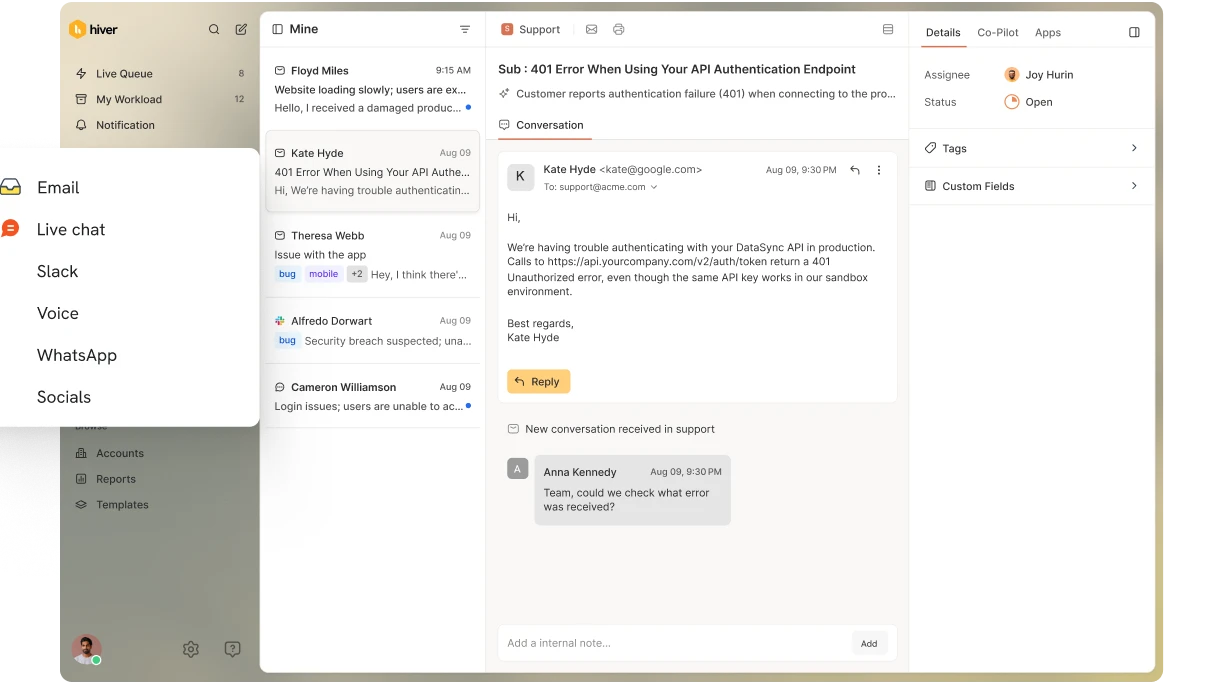
💡Pro tip: Tools like Hiver’s omnichannel helpdesk lets support teams convert each query into a trackable ticket, assign it to the right agents so that no ticket goes unresolved.

Customer Contacts feature on Hiver
Additionally, with features such as customer contacts, agents can access purchase history and past interactions across all touchpoints, ensuring customers never repeat themselves.
3. Implement AI-Powered Support
Running a 24/7 support team is expensive and complex. When you use AI to automate common customer needs or queries, and analyze conversations for insights, you make your support operation faster, and efficient.
But the basics remain. While AI handles repeated tasks, your support team can focus on complex queries. It’s also what Chloe Shill, Director of Operations at Flight CX emphasizes on our AI CX Trends report,
“AI will handle routine queries through automation, allowing for faster responses and efficiency, but human agents will be needed to step in for more complex issues requiring empathy, critical thinking, and personalized problem-solving”.
How retailers are using AI support:
✅ Predictive support: For proactive customer service where potential issues are spotted and solved before customers reach out.
✅ Data-driven insights: Analyze customer feedback to identify trending issues.
✅ Enhanced agent performance: Help support teams work faster with AI-powered summaries and response suggestions.
💡 Did you know?
Hiver’s AI features are built to save time and radically improve support responses. Here’s a quick look at what’s under the hood:

AI CoPilot – Suggests accurate, context-aware replies by scanning your knowledge base and connected tools.
AI Summarizer – Cuts through long email threads and gives agents the TL;DR in seconds.
AI Compose – Refines tone, grammar, and clarity to help agents write faster and sound on-brand.
Harvey (AI Bot) – Closes non-actionable emails like “Thanks!” to keep inboxes clean.
➡️ The result? Less searching, faster responses, and fewer repetitive tasks.
Recommended reading
4. Create Engaging Content
Great content builds relationships, not just sales. When customers find value in your content, they’re more likely to engage with your brand and make purchases. Over time, this connection turns casual browsers into loyal shoppers.
How to create content that connects:
✅ Focus on value: Share useful tips, inspiration, and entertainment instead of constant sales pitches.
✅ Mix up formats: Use blogs, videos, and customer content to keep things fresh across platforms.
✅ Plan with purpose: Map content to align with seasons, campaigns, and customer interests.
🌟Real-world example: Sephora’s Beauty Insider Community is a prime example of content-driven engagement. They blend makeup tutorials, customer discussions, and beauty challenges to create a space where shoppers actually want to spend time.

Instead of pushing products, they’ve built a community where customers learn, share, and connect naturally.
5. Host Virtual Events
Physical events limit attendance. Virtual events bring your brand experience directly to customers’ homes, letting you connect with shoppers worldwide while creating memorable experiences that drive long-term loyalty.
How to make virtual events count:
✅ Interactive product launches: Show new items with live demos and real-time Q&A sessions.
✅ Expert sessions: Host tutorials, workshops, or classes with industry experts.
✅ Live shopping events: Use platforms like Instagram and TikTok where customers can make a purchase right after.
🌟Real-world example: Samsung’s Galaxy Unpacked event showed how to make virtual launches exciting.

They featured cinematic product reveals, 360-degree product views, and live Q&A sessions with product designers. By streaming across multiple platforms, they reach millions globally while turning tech specs into must-have features.
Recommended reading
6. Use Social Media Interaction
Social media is a place where customers explore products, ask questions, and share their opinions. When brands join the conversation and respond consistently, it helps build trust and creates a stronger connection with the community.
How to make social media work for your brand:
✅ Showcase real customers: Create hashtags and feature customer photos to build authentic connections.
✅ Respond quickly: Act fast on comments and DMs to keep conversations going.
✅ Go beyond promotions: Share how-to videos, behind-the-scenes content, and user generated content.
🌟Real-world example: GoPro’s social strategy brings products to life through customer content.

Their GoPro Awards program encourages users to submit adventure photos and videos for cash prizes and featuring opportunities. This turns customers into content creators and every post into social proof.
7. Offer Live Chat Support
That moment when a customer is deciding whether to buy something? That’s when quick, human help matters most. Live chat connects shoppers with real support right when they’re most likely to need it.
How to make live chat more effective:
✅ Strategic placement: Embed chat widgets on product pages, checkout pages, and FAQs where customers often need help.
✅ Smart automation: Use chatbots for common questions like order tracking or return policies.
✅ Smooth escalation: When chatbots can’t resolve issues, customers should transfer to human agents seamlessly.
💡 Pro tip: Hiver’s live chat integrates with your support workflow, giving agents full context from previous interactions so customers never have to repeat themselves.

Hiver’s live chat feature for support agents
8. Implement Loyalty Programs
A good loyalty program does more than reward purchases; it encourages repeat visits and helps customers feel appreciated. Over time, these small rewards can turn occasional shoppers into return customers.
How to build effective loyalty programs:
✅ Use tiered rewards: Encourage spending with exclusive perks at higher tiers.
✅ Personalize rewards: Offer discounts and deals based on past purchases.
✅ Encourage referrals: Reward customers for bringing friends.
🌟Real-world example: Starbucks Rewards makes loyalty feel natural. Members earn Stars on every purchase and redeem them for anything from extra shots to free drinks.

Small touches like birthday rewards, mobile ordering, and double-star days make customers feel valued while making their daily routine more convenient.
9. Simplify Return Processes
Complicated returns can push customers away, even if they love the product. A simple, no-hassle return policy builds confidence and removes friction from the buying decision. When the process feels easy, customers are more likely to try new items and shop again.
How to make returns easy:
✅ Multiple return options: Allow returns in-store, by mail, or via drop-off locations.
✅ Transparent processes: Clearly outline return policies on product pages and checkout screens.
✅ Prepaid convenience: Offer one-click return processing and printable shipping labels.
✅ Quick refunds: Fast refund processing encourages repeat purchases.
🌟Real-world example: Nordstrom takes stress out of returns by trusting customers.

They allow returns without receipts if purchases are in their system, offer curbside returns for convenience, and process refunds quickly. This hassle-free approach shows they value relationships more than individual sales.
10. Champion Social Causes
Customers are drawn to brands that reflect their values and make a positive impact. Supporting meaningful causes shows that your brand cares about more than just sales. When this commitment feels genuine, it deepens trust and builds customer loyalty.
How to authentically support causes:
✅ Partner with charities: Donate portions of profits to causes that resonate with your audience.
✅ Commit to sustainability: Use eco-friendly materials, reduce waste, and highlight sustainability efforts.
✅ Support communities: Sponsor local events, fund scholarships, or create giving-back programs.
✅ Be genuine: Customers can spot “cause-washing.” Authenticity matters more than scale.
🌟Real-world example: TOMS Shoes set the standard with their One for One model.

For every pair sold, they donate a pair to someone in need. Over time, they’ve expanded to support mental health and education programs, showing authentic commitment beyond marketing.
Recommended reading
11. Gather Customer Feedback Regularly
Great engagement involves talking to customers and listening to them. Customer feedback provides insights into what matters most to your audience. Brands that listen and act create better experiences and build lasting loyalty.
How to make feedback actionable:
✅ Use targeted surveys: Embed short surveys on your website, in emails, or after purchases to capture insights.
✅ Conduct usability tests: Gather real-time feedback by observing customer interactions with products or websites
✅ Follow up on feedback: Show customers their opinions matter by making changes and acknowledging input
💡Pro tip: Tools like Hiver’s CSAT surveys let you gather feedback seamlessly and track satisfaction trends over time.

Hiver’s CSAT survey for gathering customer feedback
12. Train Staff for Exceptional Service
Even the best products and marketing can’t compensate for poor customer service. When your staff feels confident and well-prepared, they’re more likely to handle questions, solve problems, and leave a lasting impression.
Additionally, have an emphasis on soft skills. It’s also what Kel Kuregi, Director of Developer Support at Zapier mentions in Hiver’s Experience Matters Podcast
“Train your teams on soft skills—because when things go really wrong, a chatbot won’t give you the empathy you need”.
How to ensure exceptional service:
✅ Focus on communication skills: Train employees to listen actively and respond empathetically. Teach them to handle difficult situations and de-escalate complaints.
✅ Equip teams with product knowledge: Knowledgeable staff provide accurate, helpful recommendations.
✅ Empower decision-making: Give frontline staff authority to resolve common issues without escalation.
Recommended reading
13. Monitor Engagement Metrics Closely
You can’t improve what you don’t measure. Tracking key engagement metrics helps you understand what works and where to improve. Use this data to proactively enhance customer experiences rather than just reacting to problems.
Critical engagement metrics to track:
✅ Net Promoter Score (NPS): Measures customer loyalty and likelihood to recommend your brand.
✅ Customer Satisfaction Score (CSAT): Captures how happy customers are with a specific interaction or purchase.
✅ Conversion rates: Tracks how many visitors take action—purchasing, signing up, or engaging with content.
✅ Customer retention rate: Shows how many customers return after their first purchase.
✅ Average resolution time: Shows how quickly issues are resolved, impacting satisfaction and loyalty.
💡Pro tip: Hiver’s reporting and analytics provide real-time insights into customer satisfaction, resolution times, and team performance, helping you spot trends and optimize engagement strategies.

Hiver’s analytics and reporting dashboard
Recommended reading
Shifting to an Engagement-First Approach in Retail
Competing on product and price alone is no longer enough. Customers have more choices than ever, and they tend to stick with brands that make them feel valued and understood.
The most successful retailers focus on creating experiences that keep people coming back. They personalize every interaction, make shopping smooth across all channels, and build real relationships with their audience.
The tools to support this kind of experience—like AI-powered support and loyalty programs—are more accessible than ever. But having the tools is only part of the equation.
What matters most is how you use them to solve real customer problems and create experiences that leave a lasting impression.
If you’re ready to strengthen your customer engagement strategy, Hiver can help. With seamless omnichannel support and smart automation, Hiver makes it easier to deliver the kind of service that earns loyalty and keeps customers coming back.
Ready to see how Hiver fits into your workflow? Start a free trial today.
Frequently Asked Questions
1. What is retail customer engagement?
Retail customer engagement is the process of building meaningful relationships with customers through personalized, value-driven interactions across all touchpoints—in-store, online, social media, and customer support channels.
2. Why is customer engagement important for retail businesses?
Engaged customers have higher retention rates, spend more than new customers, and are more likely to recommend your brand. Strong engagement also reduces customer acquisition costs and increases lifetime value.
3. How can small retailers compete with large chains on customer engagement?
Small retailers can leverage their agility and personal touch. Focus on personalized service, local community connections, and authentic relationships. Use affordable tools like AI chatbots, social media engagement, and loyalty programs to scale your efforts.
4. What’s the difference between customer service and customer engagement?
Customer service typically involves reactive support—helping when problems arise. Customer engagement is proactive and ongoing—building relationships through personalized experiences, content, and interactions that create emotional connections beyond transactions.
5. How do you measure retail customer engagement success?
Track metrics like Net Promoter Score (NPS), customer retention rate, conversion rates, average order value, social media engagement, and customer lifetime value. Monitor both quantitative data and qualitative feedback to get a complete picture.
Start using Hiver today
- Collaborate with ease
- Manage high email volume
- Leverage AI for stellar service