






Healthcare today is defined by how easily patients can access care, get answers, and feel supported throughout their journey. From the ease of booking an appointment to the clarity of post-treatment instructions, every touchpoint shapes the patient’s perception of care quality.
Healthcare organizations that prioritize customer experience are seeing the impact go far beyond patient satisfaction.
In this article, we’ll break down what customer experience in healthcare really means and share nine practical strategies to:
- Simplify patient interactions
- Improve communication and transparency
- Build trust through personalization
- Leverage technology for faster, more human care
Let’s look at how healthcare providers can turn every patient touchpoint into a lasting impression.
What is Customer Experience in Healthcare?
Customer experience (CX) in healthcare refers to the sum of every interaction a patient has with a healthcare organization across their entire journey – before, during, and after receiving care. It’s not limited to clinical outcomes; it encompasses how easy, transparent, and emotionally supportive each touchpoint feels.
A strong healthcare CX focuses on understanding the patient as a customer – someone who expects clarity, comfort, and convenience while navigating an often complex system. This includes experiences such as:
- How quickly patients can schedule appointments or reach a representative
- How clearly medical staff communicate diagnoses and next steps
- How accessible billing information, medical records, and digital portals are
- How empathetically teams handle questions, complaints, or emergencies
When done right, CX transforms healthcare from a transactional service into a relationship built on understanding, empathy, and lasting loyalty.
Recommended reading
The Growing Importance of Customer Experience in Healthcare
The importance of customer experience in healthcare cannot be overstated. Given how delicate the subject is – and how most people feel anxious or vulnerable when seeking care – understanding and improving the experience at all touchpoints is crucial to making patients feel supported, informed, and valued.
1. Patients Have More Choices Than Ever
Healthcare is no longer limited to a single clinic or hospital. With telemedicine, virtual consultations, and at-home diagnostics becoming mainstream, patients now have the freedom to choose providers based on experience, not just expertise.
If booking an appointment, getting information, or reaching staff feels complicated, they’re quick to switch to alternatives that feel easier and more personal. Convenience, empathy, and speed have become deciding factors.
2. Experience Directly Impacts Health Outcomes
Customer experience has a measurable impact on patient health. When people feel listened to and confident in their providers, they’re more likely to follow treatment plans, take medication consistently, and attend follow-up appointments.
Conversely, unclear communication or long response times can lead to confusion, anxiety, and even treatment noncompliance because patients start to lose trust in the care process or feel uncertain about what to do next. When guidance feels distant or impersonal, engagement drops – and that directly affects outcomes.
3. Good Customer Experience Builds Loyalty
Trust is the foundation of every patient-provider relationship. Poor communication, billing errors, or inconsistent updates can quickly damage it. But when patients consistently receive clear information, empathy, and transparency, they develop long-term confidence in the provider. This trust translates into loyalty, positive word-of-mouth, and stronger community reputation – all essential in an era of online reviews and patient advocacy.
💡According to a study, 80% of people are likely to recommend an organization to a friend if their communications exceed expectations, showing that good communication is an essential part of customer experience.
4. It Drives Efficiency and Staff Well-Being
An often-overlooked benefit of a seamless healthcare system is that it enhances the experience for both patients and staff. When workflows are organized and digital systems reduce repetitive tasks, care teams can focus more on patients and less on paperwork. This balance leads to faster service, fewer administrative errors, and better staff morale – ultimately creating a healthier, more efficient environment.
5. It’s a Regulatory Imperative
In 2025, customer experience is a differentiator, yes, but it’s also a requirement. Regulatory bodies like the Centers for Medicare & Medicaid Services (CMS) in the US and the National Health Service (NHS) in the UK are increasingly including patient experience metrics in their quality and reimbursement frameworks. These measures evaluate how well healthcare organizations communicate, coordinate care, and respond to patient needs – not just the clinical outcomes they deliver.
At the same time, digital-first competitors are raising the bar on convenience and accessibility, offering instant appointments, transparent billing, and proactive updates. Healthcare organizations that don’t prioritize CX risk falling behind – not only in patient satisfaction, but in overall care outcomes, compliance scores, and brand credibility.
9 Strategies to Improve Customer Experience in Healthcare
Delivering an exceptional healthcare experience requires a balance of empathy, efficiency, and technology. The following 9 strategies can help healthcare organizations strengthen patient relationships, streamline operations, and make every interaction more meaningful.
1. Reduce Wait Times with Automation and Self-Service Kiosks
Few things frustrate patients more than long waiting periods. Automating routine tasks like appointment scheduling, check-ins, and billing through self-service kiosks or mobile portals can dramatically reduce wait times. This not only improves patient satisfaction but also frees staff to focus on more complex or high-touch needs.
2. Improve Digital Communication Channels
Patients expect timely and secure communication. Using HIPAA-compliant chat, email, or text platforms allows care teams to share updates, reminders, and results quickly – without compromising privacy. A smooth digital communication process helps patients feel connected and cared for, even outside clinical visits.
3. Use AI Chatbots for Scheduling, FAQs, and Triage Support
AI chatbots can handle repetitive tasks such as booking appointments, answering common questions, or directing patients to the right department. This helps reduce administrative workload, provides 24/7 availability, and ensures patients get quick, accurate responses when they need them most.
4. Establish Omnichannel Systems to Unify Communication
Patients interact through multiple touchpoints – calls, emails, websites, apps, and even social channels. An omnichannel system unifies all these interactions, giving staff a complete view of each patient’s history. This ensures context continuity and prevents patients from having to repeat information across departments.
5. Train Staff in Empathy and Cultural Competence
Human connection remains at the heart of healthcare. Regular training on empathy, active listening, and cultural sensitivity helps staff respond more thoughtfully to patients from diverse backgrounds. For practices evaluating how to structure their support teams, understanding the differences between a clinical assistant vs medical assistant can help determine which role is best suited for patient-facing responsibilities versus administrative tasks. Simple gestures – like explaining medical jargon clearly or acknowledging concerns — can go a long way in improving comfort and trust.
Recommended reading
A Complete Guide to Customer Service Training for Employees in 2025
6. Personalize Patient Communication Using Data
Personalization builds stronger relationships. Leveraging patient data such as past appointments, treatment plans, and preferences allows providers to send relevant reminders, follow-up care instructions, or wellness tips tailored to each individual. It shows patients that their care is truly personalized, not generic.
Recommended reading
How to Deliver Personalized Customer Service: 9 Strategies That Work
7. Enhance Transparency in Procedures and Pricing
Transparency reduces anxiety and builds trust. Patients appreciate knowing what to expect — from procedure details to billing breakdowns. Clearly communicating costs, timelines, and outcomes fosters confidence and prevents misunderstandings later in the care journey.
8. Implement Feedback-Driven Improvement Loops
Collecting feedback through post-visit surveys or digital reviews helps providers understand where gaps exist. Acting on this feedback is key – analyzing patterns and implementing improvements shows patients their opinions truly matter, reinforcing trust and engagement.
9. Optimize Facilities for Accessibility and Comfort
Physical and digital environments both shape perception. Comfortable waiting areas, clear signage, wheelchair accessibility, and intuitive website navigation can all make a huge difference. The goal is to make every interaction – whether in-person or online – as effortless and inclusive as possible.
Using Technology Solutions to Power Better Customer Experiences in Healthcare
Modern healthcare depends on strong connections between patients, providers, and care teams – and technology is what makes those connections seamless. From AI chatbots and automated reminders to unified communication tools, the right systems can transform how organizations deliver care and build trust.
But in many hospitals, technology still works in silos. Scheduling apps, EHRs, chat tools, and email systems often don’t talk to each other, leading to delays, missed updates, and inconsistent experiences. To truly improve CX, healthcare providers need integrated solutions that bring all communication and collaboration into one place.
One such tool is Hiver – a modern, AI-powered ticketing solution designed for modern businesses and customers. Hiver brings all your customer conversations into a single, intuitive platform, while offering the power of a full-fledged enterprise help desk software.
Let’s break down how Hiver can help healthcare companies deliver stellar customer experiences consistently.
1. Manage Patient Conversations Seamlessly Across Channels
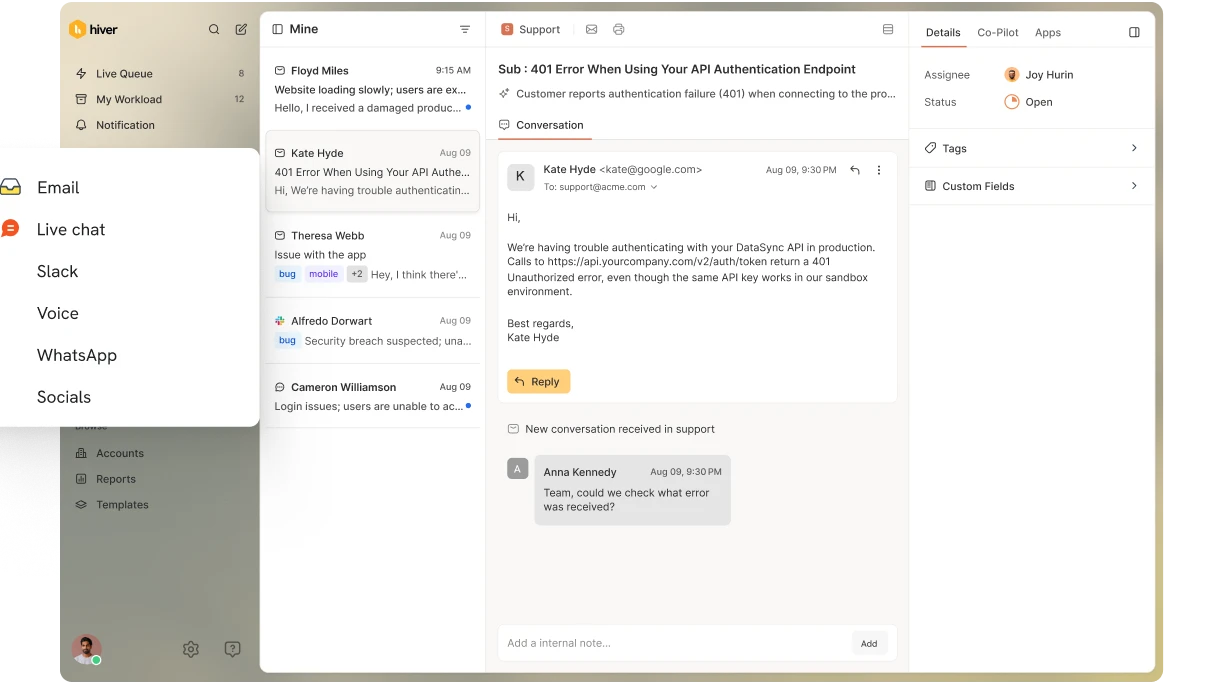
Hiver’s omnichannel system lets healthcare teams manage all patient interactions – email, live chat, WhatsApp, voice, SMS, and social channels – from a single, unified interface. No more switching between multiple systems or losing track of messages between departments.
Each conversation comes with its own status (open, pending, or closed), a full response history, and internal notes, so it’s easy to track ownership and ensure every patient gets timely updates.
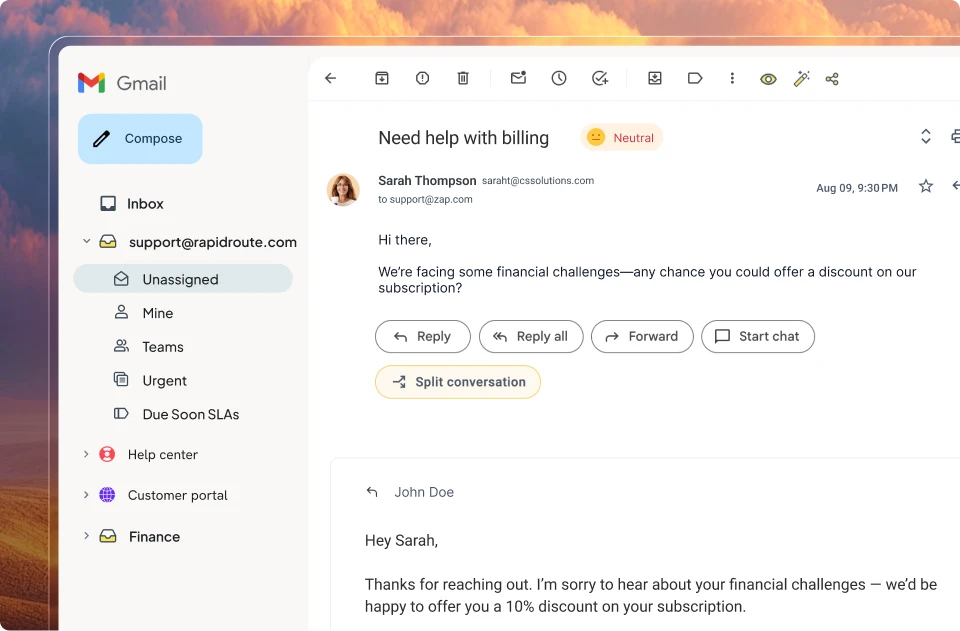
For example, a patient who books an appointment via chat and later emails their reports can have both interactions automatically linked to the same case. That gives doctors, nurses, and administrative staff full visibility into the patient’s communication history, helping them respond faster and more consistently across every channel.

2. Collaborate Across Departments Without Losing Context
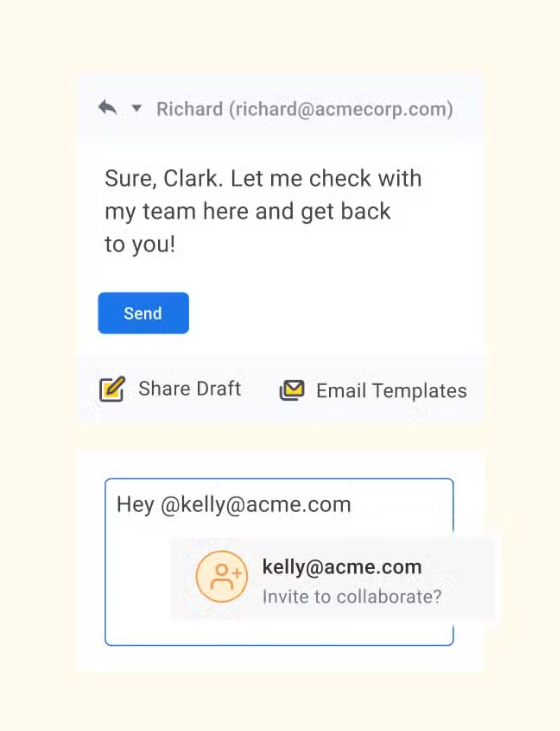
Healthcare queries often involve multiple teams – reception, nursing, doctors, billing, and pharmacy – and coordination can easily break down. Hiver makes it easy for all departments to collaborate directly within the patient conversation itself.
- @mentions and Notes: Tag colleagues to clarify medical details, verify reports, or confirm billing updates – without switching tools.
Example: A front-desk agent can tag the billing team: “Patient #1024 wants to confirm insurance coverage for tomorrow’s MRI. Can you verify?” The reply stays within the same conversation, so nothing gets lost. - Shared drafts: Doctors and nurses can co-edit responses for sensitive cases or post-treatment instructions before sending them to the patient.
- Collision detection: Real-time alerts prevent multiple staff members from replying to the same patient, ensuring communication stays consistent.
- Collaborators: Even external consultants or lab partners can securely access relevant cases and contribute updates.
3. Prioritize and Track Every Patient Request Confidently
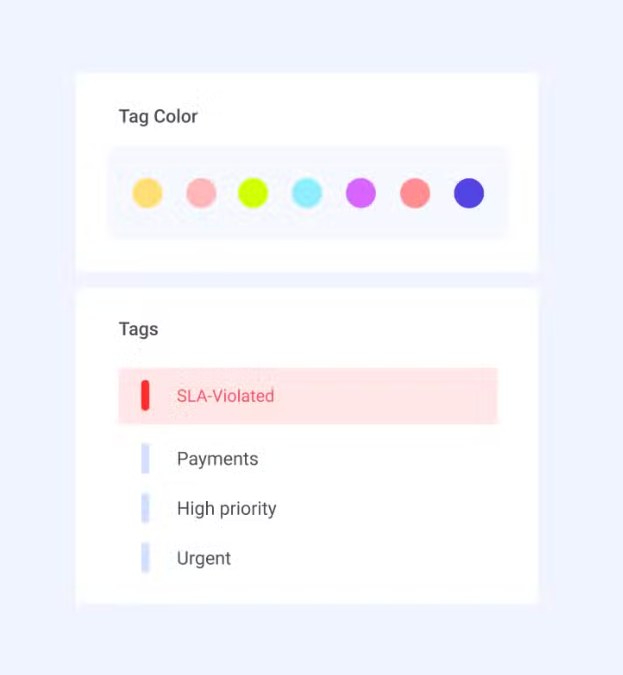
In healthcare, some queries simply can’t wait – like a medication clarification or a surgery follow-up. Hiver lets teams tag, categorize, and prioritize every request so nothing slips through the cracks.
You can create custom categories such as urgent lab reports, billing queries, appointment requests, or follow-ups pending doctor review. These help teams organize their workload and focus on what matters most.
Hiver also lets you define SLAs (Service Level Agreements) for response and resolution times. If a deadline is at risk, the system automatically notifies the right person – ensuring patients always receive timely care and communication.
4. Reduce Repetitive Queries With a Self-Service Knowledge Base
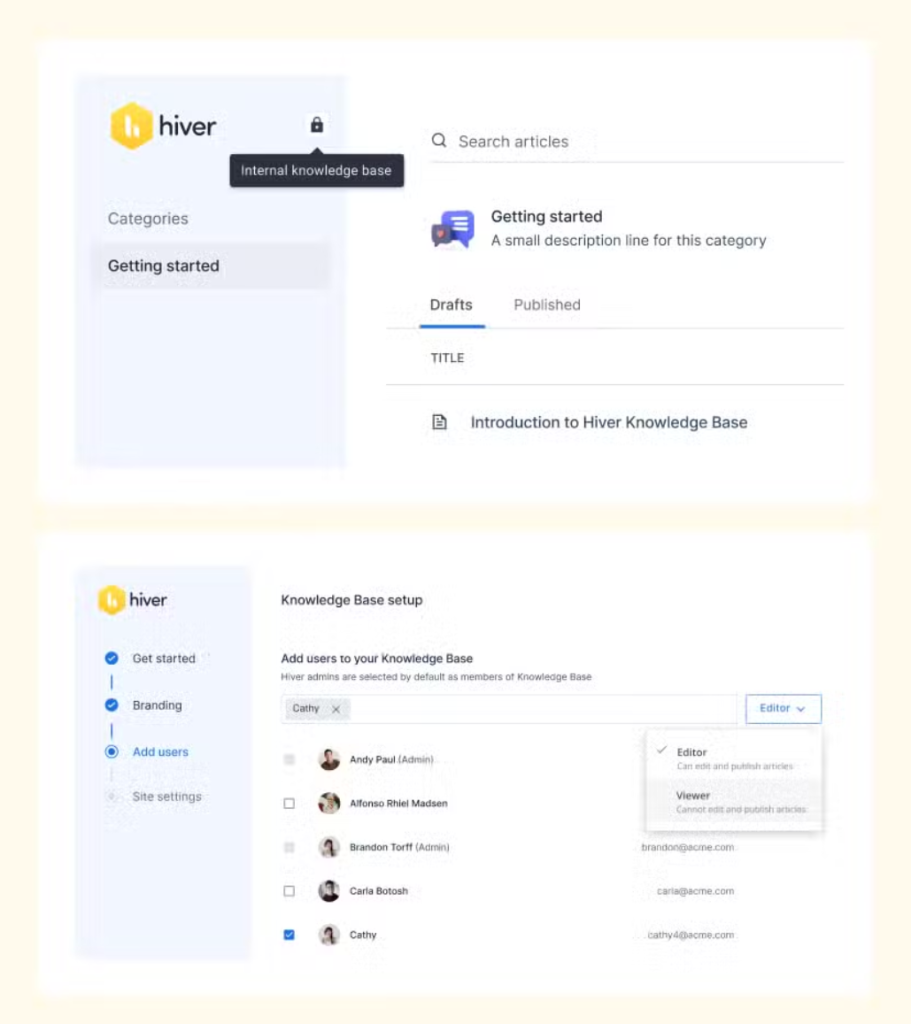
Many patient questions are repetitive – things like how to book appointments, prepare for tests, or understand billing. Hiver’s knowledge base allows you to build a self-service portal where patients can quickly find these answers themselves.
For internal teams, you can maintain a secure knowledge base for staff – with clinical protocols, discharge instructions, and administrative SOPs all in one place. This ensures consistent, accurate communication across departments and reduces dependency on manual clarification.
5. Improve Care Operations With Clear, Actionable Analytics
In healthcare, every second and every interaction can affect outcomes. That’s why having visibility into how your teams communicate and respond is so valuable. Hiver’s built-in analytics and reporting tools help healthcare administrators and department heads monitor service performance, patient engagement, and more.
You can track insights such as:
- Volume of patient inquiries by department (appointments, lab results, billing, discharge queries, etc.)
- Response and resolution times for critical messages like medication clarifications or urgent follow-ups
- Workload balance across doctors, nurses, and administrative staff to prevent burnout
- SLA compliance for time-sensitive communications – for instance, ensuring test results or discharge summaries are shared within defined windows
- Patient satisfaction and sentiment trends drawn from post-interaction feedback and conversation tone analysis.

These analytics give healthcare leaders a complete picture of where communication slows down or patients experience friction. For example, if response times for lab results consistently lag behind targets, teams can take corrective action immediately.
6. Streamline Patient Communication With AI Built Into Every Step
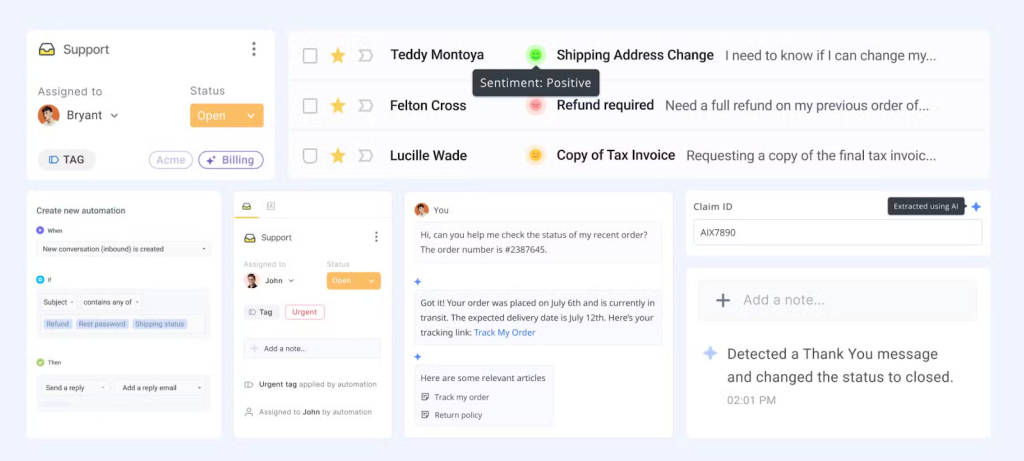
Hiver’s AI capabilities are embedded across the entire support process – from triaging messages to assisting staff and analyzing service quality.
- AI Agents: Automatically identify and tag patient messages by intent – appointment requests, lab report queries, or insurance clarifications – and route them to the right team instantly.
- AI Copilot: Helps staff draft accurate, empathetic responses, summarize long email threads, or pull details from internal SOPs – all without switching tabs.
- AI Insights: Monitor communication quality, detect sentiment shifts, and flag recurring patient pain points. This helps administrators identify issues early and maintain a consistent standard of care.
Recommended reading
AI in Healthcare: Real Use Cases, Benefits, and Examples in 2025
Best Practices from Leading Healthcare Providers
Here’s what top-performing healthcare organizations are doing to deliver exceptional customer experiences:
- Promote a patient-first culture – Every decision – clinical or administrative – starts with the patient’s needs. Leading providers foster empathy at every level, ensuring staff focus not only on treatment but on comfort, clarity, and reassurance throughout the care journey.
- Encourage feedback and act quickly – The best organizations collect patient feedback continuously through surveys, post-visit messages, or digital forms – and, crucially, take visible action on it. Quick responses to complaints or suggestions build trust and show patients that their voices truly matter.
- Empower employees as CX ambassadors – Doctors, nurses, and support staff are the face of patient experience. Training them to identify service gaps, resolve issues independently, and share improvement ideas helps create a sense of ownership and accountability.
- Use real-time analytics to guide improvements – Data-driven providers don’t wait for quarterly reviews. They track trends like response time and patient sentiment to quickly fix gaps and keep operations running smoothly.
- Invest in technology and training – Even the best tools only work if people know how to use them effectively. Forward-thinking healthcare organizations pair tools like Hiver with continuous staff training to balance efficiency and empathy.
Recommended reading
The Future of Healthcare Lies in Investing in Customer Experience
The future of healthcare won’t be defined by technology alone, but by how seamlessly that technology enhances the human side of care. As the industry grows more digital, patients will continue to expect faster, clearer, and more personalized interactions – without losing the compassion that defines good medicine.
Healthcare providers that invest in customer experience today aren’t just improving satisfaction metrics; they’re building the foundation for more resilient, trusted, and patient-centered systems. By combining empathy, efficiency, and innovation, organizations can deliver care that feels both advanced and deeply personal – the kind of experience that keeps patients coming back, not just for treatment, but for trust.
If you want to check out Hiver:
Try the forever-free plan
Take a demo
Try out an interactive tour
Start using Hiver today
- Collaborate with ease
- Manage high email volume
- Leverage AI for stellar service