I tested AI chatbots with a pretty basic expectation, it should take work off someone’s plate.
What surprised me is how many of them didn’t. They collected details, asked a few questions, and then handed the ticket to an agent anyway. Even without deep support experience, it was obvious when a bot helped.
For example, resolving FAQs on its own, pulling the right help content, and collecting context before a human stepped in.
That’s the bar I’m using here. This guide focuses on AI support bots that are easy to launch, simple to maintain, and actually hold up once they’re live in real support workflows.
Table of Contents
- Best AI Chatbots for Customer Service: Our Top Picks
- How did I evaluate the tools
- The Best AI Chatbot for Customer Service (Ranked by User Reviews)
- Top AI Chatbot for Customer Service: In-Depth Reviews
- 2. Zendesk AI: Best for large support teams that can handle complex setup to drive automation at scale.
- 3. Intercom Fin: Best for teams that want “pay-per-resolved-conversation” economics.
- 4. Ada: Best for teams that need AI to run full support playbooks and multi-step resolution paths without human intervention.
- 5. Helpshift AI: Best for mobile-first support (apps, gaming) and high-volume deflection.
- 6. Tidio AI: Best for small teams that want an AI bot live quickly with minimal setup.
- 7. FreshChat AI: Best for teams managing support across chat and messaging apps.
- 8. Chatbase: Best for teams that want AI built on their own data (KB, docs, CRM) to deliver accurate, context-specific answers.
- 9. HelpCrunch: Best for small teams that want practical chat and follow-up automation that keeps conversations flowing without complex AI setup.
- 10. Botisfy: Best for teams that prefer rule-driven chat automation they control precisely, with minimal generative AI ambiguity.
- 11. SupportAI: Best for support teams that want AI to draft and assist replies inside real tickets by using context and past replies.
- 12. Gorgias AI: Best for ecommerce teams handling orders, refunds, and fulfillment actions.
- 13. HubSpot Chatbot: Best for teams that want chat conversations to update CRM records and pipelines automatically.
- 14. Forethought AI: Best for preparing high-volume tickets before agents touch them.
- 15. Chatfuel: Best for teams that want AI chat fully tied into CRM data and sales/support workflows, so conversations directly drive pipeline and records.
- 16. Zoho SalesIQ’s Zobot: Best for teams that want a hybrid rule and AI chatbot they can precisely configure and tie into CRM/visitor tracking.
- 17. Flow XO: Best for teams that need exact logic-driven flows executing defined steps across channels without reliance on generative AI.
- 18. Drift AI (Salesloft Conversational AI): Best for B2B revenue teams that want AI to qualify leads, detect buying intent, and book meetings proactively.
- Step 1: Start with your team size and daily volume
- Step 2: Decide what the bot should handle on its own
- Step 3: Match bot complexity to setup effort you can sustain
- Step 4: Evaluate escalation based on how fast agents can act
- Step 5: Pressure-test pricing against growth, not today
- Match Your Situation to the Right Type of AI Chatbot
Best AI Chatbots for Customer Service: Our Top Picks
When choosing an AI chatbot, focus on where your support conversations start and how much work the bot should handle before an agent takes over.
Some teams use chat mainly for quick website questions. Others need bots that connect deeply with a helpdesk, CRM, or ecommerce system. The tools below are selected for the specific support scenarios they handle best.
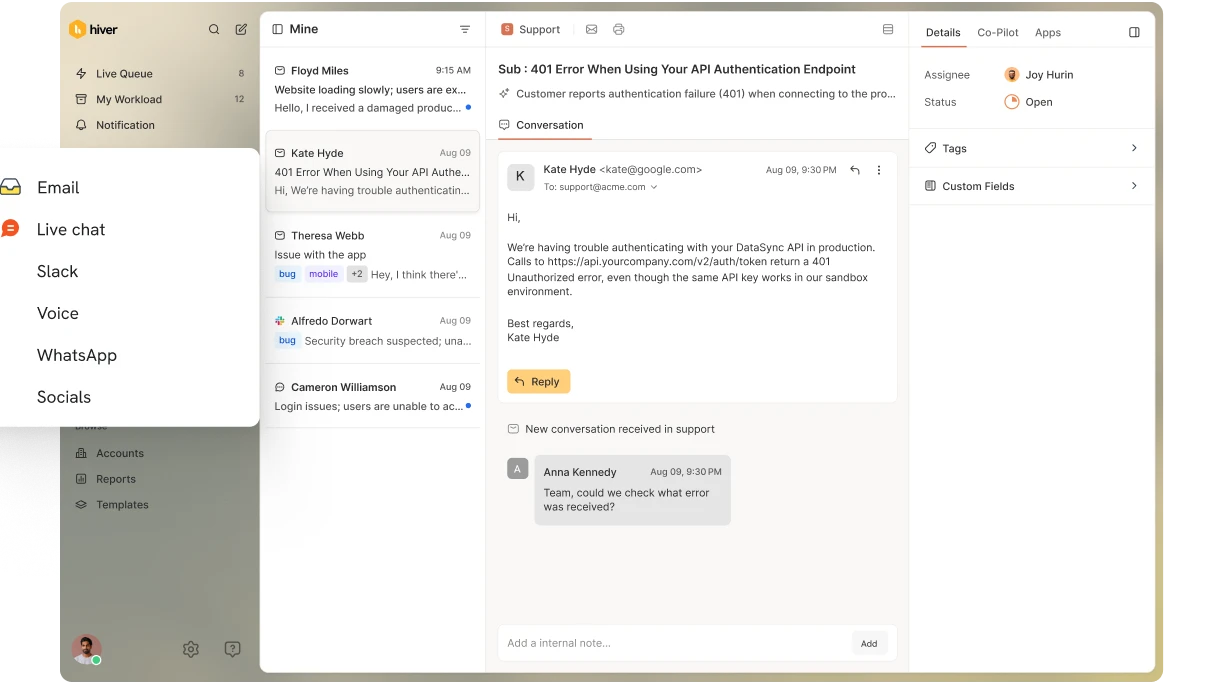
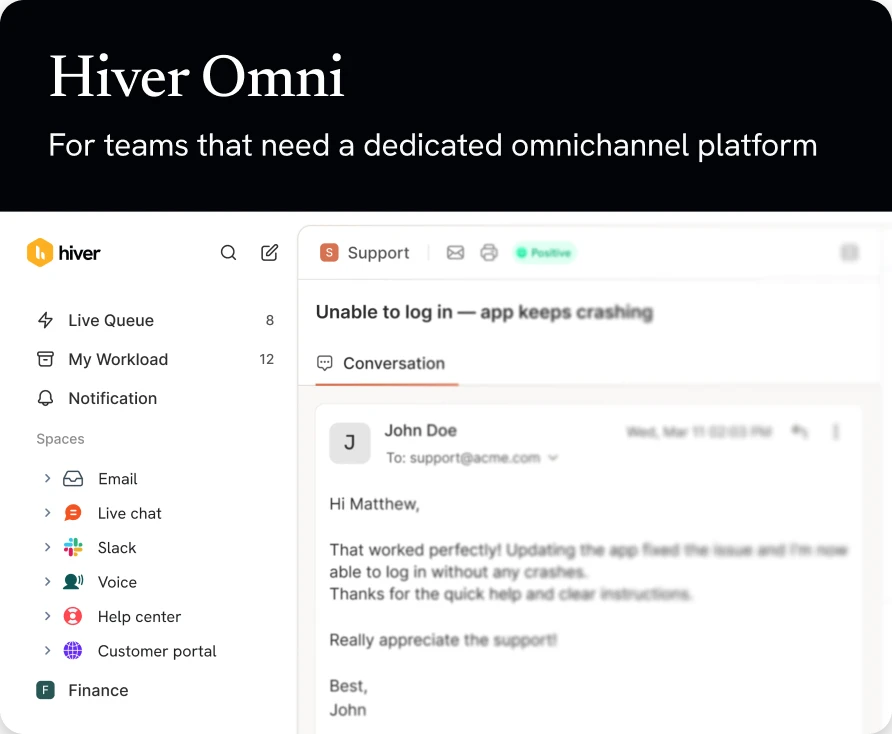
- Hiver: Best for teams that want AI-driven ticket deflection with clean human handoff in an intuitive workspace.
- Zendesk AI: Best for large support teams that can handle complex setup to drive automation at scale.
- Intercom Fin: Best for teams that want “pay-per-resolved-conversation” economics.
- HubSpot Chatbot: Best for teams that want AI chat fully tied into CRM data and sales/support workflows, so conversations directly drive pipeline and records.
- Zoho SalesIQ Zobot: Best for teams that want a hybrid rule and AI chatbot they can precisely configure and tie into CRM/visitor tracking.
- Helpshift AI: Best for mobile-first support (apps, gaming) and high-volume deflection.
- Tidio AI: Best for small teams that want an AI bot live quickly with minimal setup.
- Freshchat AI: Best for teams managing support across chat and messaging apps.
- Gorgias AI: Best for ecommerce teams whose support revolves around order, refund, and fulfillment actions rather than open-ended chat replies.
- HelpCrunch: Best for small teams that want practical chat and follow-up automation that keeps conversations flowing without complex AI setup.
The right choice depends less on AI hype and more on how much work you want the bot to take off your plate. If one of these feels close, the comparison table below will help you sanity-check it before going deeper.
How did I evaluate the tools
When I evaluate a tool, I try to understand how it behaves once people depend on it.
I read user reviews to see what comes up repeatedly. This was not isolated complaints, but the same problems or benefits mentioned across different teams. I pay close attention to comments about setup, day-to-day reliability, and what starts to feel annoying after a few weeks.
I also look for signs of ongoing work. If users talk about constant fixes, retraining, or manual cleanup, that matters more than feature depth. I compare that feedback with hands-on testing. When both point in the same direction, the decision is usually clear.
The Best AI Chatbot for Customer Service (Ranked by User Reviews)
This table helps you look past feature lists and see how each bot works in day-to-day support. Focus on how easy it is to set up, where it fits best, and what it can confidently handle without human help.
| Platform | Business size | Core perception (reviews & social) | Key use case | AI capabilities | Integrations | Setup complexity | Pricing |
|---|---|---|---|---|---|---|---|
| Hiver | Mid-market | Easy to adopt, low operational overhead | Deflect repeat queries, escalate with context | Intent detection, KB-based answers, agent assist | Email, chat, helpdesk tools | Easy | Free plan. Paid plans start at $25 |
| Zendesk AI | Enterprise | Powerful, but admin-heavy | Large-scale ticket deflection | AI replies, intent detection, workflow automation | Zendesk ecosystem + marketplace | Complex | Add-on pricing. Pricing plans start at $19 |
| Intercom Fin | Mid-market | Strong answer quality; costs scale with usage | Resolve common queries end-to-end | KB-grounded answers, NLU, smart handoff | Intercom platform | Moderate | Starting price: 0.99/user per resolution |
| Ada | Enterprise | Highly capable; requires ongoing tuning | Structured automation across regions | Intent recognition, multilingual AI, guided flows | CRM + helpdesk integrations | Complex | Custom pricing |
| Helpshift AI | Enterprise | Strong for mobile support | In-app deflection and classification | Intent detection, issue classification, automation | Mobile SDKs + support tools | Complex | Starting at $150 /month |
| Tidio AI | Small business | Quick to launch; limited depth for complex flows | FAQ deflection + instant first replies | KB-based answers, intent detection | Website chat + ecommerce tools | Easy | Lyro AI agent starts $32.50/ month from 50 AI conversations |
| Freshchat AI | Mid-market | Solid for omnichannel chat; AI varies by plan | Automate first responses in chat | Intent detection, AI replies, workflows | WhatsApp + messaging + Freshworks | Moderate | Paid plans start at ~$19/agent/month |
| Chatbase | Small business | Works well with clean docs; can drift if docs are messy | Turn help docs into instant answers | Doc training, LLM responses | Website embed, API | Easy | Has a free plan. Paid plans start $32per month, billed annually |
| HelpCrunch | Small business | Practical and straightforward | Capture context + route chats | Flow builder, basic automation | Live chat + email | Easy | Paid plans start as $12/month for 1 team member |
| Botsify | Small business | Good for basics, limited AI learning | FAQ replies across languages | Multilingual, flow-based automation | Website + messaging channels | Easy | Paid plans start at $49/month |
| SupportAI | Mid-market | Effective when knowledge base is clean | Answer repetitive helpdesk questions | KB learning, intent detection | Helpdesk tools | Moderate | Has a free plan. Paid plans start at $29/month |
| HubSpot Chatbot | Small business | Useful inside HubSpot; limited standalone AI | Basic automated replies + CRM context | Rule-based automation, CRM context | HubSpot CRM | Easy | Offered part of a bundle |
| Drift | Mid-market | Strong for sales; limited pure support depth | Qualify + route chats before support handoff | Conversational AI, routing | CRM, calendars | Moderate | Custom pricing |
| Chatfuel | Small business | Marketing-focused, less support depth | Automated replies on social channels | Rule-based flows, triggers | Meta platforms | Easy | Paid pricing start at $11.99 |
| Zoho SalesIQ Zobot | Small business | Affordable; limited AI depth | Website chat and simple support flows | Rule-based + basic AI | Zoho suite | Moderate | Paid plans start at $7/agent/month |
| Gorgias AI | Mid-market | Very popular with ecommerce teams | Shipping, returns, order status replies | Intent detection, auto-replies from order data | Shopify, ecommerce tools, email, chat | Moderate | Pricing based on ticket volume. Starting pricing is $10/month |
| Flow XO | Small business | Flexible but not deeply AI-driven | Keyword-based FAQ automation | Workflow logic, triggers, basic NLP | Chat platforms, APIs | Moderate | Starting price is $25/month |
Once you know which trade-offs you’re comfortable with, the right choice becomes obvious.
Top AI Chatbot for Customer Service: In-Depth Reviews
This section reflects how these chatbots actually show up in day-to-day support work.
In each review, I focus on what the tool is really built to do, where it helps once it’s live, and where teams usually start feeling friction. The goal is to make it easier to picture how a chatbot would fit into your support flow before you commit to it.
1. Hiver: Best for teams that want AI-driven ticket deflection with clean human handoff in an intuitive workspace.
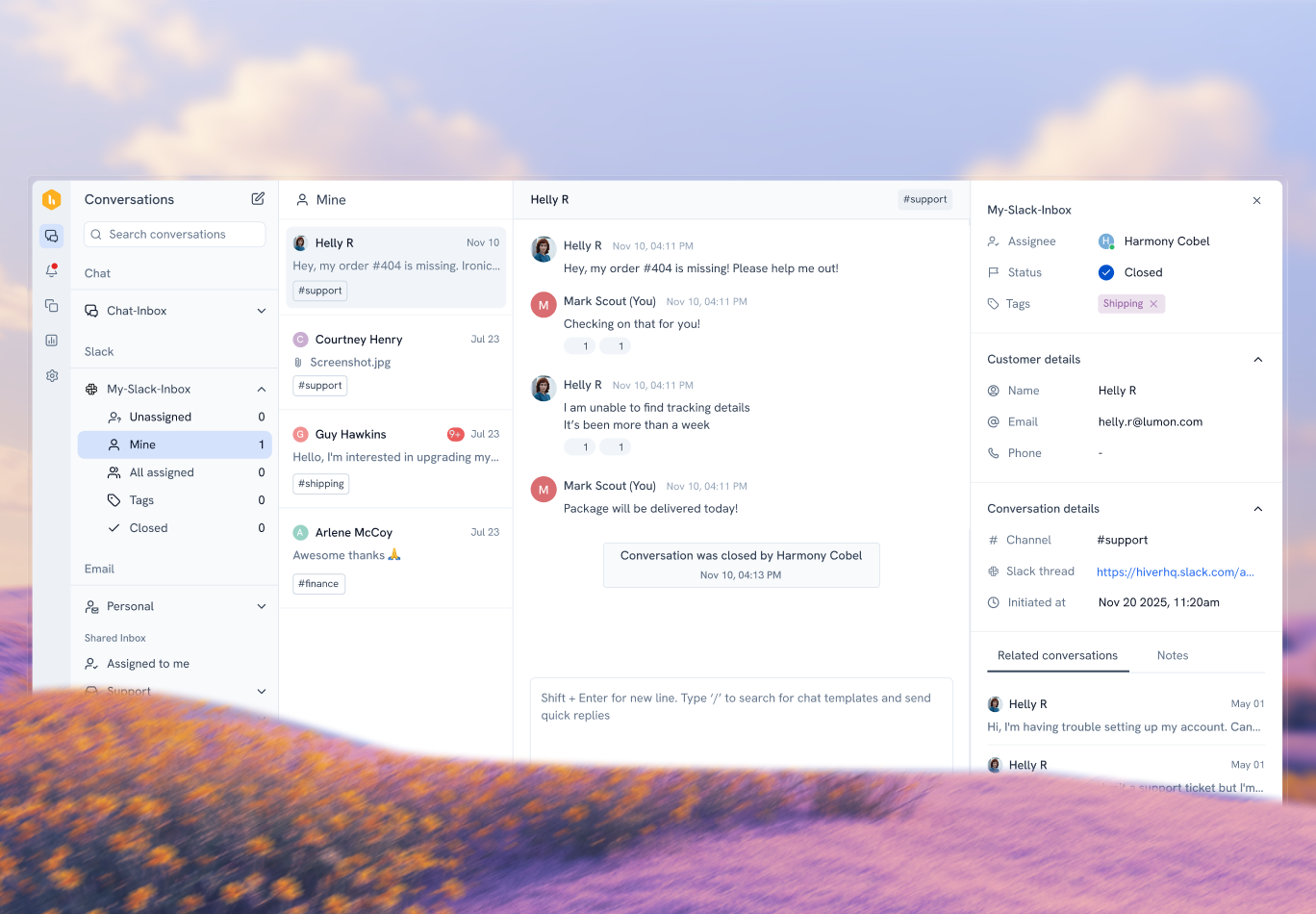
When I tested Hiver’s chat flow, the first thing I noticed was that agents didn’t have to do the query sorting.
The chatbot asks the basic questions first, things like the topic, order ID, or what the customer needs. Hiver then uses those answers to tag the conversation and route it to the right team or person. So when an agent opens the chat, they already know what they’re looking at and what to do next.
This becomes more important as chat volume grows. You cut out the back-and-forth at the start of every conversation. Agents can reply right away with the solution instead of figuring it out the query.
I’d pick Hiver if my team wastes time deciding where chats should go, or what info they need before they can help. It fixes that part first.

Hiver’s top features that stand out:
- The bot asked the questions that the agents usually ask first: In testing, agents skipped the first 1–2 clarification messages because issue type and urgency were already captured. On high-volume days, that shaved ~30–60 seconds per chat.
- Chats landed in the right queue automatically: Instead of opening a chat and reassigning it, conversations arrived already tagged and owned. That removed at least one manual action per chat, which adds up fast once you’re handling anywhere between 50–100 chats a day.
- Reply suggestions reduced typing on repeat questions: For common queries, suggested replies cut response drafting time by roughly half. Agents still reviewed and edited, but replies went out faster during peak hours.
- Escalation didn’t reset the conversation: When a human stepped in, tags, ownership, and history stayed intact. Agents could act immediately instead of spending another 1–2 messages reorienting the conversation.
- CSAT feedback surfaced immediately after chats: Post-chat CSAT appeared alongside the conversation, making it easy to spot patterns after a few dozen chats, without exporting reports or digging into dashboards.
What are some pros of Hiver chatbot
- The bot fits into existing workflows instead of forcing a new one.
- Easy to roll out for FAQs without weeks of bot training.
“Hiver has been a reliable tool that enhanced our workflows and team collaboration.” – MS Marketa S.
“The email queues we’ve created have been easy to set up, and they are very intuitive. Over time we’ve implemented more of the functionality of Hiver, which has been easy to learn and roll out.” – David S.
What got annoying about Hiver chatbot
- You won’t get value if your workflows and tags are poorly defined.
“Sometimes find the tagging doesn’t always work in terms of getting allocated to a person” – Krista D.
These reviews have been sourced from G2 and Capterra.
Who this is for
- Teams handling a high volume of repeat questions.
- Teams that want AI help without redesigning their support workflow.
Who this is NOT for
- Teams that want highly scripted, branching chatbot logic.
- Use cases that require complex decision trees.
- Teams without any existing FAQs or help articles.
2. Zendesk AI: Best for large support teams that can handle complex setup to drive automation at scale.
Zendesk AI works best when you already run everything through Zendesk and want fewer tickets hitting agents.
When I looked at how Answer Bot behaves, it surfaced help-center articles directly inside email, chat, and web widgets and resolved simple questions without creating a ticket at all.
The AI only performs as well as your knowledge base, and getting deflection right requires ongoing tuning. If your help content is messy or outdated, the bot shows it immediately.
I would use it when the goal is clear, for example, reduce ticket volume inside an already complex support operation.

What actually stood out on Zendesk AI
- Automatically suggests relevant help articles before a ticket is created: In setups I examined, Answer Bot pulled up to 3 articles within seconds of a user’s query, and in one case this resolved about ~10% of incoming tickets before they hit agents.
- Integrated across channels like email, web forms, chat, and messaging: Whether a customer asked via email or web widget, the bot suggested articles or answers before a ticket was logged. That consistency helped reduce duplicated responses.
- Escalates with full context when it can’t solve it: If none of the suggested articles help, Answer Bot hands the conversation over with the entire interaction history attached, so agents don’t have to re-ask basics.
- Customizable conversation flows with no code: Zendesk’s Flow Builder let teams map specific paths for common questions, personalize messaging, and deploy them quickly.
- 24/7 availability across languages and regions: Answer Bot stays online even when agents are offline and supports multiple languages, which means customers get suggestions any time without manual staffing.
Where Zendesk AI shines
- Extremely powerful once fully configured.
- AI can assist across the entire ticket lifecycle, not just first response.
- Works well for very high ticket volumes.
“It’s a robust and reliable platform that streamlined our customer support operations and improved response times.” – Matthew B.
“I also like the automation and triggers. Tickets can be routed, tagged, proportioned, and escalated automatically. This reduces manual work for the support team and keeps response times consistent.” – Sanket P.
What slows you down in Zendesk AI
- Setup is complex and time-consuming
- Small changes often require admin or ops involvement.
“While overall powerful, the initial setup and configuration can be a bit complex, especially when integrating multiple brands or departments” – Akshat Y.
“Some customization options, like dashboard reporting or UI changes, require more technical knowledge or developer support than expected” – Anil K.
These reviews have been sourced from G2 and Capterra.
Pricing
Zendesk AI is priced per agent, per month, there’s no standalone AI plan. The prices start at $19/agent/month and is billed annually. Advanced AI capabilities (like agent assist and higher automated resolutions) often require additional paid add-ons.
Who this is for
- Enterprise or large mid-market support teams.
- Teams with dedicated admins or ops support.
- Organizations already invested deeply in Zendesk workflows.
Who this is NOT for
- Small or lean teams.
- Teams looking for quick wins or fast rollout.
- Anyone without the time to maintain complex automation rules.
Recommended reading
3. Intercom Fin: Best for teams that want “pay-per-resolved-conversation” economics.
Intercom’s Fin is one of the few bots I’ve seen that actually takes conversations off the queue.
According to Intercom’s own benchmarks, Fin can handle 50%+ of customer questions on its own when trained on a solid knowledge base.
Fin only answers from approved content and hands off the moment confidence drops, which keeps replies accurate but makes setup non-negotiable. If your help docs are weak, Fin won’t perform.
I’d use it when the goal is blunt and measurable like reducing ticket volume.

What are some stand out features of Intercom’s Fin
- Closes tickets without agent involvement: With a clean knowledge base, Fin can resolve 50%+ of incoming questions end to end, so those conversations never reach the queue.
- Answers only from content you approve: Fin pulls replies strictly from your help docs and policies. If the answer isn’t there, it escalates instead of guessing.
- Hands off the moment confidence drops: When Fin isn’t sure, it routes the conversation to an agent with the full chat history attached. Agents don’t restart the conversation.
- Test responses before customers see them: You can run simulated chats to see how Fin answers real questions and fix gaps before going live.
- Works across channels and languages: Fin runs on chat and email and supports 45+ languages, so self-serve stays consistent across regions.
What are some good things about Fin
- Closes a high percentage of repetitive chats without agent involvement.
- Safer than most AI bots because it doesn’t invent answers
“I like that Fin by Intercom is very versatile and easy to adapt, with just a good prompt, FIN can attend to customers as if it were another support agent. I like the voice functionality and how FIN can adapt to the type of agent I want it to be, which makes it more human. FIN’s voice is very human” – Sergio Daniel R.
“It’s relatively easy to set up and if your knowledge base is strong and optimized for AI, you can expect very good results in terms of autonomous resolution of support tickets.” – Martin L.
What can improve in Intercom’s Fin
- Costs spike quickly at high resolution volume.
“The cost can quickly add up as you are being charged by resolution as opposed to a flat unlimited monthly rate, which can make it hard to anticipate.” – Martin L.
These reviews have been sourced from G2 and Capterra.
Pricing
- Seat-based pricing on Intercom plans (starts around $29 per agent/month, billed annually).
- Higher plans increase cost as you add automation, routing, and support features.
- Fin AI: $0.99 per resolved conversation (charged only when the bot closes the issue).
- No free plan; free trial available.
Who this is IDEAL for
- Teams with well-maintained help documentation.
- Support orgs where most chats are repetitive and transactional.
- Teams that want a clear “did the bot work or not?” signal.
Who this is NOT IDEAL for
- Teams handling complex, multi-step support issues.
- Use cases that require heavy scripting or decision trees.
- Teams without the time to maintain help content.
Recommended reading
4. Ada: Best for teams that need AI to run full support playbooks and multi-step resolution paths without human intervention.
Ada is built for teams that are done answering the same problems step by step.
In real use, Ada doesn’t stop at answering a question and escalating. It runs full support playbooks for things like account changes, billing fixes, or troubleshooting flows, without handing off halfway through. That’s why teams use Ada when the goal isn’t faster replies, but fewer conversations reaching humans at all.
I’d use it when support issues follow predictable patterns and the business is serious about replacing those workflows with AI.

What Ada’s chatbot actually does
- High automated resolution on real traffic: In real deployments, Ada can resolve up to ~84% of interactions automatically on chat and handle ~45% of total conversations without human escalation, not just deflect FAQs.
- Significant reductions in agent workload: Teams using Ada report a 42% drop in average agent handle time, which means more capacity for complex tickets.
- Improves CSAT while reducing volume: Brands have seen CSAT rise by 8+ points on AI interactions after implementing Ada, indicating customers are genuinely satisfied with automated support when it works well.
- Large scale savings and engagement: Some customers report $2.7M+ in estimated annual savings and hundreds of thousands of engaged conversations driven through Ada’s AI agent.
- Supports global, multi-language workflows: Ada runs across 50+ languages, giving consistent automation beyond English and supporting global user bases without separate bots per region.
Where Ada chatbot helps
- Very reliable for high-volume, repeatable issues.
- Strong control over what the bot is allowed to say.
- Works well for global, multilingual support setups.
“I really appreciate how Ada significantly reduces repetitive and simple questions, easing the workload on our customer service team by handling inquiries like ‘Where is my voucher?’ or ‘How do I activate it?’ instantly in multiple languages.” – Tiago N.
“Ada has been an incredible support tool for our team. It helps reduce workload by handling a large volume of customer inquiries quickly and efficiently, while still providing thoughtful, situation-specific responses rather than just sending generic templates.” – Verified User
What Ada chatbot falls short
- Setup and integrating new features can be complex and time-consuming.
- Requires ongoing tuning and ownership
“The main challenge with Ada is that integrating new features or adding additional channels can be complex, requiring significant time and resources.” – Silvia H.
“I find the process of training multiple bots individually quite cumbersome. Synchronizing training across different bots would significantly streamline our operations and save time.” – Tiago N.
These reviews have been sourced from G2 and Capterra.
Pricing
- No public pricing.
- Custom quotes based on usage, automation scope, and channels.
Who this is IDEAL for
- Enterprise support teams.
- Teams with compliance or brand-risk concerns.
- Organisations that want predictable, controlled automation.
Who this is NOT IDEAL for
- Small or lean teams.
- Teams looking for quick setup and fast wins.
- Use cases that require flexible, conversational AI.
5. Helpshift AI: Best for mobile-first support (apps, gaming) and high-volume deflection.
Instead of pulling users out into email or web chat, Helpshift’s AI handles questions directly inside the app. That’s why it performs best in environments like mobile apps and games, where users expect answers without leaving what they’re doing.

Core capabilities of HelpShift AI
- Support lives inside the product, not a separate chat window: Helpshift’s AI answers questions directly inside the app experience. Users don’t switch to email or a web widget, which is why teams see far higher engagement and fewer abandoned conversations.
- Automation works because issues are tied to in-app context: The bot understands where the user is in the product when they ask for help. That context is what enables 70–90% automation on common issues in real deployments, especially in mobile and gaming environments.
- Intent detection is tuned for repetitive, high-frequency problems: Helpshift performs best when the same issues show up thousands of times a day. Its intent models are built to classify those problems quickly and route or resolve them without agent review.
- AI answers pull strictly from approved content: Responses are generated from your help content and in-product FAQs. When the chatbot can’t answer confidently, it escalates instead of improvising.
- Language support scales globally without duplicating logic: Helpshift supports 150+ languages, using the same automation flows across regions. Teams don’t have to rebuild bots per market to keep automation consistent.
What HelpShift AI does right
- Extremely effective for high-volume, repetitive mobile issues
- Keeps users inside the app instead of pushing them to email
- Issue grouping helps teams spot systemic problems fast
“The best feature of this CRM is their FAQ capability for mobile apps. It wildly narrows down your customer ticket count to those who really can’t self-serve. Their tags and segmenting options help to create a super-automated customer support machine.” – Erin L.
“The service itself is of good level, especially the integration in the game is of good value. Also the different tag options make it easy to prioritize the answering of the issues. The only disadvantage of Helpshift so far was slow response to a significant issue on iOS and the difficult negotiations about renewing the contract whereby the price was increased in a non logical way. In the end this was resolved.” – Marcel P.
When HelpShift AI breaks down
- Initial setup is complex and takes time to get right
- Reporting and analytics feel basic for large teams
“The price was high for a service dedicated solely to customer support. We had to contact support several times during set up, but they were helpful. Integration was the hardest part.” – Erin L.
“Reporting features could be more detailed especially for tracking agent performance and customer satisfaction trends” – Verified User
These reviews have been sourced from G2 and Capterra.
Pricing
- Starts at $150/month (Starter plan), it includes AI powered support essentials, in-app messaging, automation, and help center.
- Higher tiers (Growth, Enterprise) are custom priced based on usage and scale.
Who this is IDEAL for
- Mobile apps and games.
- Teams handling thousands of similar support requests.
- Products where in-app support is critical.
Who this is NOT IDEAL for
- SaaS products relying mainly on email or web chat.
- Teams needing flexible, conversational AI bots.
- Small teams without dedicated support ops resources.
Recommended reading
10 Best Helpshift Alternatives in 2026 (Mobile SDK & Help Desk)
6. Tidio AI: Best for small teams that want an AI bot live quickly with minimal setup.
When I tried Tidio, it was clear it’s designed to answer simple website chat questions before an agent gets involved.
The bot sits on the site and answers common questions like order status, delivery timelines, and basic policy queries using prebuilt flows and AI responses. Anything outside that scope gets passed to an agent.
This approach works when setup time is limited. You don’t spend long configuring rules or training the bot. It starts deflecting obvious queries almost immediately.
I’d consider Tidio for small teams that are overwhelmed by repeat questions and want to reduce chat volume fast.

What Lyro does
- Deflects repetitive chats immediately: Handles basic questions like order status and delivery upfront, removing roughly 20–40% of chats from the agent queue on typical ecommerce setups.
- Answers in the first message: Instant replies eliminate the usual 2–3 message back-and-forth agents handle just to share basic info.
- Keyword triggers flatten peak traffic: Triggers like “refund” or “shipping” surface preset answers automatically, reducing spikes during busy hours.
- Clean handoff to humans: When automation stops, the full chat history carries over so agents don’t restart the conversation.
- Uses order data where it matters: Shopify and WooCommerce integrations let the bot answer order questions without agents checking systems.
Where Lyro helps
- Very fast to set up, most users are live the same day.
- Easy interface with a short learning curve.
“I also appreciate how easy the initial setup of Tidio was, allowing me to get started quickly and without hassle. Overall, my experience with Tidio has been very positive.” – Luz G.
“The interface is clean and intuitive, making it simple for both beginners and experienced teams to get up and running quickly.” – Vanessa L.
Where Lyro falls short
- Pricing jumps as you unlock advanced AI features
- AI accuracy depends heavily on FAQ quality.
- Not suited for large or highly structured support teams.
“It’s expensive especially the bundle that has the option to override the bot and multilanguages.” – Ahmed G.
“Additionally, it’s frustrating that I can’t use the AI feature, Lyro, due to Tidio’s restrictions related to our product’s CBD content. This limitation on using one of the main features is quite disappointing.” – Michelle G.
These reviews have been sourced from G2 and Capterra.
Pricing
- Paid plans start at ~$24/month (billed annually).
- Lyro AI agent starts $32.50/ month from 50 AI conversations
Who this is IDEAL for
- Small businesses and startups.
- Teams that are launching live chat for the first time.
- Websites with predictable, repetitive questions.
Who this is NOT IDEAL for
- Enterprise support teams.
- Use cases needing strict workflows or approvals.
Recommended reading
7. FreshChat AI: Best for teams managing support across chat and messaging apps.
Freshchat’s AI works best when chat is already a core channel and the goal is to handle more conversations with the same team.
What stood out in practice is how the AI sits alongside live chat instead of trying to replace it. Bots handle the predictable questions, collect context up front, and step aside quickly when a human is needed.
Agents don’t lose control of the conversation, and customers don’t get stuck talking to a bot longer than they should.

What matters day to day with Freddy AI
- Bots handle first touch during peak hours: Freshchat AI takes the first message, answers basic questions, and collects intent before an agent joins. Teams typically see 20–30% fewer chats reaching agents during busy periods once this is live.
- Context is captured before escalation: The bot asks for issue type and basic details up front. When the chat reaches a human, agents skip the usual 1–2 setup messages and can respond immediately.
- AI suggestions speed up live replies: For repeat questions, Freshchat surfaces reply suggestions inside the chat. Agents still review them, but response drafting time drops noticeably on high-volume days.
- Bots step aside quickly when needed: Freshchat doesn’t trap users in automation. If the bot can’t help, it hands off with full context intact so conversations don’t restart.
- Built for continuous chat, not ticket-first flows: Everything stays in the chat interface. Agents don’t jump between chat and tickets mid-conversation, which keeps handling time predictable.
Strengths in using Freddy AI
- Very easy to set up and use, even without technical help.
- Good customer support and intuitive UI are reported by many users.
“Freshchat offers a seamless and intuitive chat experience for businesses. Its user-friendly interface, automated responses, and robust customization options make it a valuable tool for customer engagement.” – Verified User
“I really appreciate the Freshchat customer support. They’re always available when needed and provide instant assistance. I also enjoy the upgraded version of Freshchat with additional features that make it much easier to access statistics.” – Geeta S.
Limitations of Freddy AI
- Freddy AI is basic and less powerful than some competitors.
- Reporting and analytics can feel too simple for larger support teams.
“Chat bot is not great (freddy) does not really understand and setting up freddy can take time.” – Rajul I.
“While Freshchat provides reporting and analytics features, they are quite limited. It would be great to have more in depth reporting. For e.g comprehensive reporting on Whatsapp Proactive Messaging.” – Biswajit S.
These reviews have been sourced from G2 and Capterra.
Pricing
- Free plan is available and offers basic live chat for small teams.
- Paid plans start at ~$19/agent/month (billed annually).
- Higher tiers (~$49 / ~$79 per agent) unlock advanced routing, reporting, and controls.
- Freddy AI is included with limited sessions; more usage costs extra.
Who this is IDEAL for
- Mid-market SaaS and service teams.
- Support teams handling chat and WhatsApp together.
- Teams that want AI help without an enterprise-level setup.
Who this is NOT IDEAL for
- Teams needing strict, policy-driven chatbot control.
- Very high-volume enterprise environments.
- Teams want deep customization of bot logic.
Recommended reading
8. Chatbase: Best for teams that want AI built on their own data (KB, docs, CRM) to deliver accurate, context-specific answers.
Chatbase is for businesses that need an AI agent trained on their information, not a one-size-fits-all bot.
With Chatbase, you upload your knowledge base, docs, CRM data, or website content and build an AI agent that answers questions based on that material. It is designed to use your data to generate responses and you can connect it to real-time systems like CRMs or order tools so the bot takes action.

That means it can answer personalized queries (like fetching order details or subscription info) rather than just spitting back FAQ text. But there’s a catch: accurate, reliable responses still depend on good data and careful training, and teams often hit limits on message credits or data capacity unless they move up a tier.
What’s included in Chatbase
- Document-trained chatbot from your own sources: Once you upload docs or site content, the bot answers only from that source. In testing, this cuts incorrect or off-brand replies almost entirely compared to generic bots.
- Searches across everything at once: Instead of checking one FAQ, Chatbase scans all uploaded content in a single query. That’s why it can answer questions that would normally take an agent 2–3 minutes of searching.
- Starts working fast, then improves with use: Most teams get a usable bot live in under an hour. Accuracy improves as you add or clean up source content, not by tweaking complex logic.
- Pre-launch testing catches bad answers early: You can run dozens of sample questions before going live and see exactly which responses fail. This usually exposes missing docs within the first 10–20 test queries.
- Usage and limits are predictable: Plans are based on message volume and data size, so you know upfront how many conversations the bot can handle before costs increase.
What I liked about Chatbase
- Very quick and easy to set up chatbots and embed them on sites with no dev skills required.
- Users consistently note ease of extracting info from content to create functional bots.
“Very easy to set up new chatbots and embed them on websites, I have used it in a classroom environment setting up chatbots for my courses and loading them up with all the materials from the course so students can ask questions about the materials, deliverables, etc…” – Eduardo P.
“Takes almost no time to set up, you simply link your data to it, and it calls ChatGPTs API using that. A great no code solution that allows easy integration into projects or websites.” – Verified User
What I didn’t like about Chatbase
- Limited customization and fewer controls for tailored bot behaviour compared with full support platforms.
- Can become expensive at higher message volumes or advanced usage.
“Less customizability. If you were to code this from scratch, which I have done, you could alter the prompts to better fit your needs. This however isnt a problem for most applications.” – Verified User.
“Can get expensive after the basic plan to unlock all the features needed” – Verified User
These reviews have been sourced from G2 and Capterra.
Pricing
- Chatbase offers a free plan with limited message credits.
- Paid plans start at around $19 per month.
- Higher tiers increase message limits and the number of bots.
Who this is IDEAL for
- Teams that already have solid documentation and want answers pulled straight from it.
- Small and mid-size support teams need a quick FAQ chatbot.
- Projects where flow builders and complex logic aren’t required.
Who this is NOT IDEAL for
- Support teams need live agent handoff.
- Use cases requiring workflow automation or structured ticket routing.
- Teams without reliably structured training content.
9. HelpCrunch: Best for small teams that want practical chat and follow-up automation that keeps conversations flowing without complex AI setup.
If a customer sends a message and no one replies, HelpCrunch steps in.
That message lands in a single inbox where an agent can reply immediately or come back to it later. If no one responds within a set time, HelpCrunch can send an automatic follow-up or reminder.
Agents can also use saved replies and link help articles directly inside the chat instead of rewriting the same answers.
I’d consider HelpCrunch when the problem is tracking conversations. It gives small teams basic follow-ups and reply structure without bots or complex AI.

What HelpCrunch stands out
- One inbox that reduces response gaps: Chat and email land in the same queue. Teams using HelpCrunch typically cut internal follow-ups like “did someone reply to this?” to near zero, which shows up as faster first replies by 15–25% for small teams.
- Proactive messages stop repeat questions early: Trigger messages based on page visits or behavior. For example, showing pricing answers on the pricing page or setup guidance during onboarding. These messages answer common questions in context, before a chat even starts.
- Chatbot filters before a human joins: The bot handles simple FAQs and basic qualification. It won’t resolve edge cases, but it reliably removes the lowest-value conversations from agent queues.
- Automated follow-ups replace manual chasing: Behavior-triggered emails handle nudges and check-ins. For teams running support alongside other roles, this saves 3–5 hours per week of manual follow-ups.
- Setup measured in hours, not weeks: Most teams are live in under a day, and changes don’t require technical ownership or ongoing tuning.
What worked consistently for HelpCrunch
- Very easy to set up and start using.
- The inbox style set up is very intuitive and clean.
“As a tech SaaS startup we needed to set-up fast and were looking for a SEO friendly knowledge base, as well as a chat widget that could help us with customer support.” – Joris E.
“But in HelpCrunch is not one of those tools. The design is simple in clean. The navigation in the inbox is very simple – you the different chat categories (unassigned, pending, new, drafts, etc.)” – Maister D.
What slowed things down for HelpCrunch
- Limited AI depth compared to newer tools.
- Chatbot is basic and not suited for complex queries.
“Would love more flexibility with the automation rules.” – Tetiana K.
“Some expected features aren’t available at the “basic” level, e.g., if a customer contacts us after hours, HelpCrunch won’t email them that we’ve responded.” – Verified Users
These reviews were sourced from G2 and Capterra.
Pricing
- Paid plans start at ~$12 per user/month.
- Higher tiers (~$20–$495 per user/month) unlock more widgets, automation, and email limits.
Who this is IDEAL for
- Small SaaS teams.
- Early-stage startups adding chat for the first time
- Teams that want simple automation without complexity.
Who this is NOT IDEAL for
- High-volume support teams.
- Use cases needing advanced AI or routing logic.
- Teams planning to scale complex workflows.
10. Botisfy: Best for teams that prefer rule-driven chat automation they control precisely, with minimal generative AI ambiguity.
Botsify let me design exactly what the bot will say and when it will say it.
Conversations are built as fixed flows. I defined the questions, the responses, and the paths users can take. The bot doesn’t infer intent or generate answers on its own. If a scenario isn’t covered in the flow, the bot either stops or hands off.
That makes it useful for lead qualification, form-style support, or policy-driven chats where responses need to stay consistent across every interaction. The tradeoff is flexibility, but the payoff is predictability.
I’d choose Botsify when I need the bot to follow instructions precisely.

How Botisfy does tasks
- Flow-based logic that never goes off-script: Every conversation follows the paths you define. In practice, this eliminates unexpected or incorrect replies entirely, which is why teams use it for FAQs and lead capture where accuracy matters more than flexibility.
- Reusable bot flows across channels: The same bot logic can be deployed on your website, WhatsApp, and Facebook Messenger. Most teams reuse 80–90% of flows without rebuilding anything.
- Human takeover without resetting the conversation: When a user needs help, an agent joins the same thread. There’s no restart and no loss of context, which keeps resolution time predictable.
- Built-in lead capture during conversations: Bots can collect emails, names, and intent before handing off. This typically replaces standalone forms and shortens response time for sales follow-ups.
- Quick setup for straightforward use cases: Basic bots are usually live in a few hours. Once flows are set, there’s very little ongoing maintenance.
When Botisfy helps the most
- Easy deployment across multiple channels (web + social + messaging) without complex setup.
- Users report good support responsiveness and onboarding help on some plans.
“Its easy setup process is a huge plus, handling and routing inquiries seamlessly and helping reduce response time.” – Zero
“I particularly value their excellent customer support, which ensures any issues are resolved promptly and with care.” – Kemal G.
Where Botisfy doesn’t help
- Some users say the interface feels clunky or dated in places.
“Some users say the interface is functional but may feel a bit clunky in places, and more advanced configuration options may take a little time with the documentation to get correct.” – Camila R.
These reviews were sourced from G2 and Capterra.
Pricing
- Basic plan – $49/month: Includes 2 AI agents, ~6,000 message credits, and chatbot deployment across website and messaging channels.
- Agency plan – $199/month: Unlocks unlimited AI agents, ~30,000 message credits, whitelabeling, and priority support.
- Pricing mainly scales with the number of agents and message volume.
Who this is IDEAL for
- Small to mid-size teams needing omnichannel bot deployment.
- Agencies that want to resell chatbots under their brand.
- Teams that prefer prompt-defined AI agents over builder logic.
Who this is NOT IDEAL for
- Teams that need homegrown deep conversational logic out of the box.
- Support orgs with very high automation requirements without extra tuning.
- Teams prefer a fully polished, enterprise-level UX.
11. SupportAI: Best for support teams that want AI to draft and assist replies inside real tickets by using context and past replies.
SupportAI reads the ticket, past replies, and help docs, then suggests a response for the agent to send or edit.
The AI works in the background. It uses your existing knowledge base and historical responses as its source, and you can correct or rewrite its suggestions so future drafts improve. There’s no separate chatbot flow to design and nothing customer-facing to manage.
I’d look at SupportAI when the goal is to speed up replies and keep tone consistent, without changing how agents already work.

How SupportAI behaves
- AI replies grounded in real ticket context: In my experience, this reduces incorrect or irrelevant AI suggestions significantly. Teams typically see 20–30% fewer rewrites of AI-drafted replies compared to generic chatbot suggestions.
- Assists agents without taking over conversations: SupportAI works as a drafting layer, not a replacement. In practice, this avoids the extra review loops that fully automated bots create and keeps handling time predictable across high-volume days.
- Clean escalation with full context preserved: When AI can’t help, agents don’t restart the conversation. Skipping clarification questions alone typically removes 1–2 back-and-forth messages per ticket.
- Reliable reduction in repetitive work: Across common “how-to” or status questions, teams usually see 15–25% of replies partially or fully assisted by AI, without changing workflows or retraining staff.
When SupportAI paid off
- Works well when your documentation is clear and up to date, since answers come directly from trained content.
Where SupportAI doesn’t help
- Very limited public reviews on trusted platforms like G2 or community feedback to validate performance at scale.
Pricing
- SupportAI offers a free plan with a small monthly message limit to test the bot.
- Paid plans start at $29 per month and increase based on message volume.
- Higher tiers allow more chatbots and higher monthly message limits.
Who this is IDEAL for
- SaaS teams with a strong help center.
- Support teams are drowning in repeated questions.
- Teams focused on ticket deflection, not chat workflows.
Who this is NOT IDEAL for
- Teams needing live chat routing or ownership.
- Complex, multi-step support scenarios.
- Teams without well-maintained documentation.
12. Gorgias AI: Best for ecommerce teams handling orders, refunds, and fulfillment actions.
When I opened a ticket in Gorgias, the order details are already in front of me.
I could see what the customer bought, the shipping status, payment details, and past interactions without switching tools. Gorgias AI uses that context to suggest what action to take next. It can be to issue a refund, send a replacement, or update the customer on delivery.
For questions about delays, cancellations, or returns, the AI isn’t writing a generic reply. It pulls live store data and lines up the next step so the agent can review and act, instead of searching through Shopify or payment systems.
I’d use Gorgias AI when support work is tightly tied to ecommerce operations. It’s effective when most conversations end in order updates or fulfillment actions, and it adds little value outside that workflow.

How Gorgias behaves
- Order-aware automation resolves common tickets: The AI answers order status, shipping, and delivery questions using real store data. For most ecommerce teams, this removes 20–40% of order-related tickets before an agent touches them.
- AI triggers real support actions: Refunds, cancellations, tagging, and routing can happen automatically based on intent. This cuts 1–2 manual steps per ticket, which compounds fast at scale.
- Agents start with full context, not questions: When a ticket escalates, agents see order history, customer value, and previous issues immediately. This eliminates 2–3 clarification messages that usually slow things down.
- Macros are enforced, not reinvented: AI suggestions follow your existing macros and policies. Agents approve instead of rewriting, which speeds up replies without introducing inconsistency.
- Built for traffic spikes, not steady days: During sales, promotions, or shipping delays, automation absorbs volume instead of pushing everything to humans. That’s where Gorgias AI earns its cost.
What I liked about Gorgias
- Generally intuitive UI and easy initial setup for ecommerce teams.
- Deep integration with ecommerce platforms and order data (Shopify, Magento, etc.), enabling quicker context and actions.
“I find Gorgias incredibly valuable as it seamlessly handles our help desk needs, particularly for its ease of implementation and excellent integration with Shopify. The setup process was straightforward, thanks in part to the user-friendly UX, which made getting started a breeze.” – Jason L.
“For me, Gorgias is an incredibly convenient helpdesk solution for eCommerce businesses, thanks to its powerful integration with platforms like Shopify, Magento, and BigCommerce. Its ability to centralize customer support across email, live chat, social media, and SMS into one intuitive dashboard saves time and streamlines workflow.” – Joana Angela N.
What I don’t liked about Gorgias
- Pricing and automation costs can feel high, especially for smaller stores.
- Users note occasional bugs and issues with ticketing integrations.
“Sometimes the rules do not trigger correctly and there is no easy way to create a rule. Pricing 🙁 had to stop using because it was so expensive” – Paul R.
“It’s priced too high compared to the rest of the market and it’s support is not helpful.” – Verified User.
These reviews were sourced from G2 and Capterra.
Pricing
- Gorgias pricing is based on the number of support tickets you handle each month, not per agent.
- Plans start at around $10 per month for low ticket volumes and scale up as volume increases.
- You pay overage fees if you exceed your monthly ticket limit.
Who this is IDEAL for
- Ecommerce brands on Shopify, BigCommerce, Magento, or WooCommerce.
- Teams that want AI to act on orders and returns, not just reply.
- Stores with a heavy volume of orders, refunds, and status questions.
Who this is NOT IDEAL for
- Support teams outside ecommerce.
- Teams that need lightweight FAQ bots, not full helpdesk integration.
- Projects with a very tight monthly budget and low ticket volume.
13. HubSpot Chatbot: Best for teams that want chat conversations to update CRM records and pipelines automatically.
The moment a chat starts in HubSpot, it becomes CRM data.
As soon as someone starts chatting, HubSpot’s chatbot logs the interaction against contacts, deals, or tickets. It can qualify the visitor, assign lifecycle stages, route the conversation to sales or support, and trigger follow-up workflows automatically.
The value isn’t in how the bot replies, but in how cleanly the data flows into the CRM.
That makes the chatbot effective when chat is meant to move work forward like creating leads, updating deal stages, opening tickets, or assigning owners. Every response feeds the system, so nothing lives outside HubSpot’s records or pipelines.
I’d use HubSpot’s chatbot when chat needs to drive structured outcomes inside the CRM.

What’s built in
- CRM-first conversations, not anonymous chats: Every chat is logged against a contact record. That means agents and reps see history, deal stage, and past interactions instantly instead of asking basic questions again.
- Bots qualify and route before humans step in: Chatbots can collect intent, company size, or issue type and route conversations automatically. This typically removes 1–2 manual triage steps per conversation.
- Lead capture and meeting booking inside chat: For sales teams, the bot books meetings and updates CRM fields automatically. That replaces forms and reduces follow-up lag by hours, sometimes days.
- AI-assisted replies inside the inbox: Agents get suggested responses based on conversation context. These aren’t auto-sent, but they reduce drafting time for repetitive replies.
- Works best when chat is part of a bigger funnel: Chat connects directly to workflows, email sequences, and ticket pipelines. This is where HubSpot’s chatbot shines and where setup effort increases.
What worked with Hubspot chatbot
- AI features reduce manual triage, which saves time during busy support periods.
- The chatbot handles simple questions and automatically sorts incoming tickets, helping urgent issues surface faster.
- Strong documentation and in-product guidance support customization when teams need it.
“I like how everything is in one spot tickets live chat and customer info all together. The AI features are super helpful too, the chatbot answers easy questions for us and it sorts tickets so important stuff gets handled right away.. it’s made support simpler and saves us time.” – Verified User
“Service Hub is scalable and pretty intuitive to navigate. It also offers plenty of online assistance for additional customisation as well as a responsive chatbot and support team where needed.” – Thomas M.
What didn’t work with Hubspot chatbot
- The chatbot can’t be customized with different voices or personalities for multiple brands.
- Chatbot configuration options are limited compared to dedicated bot platforms.
“The chatbot is not able to have different voices for different brands.” – Brad B.
“Chatbot configuration do not have expected customization and inbuilt features like video support.” – Nitin K.
These reviews were sourced from G2 and Capterra.
Pricing
- HubSpot offers a Free plan that includes CRM, basic live chat, and simple chatbot flows at no cost.
- Starter plans begin around $9–$15 per seat/month, removing branding and adding basic support features.
Who this is IDEAL for
- B2B teams using HubSpot CRM.
- Sales-led organizations focused on lead qualification.
- Teams that want chat tied directly to CRM data.
Who this is NOT IDEAL for
- Teams needing advanced AI chat automation.
- Ecommerce or order-driven support.
- Support orgs outside the HubSpot ecosystem.
14. Forethought AI: Best for preparing high-volume tickets before agents touch them.
With Forethought, the work starts before an agent ever opens a ticket. As tickets come in, it analyzes them against historical tickets, past resolutions, and the knowledge base. It classifies the issue, applies the right tags, and routes the ticket to the correct queue. This happened automatically.
And by the time an agent opens the ticket, they’re not starting cold.
Forethought also pulls in relevant context. It surfaces similar past cases and suggested responses based on how the team has handled the same issue before. If certain questions keep coming in without good answers, it flags those gaps so teams know where documentation or workflows need fixing.
I’d use Forethought when ticket volume is high and triage is the real bottleneck.

What are some features of Forethought AI
- AI-driven ticket classification and routing: Incoming tickets are tagged and routed automatically, removing 30–50% of manual triage work in email-heavy queues.
- Suggested resolutions inside the ticket: Agents see recommended replies pulled from past resolutions and help content, cutting 1–2 minutes per repetitive ticket.
- Self-service that prevents tickets, not just replies: Relevant articles surface before tickets are submitted, leading to 10–20% deflection when the knowledge base is solid.
- Learns from real support history: The AI improves using your historical tickets, not generic training data, so accuracy increases without constant rule updates.
Why Forethought AI is useful
- Easy to use and integrates smoothly into existing support workflows.
- AI’s intent detection and automation noticeably reduce manual work and improve support efficiency.
- Good customer support and responsiveness from the vendor team.
“Customer support has been responsive and helpful whenever we’ve had questions. We use Forethought frequently because it consistently delivers accurate and fast responses to client queries.” – Manoj Kumar T.
“I love how Forethought speeds up support by really understanding user intent and automating key steps in the flow. It makes CX smoother, reduces manual work, and helps agents find the right answers faster.” – Giuliano D.
“We’ve been with Forethought for over two years…. it’s easy to use on the backend and they’ve added a ton of features in the last couple of years that make it easier and easier to use.” – Verified User
When Forethought lacks
- Cost and pricing complexity are a downside, especially for smaller teams.
- Limited customization in certain areas makes it harder to tailor the bot to specific needs.
“Forethought AI delivers solid automation, but its pricing is a major downside. The pricing can make budgeting difficult, and the ROI may not always justify the expense.” – William G.
“The Chatbot took a little more tim to setup than I would have prefered. I would have liked the dashboard to be a little more customizable.”
These reviews were sourced from G2 and Capterra.
Pricing
- No public pricing.
- Custom quotes based on ticket volume and modules used.
Who this is IDEAL for
- Support teams handling large ticket volumes.
- Teams using Zendesk or Salesforce already.
- Orgs looking to automate email triage and assist agents.
Who this is NOT IDEAL for
- Small teams or early-stage startups.
- Teams looking for a simple website chatbot.
- Use cases without historical ticket data.
15. Chatfuel: Best for teams that want AI chat fully tied into CRM data and sales/support workflows, so conversations directly drive pipeline and records.
Chatfuel’s drag-and-drop builder lets you put a bot in front of customers quickly, often in under an hour, and tie conversations directly to actions like lead capture, broadcast campaigns, or qualifying prospects.
It’s not the tool I’d pick when I need nuanced support automation or deep multi-language intent understanding, the underlying AI is primarily keyword-based, and the bot won’t “read between the lines.”
But if the goal is filtering inquiries, capturing leads, and automating repetitive responses inside Meta channels, fast, Chatfuel delivers exactly that.

Some key features of Chatfuel AI
- Multi-channel message automation where conversations happen: Chatfuel covers WhatsApp, Facebook Messenger, and Instagram DMs smoothly, letting you automate replies, lead asking, and engagement without spinning up multiple tools.
- AI blocks with ChatGPT integration for smarter replies: You can insert ChatGPT-powered blocks into flows so responses feel less rigid than pure keyword rules, but it still isn’t full intent understanding. It’s literal responses guided by your setup and triggers.
- Lead capture and funnel automation built-in: Collect emails, segment users, broadcast updates, and send follow-ups without a separate marketing stack. That bridges support and sales in a way many lightweight bots never do.
- Live chat handoff and mobile agent takeover: When the bot can’t resolve something, agents jump in with context preserved. You don’t lose conversations and can switch between bot and human without friction.
What I liked about Chatfuel AI
- Very intuitive drag-and-drop bot builder makes setup fast, even for non-tech users.
- Strong native support for Facebook Messenger, Instagram, and WhatsApp automation.
- Customer support is fast and empathetic.
“The fact that it is easy to use and set up within a few minutes. The chatbot automation on Facebook and Instagram. Facebook messenger. Compared to competitors it is reliable.” – Verified User
“Customer support is usually fast. They usually find an answer or report issues to Facebook.” – Brian S.
What I didn’t like about Chatfuel
- Documentation and support quality feel inconsistent for some users.
“My subscription went from $15 to $66 and I feel like it happened without my approval. I contacted the support team about this and the agent I connected with, Larisa, told me there’s nothing she can do – so, reading between the lines, it is my own fault that I didn’t disable this autoscaling feature in their settings.” – Felix B.
These reviews were sourced from G2 and Capterra.
Pricing
- Chatfuel offers a free trial so you can test before buying.
- Paid plans start at about $20–$24/month for business chatbot use on Facebook and Instagram.
Who this is IDEAL for
- Marketing and growth teams.
- Businesses focused on WhatsApp or Instagram.
- Teams needing structured, predictable chat flows.
Who this is NOT IDEAL for
- Support teams needing deep AI understanding.
- Complex, multi-step troubleshooting scenarios.
- Knowledge-base-driven customer service chatbots.
16. Zoho SalesIQ’s Zobot: Best for teams that want a hybrid rule and AI chatbot they can precisely configure and tie into CRM/visitor tracking.
With Zobot, I design exactly how a conversation should progress, then decide where AI is allowed to step in.
I defined the questions, the decision paths, and the handoff points. Zobot then uses visitor data like pages viewed, time on site, and location, along with Zoho CRM fields to choose the right flow, route the chat, or update records. AI is only used to interpret responses inside those rules, not to invent replies.
This made the behavior predictable. The bot qualifies leads, routes conversations, and updates CRM data exactly as configured. I’d use Zobot when chat needs to react to visitor behavior and CRM context, but still stay controlled.

What Zoho’s Zobot does for you
- Context collection before escalation: The bot asks the same qualifying questions agents usually ask, like issue type, account info, urgency, before routing to a human. That saves agents 10–30 seconds per ticket on average because information is already captured.
- Custom code and logic support: If your team needs conditional behavior (e.g., business rules, API triggers, store lookups), Zobot lets you plug in custom scripts so automation does real work.
- Seamless handoff with preserved context: When escalation is needed, every detail the bot collected stays attached. Agents don’t restart with “What’s your order ID?” or “Where are you stuck?”
- Tight integration with the SalesIQ stack: Because Zobot lives inside Zoho SalesIQ, it shares context with visitor tracking, CRM data, and engagement history. Conversations don’t happen in isolation, they’re tied to real customer records.
What I liked about Zoho’s Zobot
- Strong CRM and visitor-context integration.
- Works well for proactive chat and lead qualification.
- Predictable bot behavior with rule-based controls.
“I get notifications when a visitor lands on my website, and for new visitors who start a chat, their information is automatically saved in the CRM as a new lead, so I don’t need to add anything manually. Tracking visitors helps me focus on what they’re interested in, while mobile notifications ensure I never miss a chat. The automatic integration of leads’ data lets me concentrate on other business aspects. The initial setup was super easy, requiring just a single line of code.” – Nayeem M.
What I didn’t like about Zoho’s Zobot
- Limited value outside the Zoho ecosystem.
- Bot customization feels rigid compared to AI-first tools.
- UI can feel dated in places
“Sometimes Zoho SalesIQ feels a bit limited in customization, and the interface can be slightly clunky when handling multiple chats. The mobile app could also be smoother. It works well overall, but a cleaner UI and more flexibility would make it even better.” – Ashutosh J.
These reviews were sourced from G2 and Capterra.
Pricing
- Included with Zoho SalesIQ plans.
- Paid plans start at a low monthly cost per agent.
- Higher tiers unlock AI bots, advanced routing, and analytics.
Who this is IDEAL for
- Teams already using Zoho CRM or Zoho Desk.
- Sales-led teams focused on lead qualification.
- Businesses that want proactive website chat.
Who this is NOT IDEAL for
- Teams not using Zoho products.
- Complex, free-form AI chatbot use cases.
- Orgs wanting a standalone chatbot tool.
Recommended reading
17. Flow XO: Best for teams that need exact logic-driven flows executing defined steps across channels without reliance on generative AI.
Flow XO ran exactly the instructions I gave it.
I build flows as explicit steps: ask a question, capture the answer, evaluate a condition, trigger an action. That action can be sending a reply, routing the conversation, updating another tool, or stopping the flow altogether.
Flow XO executes those steps in sequence. It doesn’t infer intent, generate language, or adjust behavior on its own.
That rigidity is the value. Every path is deterministic. If an input matches a condition, the flow continues. If it doesn’t, the bot follows the fallback or ends. There’s no improvisation and no unexpected output.
I’d use Flow XO when chat is really a workflow, for example, FAQ handling, lead qualification, data collection, or routing requests into systems like Slack, email, or a CRM.

What does Flow XO offer
- Visual flow builder that executes exactly as defined: You build step-by-step flows that guide conversations based on user input. There’s no behind-the-scenes “AI interpretation,” which removes ambiguity and prevents off-script replies.
- Multi-channel deployment from the same logic: A single flow can power chat on your website, Messenger, WhatsApp, and other channels without rebuilding logic for each place.
- Triggers and webhooks for real actions: Flows can call external services via webhooks (e.g., CRM updates, ticket creation, database lookups). That turns conversations into real work instead of just scripted replies.
- Conditional branching with clear outcomes: Flows diverge based on user responses and defined criteria. That makes it easy to handle qualification, routing, and simple decision trees without agents jumping in early.
- Reliable handoff with context preserved: When escalation is needed, the conversation history and captured info travel with the chat, so agents don’t ask basics again.
What I liked about Flow XO
- Very flexible for automation-heavy use cases
- Predictable bot behavior using logic and rules.
- Strong integration ecosystem.
“The fact that it contains its own wide variety of connections to existing platforms it can share and extract data with (Google Drive, Googhe Sheets, Knack, etc.). Tere aremore than 100 integrations to choose from, so you don’t have to spend money build an integrated solution.” – Augusto V.
“Building a bot has never been easier than with Flow XO. It gives you templates to follow, which means what you build almost always works.” – Verified User
What I don’t like about Flow XO
- Steeper learning curve than template-based bots.
- Not designed for natural, AI-style conversations.
- UI feels dated compared to newer tools.
“The workflow is a bit tedious but honestly it’s this or learn to program so- no complaints here.” – Verified User
“Several of the things we wanted to do were rather unintuitive, but after some trial & error and reading through the docs, we figured it out.” – Verified User
These reviews were sourced from G2.
Pricing
- Flow XO has a Free Forever plan with limited interactions and up to five bots.
- The main paid tier is about $25 per month, which includes ~5,000 interactions, 15 bots/flows, 5 team members, and 250 AI credits
- You can add more bots, interactions, or team members as add-ons (e.g., +$10 per 5 bots, +$25 per 25,000 interactions, +$5 per extra user).
Who this is IDEAL for
- Ops and automation teams.
- Internal tools and workflow automation.
- Teams that prefer logic over conversational AI.
Who this is NOT IDEAL for
- Customer-facing support teams needing natural chat.
- AI-first chatbot use cases.
- Teams wanting fast, template-driven setup.
18. Drift AI (Salesloft Conversational AI): Best for B2B revenue teams that want AI to qualify leads, detect buying intent, and book meetings proactively.
When I tested Drift, it immediately steered every chat toward qualification and booking.
It asks intent-driven questions based on the page and company data, then qualifies fast. Qualified visitors are routed to a rep or prompted to book a meeting, with context passed along.
The model is trained on 100M+ B2B conversations, which shows up in how it picks up buying signals that simpler bots miss. Drift doesn’t try to support long conversations or answer everything. Its job is narrow and clear.
I’d use Drift when chat exists to drive pipeline, not to educate or support.

What’s built in to Drift AI
- AI qualifies visitors on first contact: Drift AI asks targeted questions related to role, need, timeline, before routing to a rep. This turns random chats into pipeline-ready conversations, not filler noise.
- Instant meeting scheduling inside chat: Once a visitor is qualified, Drift books meetings automatically based on rep availability. That cuts out hours of email back-and-forth and accelerates deal momentum.
- Intent detection built for sales, not support: The AI prioritizes buying signals (e.g., “pricing,” “demo,” “integration”) over generic support keywords. If the signal isn’t clear, it hands off with context rather than guessing, so reps get quality, not confusion.
- Context flows into your CRM: Every chat populates CRM fields automatically like company, role, product interest, chat transcript. That means reps don’t need to copy data manually, and pipeline records stay accurate.
- Account-aware behavior boosts prioritization: Known companies or key accounts get different handling like priority routing or tailored bots, based on fit. This increases focus on high-value visitors instead of just volume.
- Omnichannel engagement from a single bot build: Once you define conversational logic, the same AI handles website chat, email links, and linked social messaging without rebuilding logic per channel.
What I liked about Drift AI
- Chatbots qualify visitors and book meetings directly in chat, reducing follow-up work for sales teams.
- Playbooks make it easy to control how and when bots engage high-intent visitors.
- Real-time routing sends conversations to the right rep instead of a shared queue.
“The platform efficiently routes complex customer inquiries to the appropriate representative, allows for instant meeting scheduling, and integrates smoothly with marketing tools such as HubSpot, Salesforce, and Adobe Marketo.” – Nabin P.
What I didn’t like about Drift AI
- Pricing is high and difficult to justify without clear revenue attribution.
- Setup and ongoing tuning require sales ops involvement.
“Quite hard to find the pricing plan. It always says to open a chat to discuss pricing. If they can be transparent about pricing, it will be beneficial. Now it seems like they want us to like the product and get used to it, and when we are comfortable with it, if they ask for a considerable sum, it will be problematic.” – Milroy A.
“It can be hard to set up at first with your chats. However with our CSM team, we found that being able to rely on them to build playbooks helped us to get up and running quickly.” – Maggie S.
These reviews were sourced from G2 and Capterra.
Pricing
Drift does not publishes public pricing, all plans require a sales consultation to get a quote.
Who this is IDEAL for
- B2B SaaS and enterprise sales teams.
- Organizations with high traffic and lead velocity.
- Teams focused on pipeline acceleration, not suppor.
Who this is NOT IDEAL for
- Small businesses with limited traffic.
- Support-centric use cases.
- Teams needing lightweight, affordable chat.
How to Choose the Right AI Chatbot for Your Team
Choosing an AI chatbot works best when you treat it like a workflow decision, not a customer experience software comparison. The right choice depends on what you want the bot to take off your team’s plate and what you’re realistically willing to maintain.
Here’s how to make that decision step by step.
Step 1: Start with your team size and daily volume
Before you look at tools, write down the one thing the bot should do reliably on its own. Ask:
- How many agents do we have today?
- How many conversations do we handle on an average day?
- Where does the team feel the most strain?
Small teams with low volume usually need help collecting context. Larger teams with high volume usually need help reducing demand. Picking the wrong type of AI chatbot here is where most mistakes happen.
Step 2: Decide what the bot should handle on its own
Based on your size and volume, define the bot’s core responsibility.
- Small teams, lower volume: Use the bot to collect issue type, urgency, and basic details before handing off. This shortens conversations without risking wrong answers.
- Mid-sized teams, growing volume: Let the bot resolve the most repetitive frequently asked questions and prepare everything else for agents. This is where deflection starts to matter.
- Large teams, high volume: Use the bot to actively reduce ticket load through deflection, intent detection, and routing. Even small gains here have outsized impact.
A chatbot that does one job consistently will outperform a chatbot that tries to do everything at once.
Step 3: Match bot complexity to setup effort you can sustain
AI chatbots don’t fail because they’re inaccurate. They fail because no one maintains them. Be realistic about:
- Whether your help content is clean and up to date.
- Who owns tuning and reviewing bot performance.
- How often workflows or policies change.
If you can’t support ongoing tuning, choose simpler bots with predictable behavior. If you have data, documentation, and ownership, more advanced AI becomes viable.
Step 4: Evaluate escalation based on how fast agents can act
Most conversations eventually need a human. What matters is how prepared the agents are when they step in. Test this before committing:
- Let the AI chatbot escalate a real conversation.
- Check if the ticket is already categorized, prioritized, and routed.
- See if the agent can respond immediately without asking basics again.
For small teams, this saves time and for large teams, this prevents chaos. If escalation feels like starting over, the chatbot is adding friction instead of removing it.
Step 5: Pressure-test pricing against growth, not today
AI chatbot pricing often looks reasonable at low volume and painful at scale. Instead of comparing plans, estimate:
- Current daily conversations.
- Expected growth in six to twelve months.
- Cost at 2× your current volume.
If pricing grows faster than your ability to add agents, the tool won’t scale with you.
Match Your Situation to the Right Type of AI Chatbot
Use this table to quickly align your needs with the right category of bot.
| What to check (do this, don’t read docs) | How to test it quickly | What “good” looks like | If it fails, avoid tools that… |
|---|---|---|---|
| Bot responsibility is clear | Ask: “What can the bot resolve without a human?” | The answer is one sentence | Claim to “handle everything” |
| Fits your existing workflow | Trace a real chat from start to finish | Bot mirrors how agents already work | Introduce new queues or processes |
| Collects useful context | Start a chat and force an escalation | Agent sees issue type, urgency, and history | Make agents re-ask basics |
| Escalation preserves momentum | Time how long the agent takes to act | Agent can act immediately | Reset the conversation on handoff |
| Setup effort is realistic | Ask who owns tuning after launch | Clear owner, minimal upkeep | Need constant retraining |
| Pricing holds up at scale | Estimate cost at 2× volume | Cost grows slower than headcount | Spike unpredictably with usage |
| Agents trust the bot | Ask agents if they’d rely on it | They don’t double-check everything | Create more review work |
The best AI chatbot is the one that matches your team’s size and workload today, while still holding up as volume grows. When the bot fits the team, it quietly absorbs pressure rather than creating more.
See What an AI Chatbot Looks Like in a Real Support Setup
AI chatbots often look polished in demos, and real support environments are less forgiving. The fastest way to evaluate a chatbot is to run it inside an existing workflow and see what actually changes.
Pay attention to whether it reduces back-and-forth, captures the right details up front, and makes escalation easier for agents. If it does, the impact is immediate. If it doesn’t, no feature list will fix that.
Try Hiver with real conversations and decide whether it fits your support workflow.
Frequently Asked Questions
1. What is an AI support bot?
An AI support bot is a chatbot that answers common customer questions, gathers basic details, and routes conversations to a human agent before they step in.
2. How much does an AI support bot typically cost?
Most AI support bots start free or low-cost, then scale up as volume grows. Expect anywhere from $0–$50/month for basic use, and $300–$2,500+ per month for higher traffic or advanced features.
3. What are the benefits of using an AI support bot for customer service?
The biggest win is time. Bots handle repeat questions, respond instantly, and give human agents context upfront so they can focus on real issues instead of routine ones.
4. What security or compliance standards should customer service chatbots meet?
At a minimum, the chatbot should support SOC 2 compliance, GDPR, secure data storage, and clear access controls so customer data stays protected.
5. How do I measure the ROI of an AI customer service chatbot?
Look at what changes after launch. Fewer repeat tickets, faster responses, shorter conversations, and less pressure on agents usually mean the bot is doing its job.
6. What types of customer service queries can AI support bots handle?
AI support bots handle FAQs, order status, account questions, simple troubleshooting, and information collection. Complex or sensitive issues should go to human agents.
7. What features should I look for when choosing a customer service chatbot?
Don’t get distracted by flashy AI claims. Focus on clean escalation, context capture, workflow integration, predictable pricing, and ease of setup.
8. What are the latest trends in AI chatbots for customer service?
Teams are moving toward agent-assist AI, intent-based routing, and bots that prepare conversations instead of trying to replace human agents entirely.
9. Are there any free AI chatbots for customer service?
Yes. Many tools offer free plans or trials, but they usually have limits on volume, features, or branding and are best for testing.
10. How can small businesses use AI chatbots for customer support?
Small teams use AI chatbots to answer common questions, collect details upfront, and route conversations so they can respond faster without hiring more human agents.
Skip to content