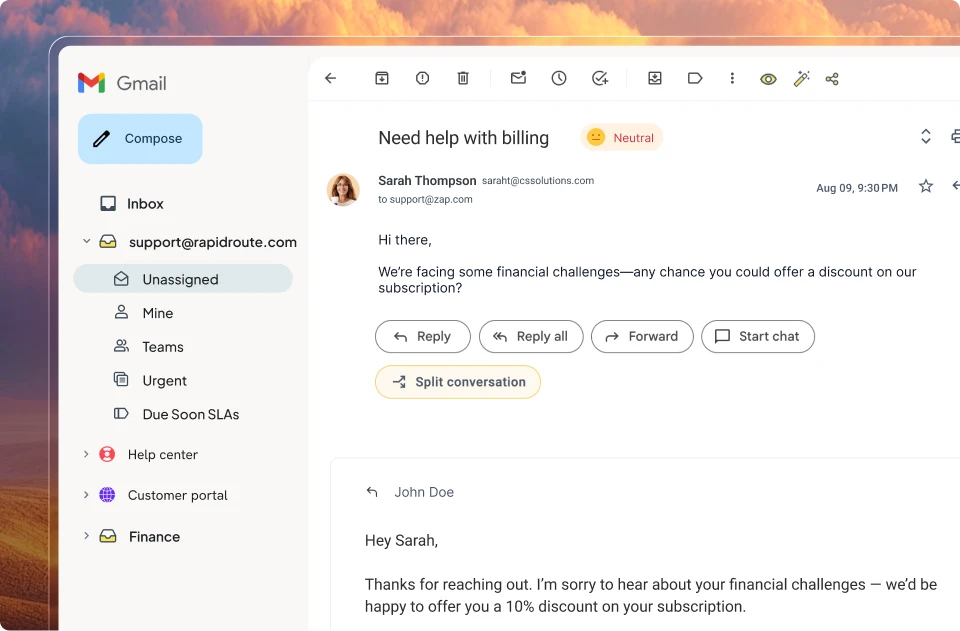







Running an online store means juggling product questions, order tracking, returns, and round-the-clock customer requests. Shoppers expect instant, personalized responses, whether it’s 2 p.m. or 2 a.m. Delivering that kind of always-on experience at scale isn’t easy, especially when every minute can make or break a sale.
Thankfully, AI chatbots can now shoulder some of that load. They help customers find the right products, recover abandoned carts, and provide instant answers without waiting for a human agent.
Still, with dozens of chatbot platforms promising better automation, faster setup, or smarter AI, choosing the right one can feel overwhelming. The best fit depends on your store’s size, tech stack, and goals.
In this guide, we’ll break down what ecommerce chatbots are, why they matter, and which tools deliver the best results in 2025.
TL;DR
| Section | Key Takeaway |
|---|---|
| Definition | An ecommerce chatbot is an AI assistant that helps shoppers find products, get order updates, and resolve queries instantly across websites, apps, and messaging channels. |
| Top Ecommerce Chatbots (2025) | Top ecommerce chatbot platforms include Intercom (Fin), Hiver Chatbots, Chatfuel, Zendesk AI, Gorgias, LivePerson, Rep AI, Octane AI, and Botpress. |
| What Are Its Benefits? | Ecommerce chatbots improve customer experience, reduce agent workload, and drive higher conversions through instant, personalized interactions. |
| Real-World Examples of Ecommerce Chatbots | Brands such as KLM, LEGO, and eBay utilize chatbots to streamline shopping experiences and enhance sales efficiency. |
| Future of Ecommerce Chatbots | Chatbots are evolving into AI-powered sales assistants, combining predictive analytics and generative AI to create more natural, personalized shopping experiences. |
What Is an Ecommerce Chatbot?
An ecommerce chatbot is an AI-powered assistant that helps online shoppers find products, get order updates, and resolve queries instantly. It serves as the primary point of contact across your website, mobile app, and messaging channels.
Beyond answering questions or guiding purchases, AI chatbots for ecommerce can:
- Personalize recommendations using browsing and purchase data.
- Automate returns, refunds, and order updates in real time.
- Collect feedback and route complex queries to live agents.
- Engage customers proactively during checkout or post-purchase.
Traditional chatbots could only respond to basic FAQs. Modern ecommerce chatbots utilize Artificial Intelligence (AI) and Natural Language Processing (NLP) to comprehend intent, context, and tone.
How We Chose the Tools
We analyzed leading AI chatbot platforms for ecommerce through hands-on research and user feedback. Each tool was evaluated for real-world performance—how well it integrates with ecommerce systems like Shopify and WooCommerce, and how effectively it improves customer experience and sales.
Our focus was on conversational AI chatbot solutions that strike a balance between automation and human support, deliver reliable results, and integrate seamlessly into existing ecommerce workflows.
9 Best Ecommerce Chatbot Tools in 2025
Choosing the right chatbot depends on your goals, whether you are automating FAQs or driving sales. Here’s a quick overview of leading ecommerce chatbot solutions in 2025.
| Tool | Key Features | Best Suited For | Channels Supported | Starting Price |
|---|---|---|---|---|
| Intercom (Fin) | Order management, Shopify/Stripe integration, multilingual AI, configurable tone | Autonomous AI agent for ecommerce automation | Chat, email, social, in-app | $0.99 per resolution |
| Hiver | Live chat integration, automation, chat analytics | Omnichannel AI automation for fast-growing teams | Website, in-app, WhatsApp (via integrations) | Free (unlimited users) |
| Chatfuel | No-code builder, FAQ flows, Messenger automation | AI assistant for social commerce and engagement | Instagram, Facebook, WhatsApp | $14/mo |
| Zendesk AI | AI agents, Copilot assistance, order system integration, omnichannel workflows | AI agents for retail and omnichannel experiences | Chat, email, social, in-store | Custom |
| Gorgias | Conversational AI agent, Shopify actions, proactive chat campaigns | Conversational AI for Shopify and WooCommerce stores | Web, chat, email, SMS, social | Custom |
| LivePerson | Conversation builder, intent manager, CRM & payment integrations, AI-human orchestration | Enterprise conversational AI for ecommerce | Web, mobile, social, messaging apps | Custom |
| Rep AI | Product catalog sync, smart selling flows, conversion tracking | AI-powered sales and support automation for Shopify & DTC brands | Site, Instagram, Facebook, WhatsApp | Custom |
| Octane AI | AI-powered quizzes, product recommendations, zero-party data capture | Conversational personalization for Shopify stores | Website, Facebook Messenger, SMS | From $50/mo |
| Botpress | NLP engine, API workflows, visual flow builder, advanced customization | Developer-first AI chatbot platform | Web, mobile | Free (open-source) |
Let’s have a deeper look at each platform below:
1. Intercom (Fin)

Fin is an AI-powered agent from Intercom, designed to help ecommerce brands automate complex customer interactions. The agent can handle refund queries, order tracking status, and personalized product support.
Built for scalability, Fin supports 45+ languages and delivers instant, high-quality responses across chat, email, and social channels.
Key Features
- Complex Query Handling: Automates end-to-end actions like returns, order edits, and refunds by connecting directly with platforms such as Shopify and Stripe.
- Personalized Responses: Uses live data, like order history, inventory status, and customer context, to generate accurate, contextual replies.
- AI-Powered Insights: Offers real-time visibility into conversations, performance metrics, and optimization opportunities.
- On-Brand Customization: Let teams control tone, style, and escalation rules for consistent brand messaging across all channels.
Pros
- Deep integration with ecommerce platforms for real-time order handling.
- Highly customizable controls for tone and response style.
- Proven enterprise reliability with 99.97% uptime and elastic scaling.
Cons
- Best suited for enterprise-scale ecommerce operations; may be complex for small teams.
- The pricing structure (per resolution) can increase with higher chat volumes.
(All feedback sourced from G2)
Pricing
Starts at $0.99 per resolution (minimum 50 resolutions/month). Outcome-based pricing with a 90-day satisfaction guarantee through the Fin $1M Guarantee program.
2. Hiver

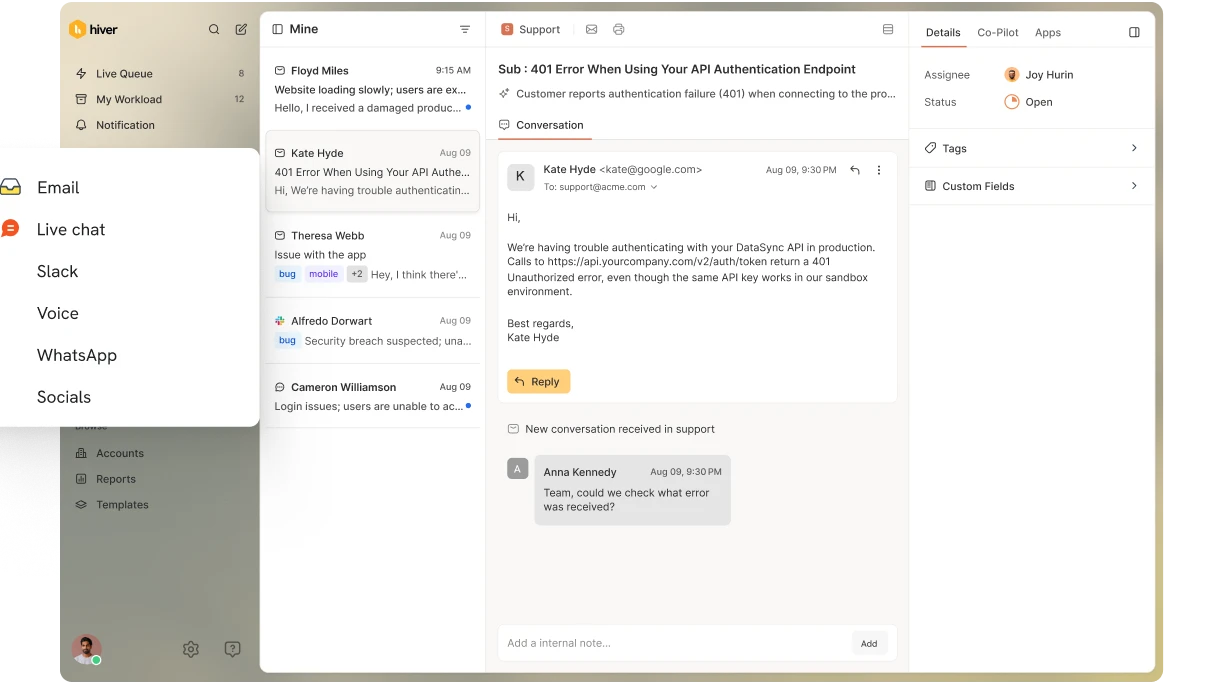
Hiver is an AI-powered helpdesk platform designed to simplify customer service for growing teams. The platform unifies conversations across email, live chat, voice, and WhatsApp, providing faster, contextual service in a single unified inbox.
As part of Hiver’s Live Chat, the platform now includes Chatbots that automate customer interactions and provide instant responses on your website. These chatbots handle FAQs, assist with order tracking, and guide users through common issues before handing off to an agent when needed.
For businesses, Hiver Chatbots reduce repetitive workload and keep teams focused on high-value conversations. For customers, they make support faster, more engaging, and available 24/7, improving both customer satisfaction and efficiency.
Hiver Key Features
- AI Chatbots: Automate FAQs and repetitive queries with customizable chatbots that respond instantly and guide customers toward quick resolutions.
- Smart Chat Routing: Automatically assign incoming chats to the right agent or team based on context, priority, or business hours to keep workflows efficient.
- Chat Analytics: Track chat volume, monitor response times, and CSAT scores to measure team efficiency and customer satisfaction.
- Live Chat Integration: Add a branded chat widget to your site or app to handle real-time customer conversations with AI-suggested responses and chatbot handoffs.
- Automated Workflows: You can automate workflows and route order-related messages to the right agent or team using intelligent rules and tags.

- Embedded Help Articles: Reduce chat volume by surfacing relevant help articles directly within the chat widget, allowing customers to self-serve.
Pros
- Keeps shared inboxes organized and transparent for teams handling large message volumes.
- Easy to set up and intuitive
- Simplifies task assignment, improving accountability and collaboration.
Cons
- Some users would like broader integrations with third-party tools for deeper cross-platform visibility.
(All feedback sourced from G2)
Pricing
- Free: $0/user/month: Basic shared inbox and collaboration tools.
- Growth: $25/user/month: Adds multi-channel support and automation.
- Pro: $45/user/month: Includes advanced analytics, CSAT surveys, and chatbots.
- Elite: $75/user/month: Offers enterprise-grade controls and enhanced security.
3. Chatfuel

Chatfuel is a no-code conversational chatbot platform for ecommerce that helps brands sell directly through chat on Facebook, Instagram, and WhatsApp.
It enables businesses to automate product recommendations, answer FAQs, and send promotions to customers, all without writing a single line of code.
With ready-to-use templates and Stripe integration, Chatfuel makes it easy for small and mid-sized ecommerce stores to turn social media conversations into conversions.
Key Features
- Payment Integration: Let customers complete purchases directly in chat through Stripe.
- Ready-to-Use Templates: Deploy pre-built chatbot flows for FAQs, product recommendations, and promotions.
- Lead Generation: Capture customer contacts and retarget using automated follow-ups.
- Campaign Tools: Automate recurring promotions, product launches, and discount offers.
Pros
- Simple setup for teams with no coding background.
- Deep integrations with Meta platforms for social selling.
- Affordable for small and mid-sized ecommerce businesses.
Cons
- Limited flexibility for complex automation or multi-channel support.
- Lacks advanced AI or NLP capabilities compared to newer platforms.
(All feedback sourced from G2)
Pricing
Starts at $12 per month for the Business plan (which includes 1,000 conversations), with Enterprise plans starting at $400 per month for custom bot development and dedicated support.
4. Zendesk AI

Zendesk AI helps ecommerce and retail businesses deliver fast, consistent support through a mix of intelligent chatbots and real-time agent assistance.
Zendesk’s built-in AI agents act like always-on support assistants, handling customer questions, managing orders, and providing real-time updates. They can independently resolve complex requests such as order tracking, returns, and product inquiries by reasoning across multiple systems and data sources.
Key Features
- AI Agents: Automatically handle repetitive customer queries across channels.
- Omnichannel Support: Connects support across chat, email, social, and in-store systems.
- Analytics & Reporting: Offers automated resolution tracking, performance insights, and customer experience metrics.
- Smart Integrations: Connects easily with ecommerce systems, POS, and order management tools.
Pros
- Integrates deeply with ecommerce, POS, and order management systems.
- Combines automation with powerful agent assistance.
Cons
- Enterprise-level setup may require onboarding support.
- Pricing varies by volume and integration complexity.
(All feedback sourced from G2)
Pricing
Starts at $19 per agent/month (annual billing) for basic support. AI-enabled plans begin at $55 per agent/month, with enterprise tiers up to $169 per agent/month.
5. Gorgias
Gorgias is a conversational AI platform built for ecommerce that combines automation, conversational AI, and integrations with other tools like Shopify, Magento, and WooCommerce.
The AI Agent acts as a 24/7 virtual assistant, handling pre-purchase and post-purchase interactions such as product discovery, order tracking, returns, and FAQs. Its AI Shopping Assistant, trained on your store’s catalog and customer data, engages shoppers in real time.
Key Features
- Conversational AI Engine: Handles product questions, returns, and order tracking across multiple channels.
- Brand-Aligned Responses: Learns your tone, workflows, and guidelines for consistent customer interactions.
- Shopify-Native Actions: Automates refunds, edits orders, and offers discounts directly in chat.
- Performance Analytics: Monitors resolution rates, customer sentiment, and ROI in real time.
- Extensive Integrations: Connects with 100+ ecommerce tools.
Pros
- Built specifically for ecommerce with deep Shopify integration.
- Balances automation and personalized engagement.
- Reduces operational costs while improving conversion rates.
Cons
- Limited flexibility beyond ecommerce environments.
- Advanced automation features may require higher-tier plans.
(All feedback sourced from G2)
Pricing
Starts with a free trial. Paid plans scale by ticket volume and AI usage (pricing available upon request).
6. LivePerson
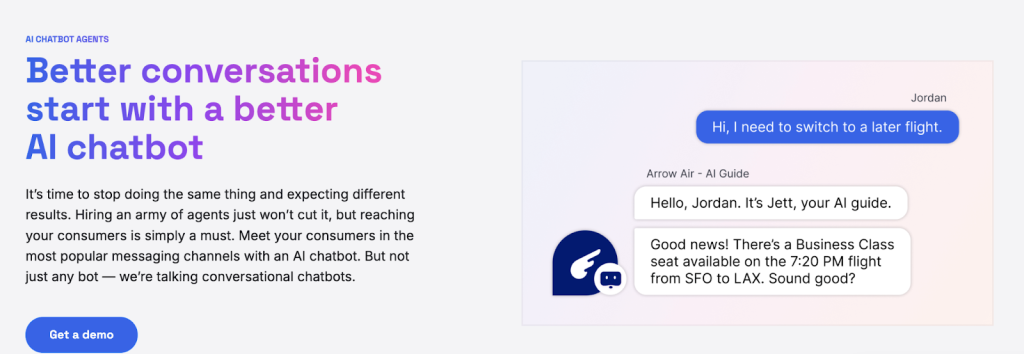
LivePerson is an enterprise conversational AI platform for ecommerce that powers intelligent, human-like chat experiences across digital channels. Retailers can automate support, personalize recommendations, and connect customers with live agents when needed.
Powered by large language models and advanced intent analytics, LivePerson’s AI agents understand context, personalize conversations, and recommend products in real time.
Key Features
- Conversational AI for Retail: Automates order updates, returns, and product recommendations to enhance engagement.
- Intent Manager: Understand customer intent and refine automation in real time.
- Omnichannel Messaging: Supports chat across web, mobile, and social channels, integrating with existing ecommerce tools.
- Bot-human orchestration: Enable smooth transitions between AI and agents.
Pros
- Scalable AI platform for high-volume ecommerce operations.
- Powerful analytics and orchestration tools.
Cons
- Complex for smaller teams; requires setup and training.
(All feedback sourced from G2)
Pricing
Custom enterprise pricing based on usage, channels, and automation level.
7. Rep AI

Rep AI is an ecommerce-focused AI agent that converts conversations into revenue growth, fewer support tickets, and smarter shopper intelligence. Built for Shopify and DTC brands, it helps businesses engage, sell, and support customers effortlessly through AI-driven chat experiences.
Their chatbot acts as a 24/7 shopping assistant, recommending products, guiding purchases, recovering abandoned carts, and resolving post-purchase queries like returns or order tracking.
Rep AI Key Features
- AI Concierge: Resolves common ecommerce queries like returns, order status, and address changes.
- Multichannel Support: Works across website chat, social DMs, and helpdesk integrations (Zendesk, Gorgias, Kustomer).
- Email AI Assistant: Automatically replies to customer emails in real time using brand tone and updated product data.
- Behavioral AI: Detects drop-offs, triggers discount offers, and recovers abandoned carts to boost conversion rates.
Pros
- Built specifically for ecommerce and conversion-driven chat flows.
- Easy integration with Shopify and other major platforms.
- Delivers personalized upselling and cart recovery sequences automatically.
Cons
- Lacks advanced customization for developers.
- Works best within Shopify; cross-platform flexibility is limited.
(All feedback sourced from G2)
Pricing
Custom pricing based on store size, chat volume, and automation level.
8. Octane AI

Octane AI is a Shopify-native conversational commerce platform that helps online brands personalize the shopping experience through AI-powered quizzes and chat interactions. While it’s not a traditional chatbot tool, it enables brands to engage visitors conversationally, guiding them toward the right products and improving conversions.
With its no-code builder, Octane AI lets merchants create product recommendation quizzes, recover abandoned carts, and collect zero-party data to enhance personalization.
Key Features
- Conversational chatbot for ecommerce: Recommend products, answer FAQs, and guide customers through checkout.
- Abandoned cart automation: Trigger chat or SMS reminders to recover lost sales.
- Multichannel engagement: Facebook Messenger and SMS built in for outreach.
- Analytics: Track quiz conversions, AOV uplift, and engagement performance.
Pros
- Deep Shopify integration with strong personalization.
- Combines data capture, chat, and sales automation effectively.
Cons
- Limited functionality for non-Shopify stores.
(All feedback sourced from G2)
Pricing
- Basic: $50/month
- Plus: $200/month
- Enterprise: $500/month (feature-based).
9. Botpress
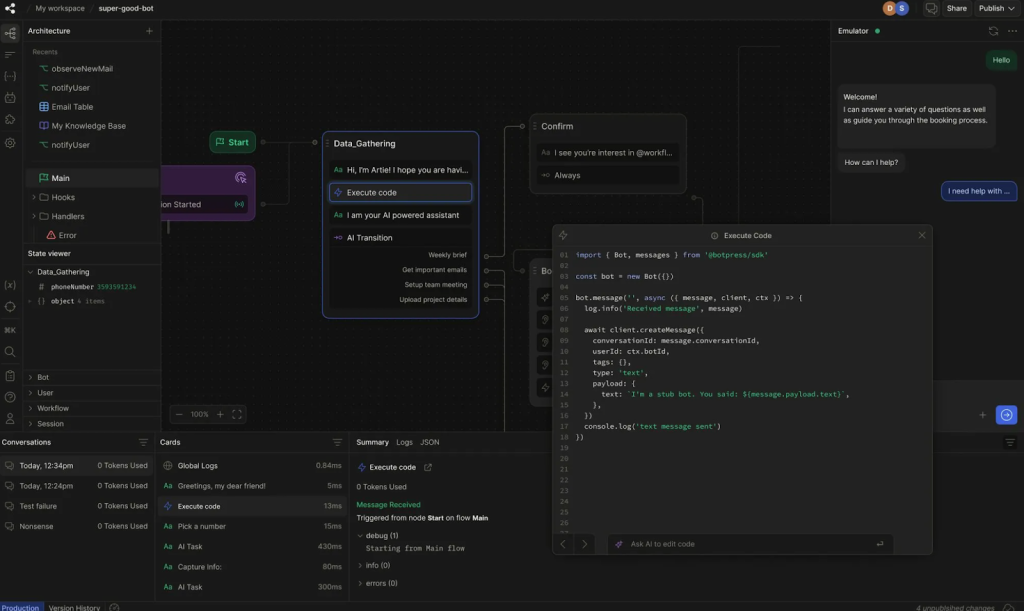
Botpress is a conversational AI platform designed to help teams build and deploy intelligent chatbots and AI agents without extensive coding. Its visual flow builder and NLU-based architecture make it easy to create dynamic, human-like interactions across industries.
With Botpress Studio, businesses can design and test GPT-powered AI agents through a drag-and-drop interface.
For ecommerce, Botpress AI agents can recommend products, recover abandoned carts, automate FAQs, and process payments or returns.
Botpress Key Features
- Visual Flow Builder: Design sophisticated conversation trees with condition-based triggers.
- NLP Engine: Built-in natural language understanding for intent detection and contextual responses.
- API and Database Integrations: Connect with internal systems, such as CRMs, ERPs, and inventory tools.
- Version Control: Supports collaboration among multiple developers and teams.
Pros
- Highly customizable and scalable for enterprise-grade deployments.
- Free and open-source with strong community support.
- Integrates easily with any stack via REST APIs or SDKs.
Cons
- Requires technical expertise to implement and maintain.
- Not suited for teams seeking an out-of-the-box chatbot solution.
(All feedback sourced from G2)
Pricing
Free for self-hosted (open-source); paid enterprise licenses available for advanced support and hosting.
Why Ecommerce Chatbots are Important for Online Brands
Ecommerce chatbots help online stores enhance customer service and lower operational costs by automating customer support and tailoring every shopping interaction. Chatbots help customers find products, resolve issues instantly, and stay engaged across every step of the buying journey.
Here are a few ways ecommerce chatbots help online stores:
Hybrid Chatbots
Modern AI chatbots combine automation with live-agent support. They handle repetitive queries instantly and hand off complex issues to human agents for faster resolutions.
If a customer requests a refund, the chatbot can retrieve order details first, then transfer the chat to an agent with full context to complete the process efficiently.
Collect Customer Feedback and Reviews
After purchases, you can trigger the chatbots for quick surveys or review requests. Feedback helps you gather valuable information and improve customer satisfaction metrics.
Keep Consumers Engaged
You can initiate timely conversations with chatbots, like answering product questions and recommending products to users. It helps shoppers stay longer on your site.
For example, a visitor browsing shoes can instantly get recommendations for matching accessories or see size availability without leaving the page.
Upselling and Cross-Selling
AI ecommerce chatbots analyze shopping behavior and suggest relevant add-ons or upgrades. You can increase average order value and drive more revenue this way.
For example, if a shopper adds a phone to their cart, the chatbot can instantly suggest a compatible case or screen protector.
Prevent and Recover Abandoned Carts
Chatbots can send reminders, offer discounts, or address last-minute concerns when customers abandon their carts. If someone leaves during checkout, the chatbot can follow up with a friendly message like “Still thinking about it? Here’s 10% off to complete your order.”
Offer Easy Order Tracking and Updates
By integrating with your ecommerce platform, chatbots share real-time order updates, delivery notifications, and payment confirmations directly in chat. Customers can simply type “Where’s my order?” and receive instant status updates without waiting for email notifications.
Real-World Examples of Ecommerce Chatbots
Ecommerce chatbots are changing how brands connect with shoppers and handle customer interactions. Many global retailers are already seeing strong results from real-world use. Here are a few standout examples:
KLM: BlueBot (BB)
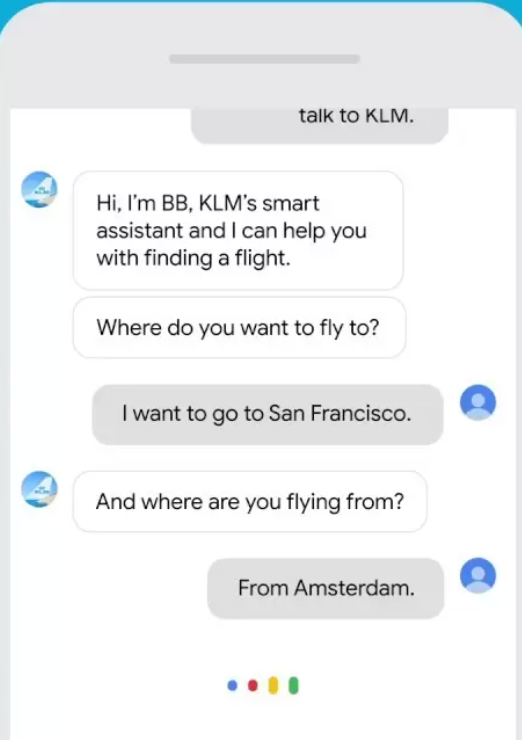
KLM’s BlueBot (BB) chatbot helps travelers book flights directly through Facebook Messenger using conversational AI. Designed with a friendly and professional personality, BB guides users step-by-step through ticket booking without human intervention.
eBay ShopBot
eBay unveiled ShopBot on Facebook Messenger, which allows users to type natural-language requests (“I need a gift for my dad”) and receive curated listing suggestions.

ShopBot tracks browsing and purchase behavior to refine future recommendations, making it a conversational commerce assistant.
LEGO “Ralph”
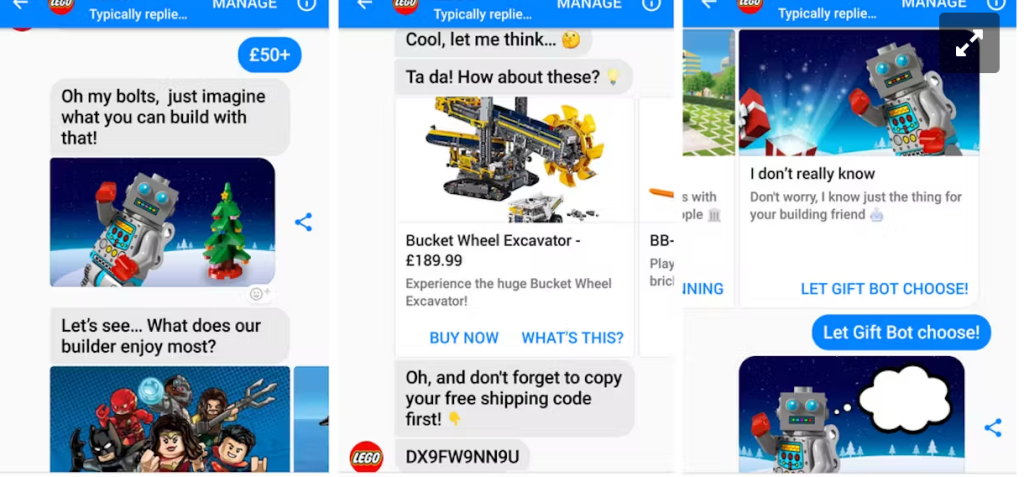
LEGO created a messenger chatbot named Ralph to help customers find the perfect gift by asking about age, interests, and budget. Ralph reportedly accounted for a quarter of social media-driven sales during the holiday campaign by simplifying the gift selection process for busy shoppers.
Future of Ecommerce Chatbots
Ecommerce chatbots are evolving rapidly, moving from simple automation tools to intelligent systems that understand intent, personalize interactions, and close sales.
The right chatbot depends on your business size, tech stack, and customer goals; what works for a small DTC brand might look very different from an enterprise retailer.
As you evaluate different chatbot platforms, focus on clear goals, thoughtful design, and strong integration. They’ll help you create a chatbot that not only responds quickly but also delivers real business value.
Looking to get started? Hiver Chatbots helps ecommerce teams offer instant, AI-assisted support.
Frequently Asked Questions
1. Can AI chatbots really increase online sales?
Yes. AI chatbots help reduce cart abandonment, personalize product recommendations, and offer real-time support, all of which improve conversion rates. Many ecommerce brands report measurable sales lifts after deploying chatbots for guided selling and 24/7 assistance.
2. How do chatbots integrate with Shopify or WooCommerce?
Most modern chatbots connect with ecommerce platforms like Shopify, WooCommerce, and Magento through native plugins or APIs. These integrations let them sync product catalogs, track orders, manage customer data, and automate post-purchase updates.
3. How do I measure ROI in ecommerce chatbots?
ROI depends on how effectively the chatbot automates support and influences conversions. Track metrics such as leads captured, orders completed via chat, time saved on support tasks, and overall revenue contribution from chatbot-assisted sessions.
4. What KPIs should I track for chatbot performance?
Key chatbot metrics include resolution rate, average response time, human handoff rate, customer satisfaction (CSAT), and cart recovery percentage. Monitoring these KPIs regularly helps you identify gaps and optimize your chatbot’s performance over time.
Start using Hiver today
- Collaborate with ease
- Manage high email volume
- Leverage AI for stellar service