






Ever wondered why some team projects flow smoothly while others feel like pushing a boulder uphill?
The secret often lies in knowing the difference between teamwork and collaboration.
Most often, these two terms are used interchangeably, but they are fundamentally different in practice.
One runs on clear roles and structure; the other thrives on fluid ideas and co-creation.
Understanding the difference and knowing which approach to choose when can transform how your team solves problems, hits deadlines, and keeps everyone engaged.
In this guide, you’ll learn what distinguishes teamwork and collaboration, where they overlap, and how to improve both in your organization.
What is Teamwork?
Teamwork is a structured way of working together. Everyone has a clear role and responsibility, but their efforts connect to reach a common goal. A team leader oversees this hierarchy and keeps everyone in rhythm.
Think of it as a well-orchestrated symphony, where each musician plays their part under a conductor’s guidance. As Andrew Carnegie, a philanthropist, puts it, “Teamwork is the ability to work together toward a common vision. It’s about individual contributions coming together to accomplish organizational objectives.”
When to use Teamwork
Picture a marketing agency’s day-to-day social media operations. The content creators, designers, and account managers each play their part like a well-oiled machine.
- The copywriter crafts posts
- The designer creates visuals
- The social media manager schedules and publishes everything.
Essentially, everyone knows their role and executes it reliably – that’s teamwork in action.
Teamwork shines when an established group handles routine tasks with clear handoffs. Like a relay race, everyone knows exactly when to pass the baton and what to do with it. This method is perfect for recurring projects where the process is already mapped out.
What is Collaboration?
Collaboration is a more flexible way of working together. Instead of clear roles and a leader calling the shots, everyone joins as equal partners. Each person brings their ideas, skills, and experience to reach a shared goal.
In collaborative environments, decisions are made as a group. Success depends on trust, openness, and everyone’s willingness to give and take.
Think brainstorming sessions, team huddles, or problem-solving workshops — anytime people pool ideas to build something together.
As Dr. Sheron Brown, author of Conscious Collaboration Pathway explains in her podcast, “In collaboration, the magic happens when people work collectively, bringing their ideas and expertise to the table as equals. It’s about co-creating solutions and deciding together how to move forward”
When to use Collaboration
Imagine a marketing agency tackling a major rebranding project for its biggest client. The stakes are high, and there’s no clear playbook.
The strategist, creative director, and client lead gather around the table. They swap ideas, challenge each other’s assumptions, and build on every new thought. They’re not just ticking off tasks but shaping the vision together.
Collaboration thrives in these situations where innovation is key, and the path forward isn’t obvious.
These smaller, focused groups need to pool resources and knowledge together, stay in constant communication, share their expertise openly, and be ready to adjust their approach based on the team’s collective insights.
Recommended reading
Teamwork vs Collaboration: What’s the Difference?

You’ve likely heard teamwork and collaboration used as if they mean the same thing. And while both involve people working together, they function very differently.
Understanding the key differences helps you choose the right approach for the situation.
Let’s break it down using a simple example: A group of coworkers planning the company’s annual offsite event.
We’ll follow this example through each section to highlight these key differences and how teamwork and collaboration would approach the same goal differently.
1. Structure and Leadership
In a teamwork setup, there’s a clear structure with a designated leader—maybe the office manager—who delegates responsibilities. One person handles the venue, another takes care of catering, and someone else plans the agenda. If there’s a conflict or overlap, the team leader steps in to resolve it. Team members know their individual roles, and there’s a clear path of decision-making.
In a collaboration model, the group works without a formal leader. Everyone brings ideas to the table, decisions are made together, and responsibilities shift as needed. Instead of top-down direction, the team members self-organize and navigate disagreements through discussion and consensus.
🔑 Key takeaway:
Teamwork depends on structure and a designated leader. Collaboration is more equal—everyone helps make decisions and shares responsibility for the results.
2. Project Timeline and Commitment
In a teamwork setup, this same group might plan the offsite every year. They’ve developed a rhythm, know each other’s working styles, and have a defined process. It’s an ongoing relationship with long-term dynamics.
In collaboration, the group may be newly formed just for this year’s event—people from different departments are brought together temporarily. Once the event is over, the group disbands. They bring fresh energy, but they have to quickly build trust and alignment.
🔑 Key takeaway:
Teamwork is often long-term and built on ongoing relationships. Collaboration tends to be temporary and project-specific.
3. Work Approach and Goals
In teamwork, each person is assigned specific tasks. Someone books the venue, someone manages the guest list, and another handles logistics. Team members work independently toward a shared outcome, with each person owning their part of the puzzle.
In collaboration, the group brainstorms innovative solutions and executes them together. One person might start researching venues, but others jump in to refine the shortlist or suggest alternatives. Roles overlap, and tasks evolve as ideas are shared and refined.
🔑 Key takeaway:
Teamwork focuses on individual responsibilities that contribute to a common goal. Collaboration emphasizes collective effort with flexible roles.
4. Decision-Making Process
In a teamwork setting, the team leader typically makes the final call. For example, if there’s a disagreement on catering options, the leader listens to feedback but ultimately decides what’s best and moves the project forward.
In collaboration, decisions come from group discussion. The team weighs options together and only moves forward when everyone agrees. This can take longer, but creates stronger buy-in.
🔑 Key takeaway:
Teamwork often uses top-down decision-making. Collaboration is more democratic and driven by group consensus.
5. Innovation and Problem-Solving
Let’s say bad weather forces the offsite to move indoors. In teamwork, the group falls back on a backup plan already set by the leader. There’s a process in place to handle disruptions.
In collaboration, the team might huddle up and brainstorm a new plan on the spot—pooling creative ideas, diverse perspectives, and pivoting quickly. There’s no predetermined solution, so the group adapts in real time.
🔑 Key takeaway:
Teamwork excels in executing well-defined plans. Collaboration is better for navigating uncertainty and finding creative solutions.
6. Resource Utilization
In teamwork, each person works with a defined budget or toolset. For example, the person in charge of activities has a set amount of money and clear limits on what they can book.
In collaboration, resources are shared more flexibly. If someone finds a great vendor that overlaps with another area, the group may shift budget or reassign tasks. It’s less rigid but more fluid.
🔑 Key takeaway:
Teamwork keeps resource use clearly defined. Collaboration encourages pooling and flexible sharing of tools, knowledge, and time.
Recommended reading
7. Communication and Interaction
Teamwork usually follows a schedule: weekly check-ins, status updates, and defined reporting. Everyone knows who they report to and when updates are due.
Collaboration involves more open dialogue. In a collaborative framework, people hop on quick calls, share ideas in real time, and adjust plans based on the flow of discussion. It’s informal but highly interactive.
🔑 Key takeaway:
Teamwork uses structured communication to stay aligned. Collaboration favors open, ongoing conversations that evolve with the project.
Recommended reading
The Benefit of Teamwork and Collaboration: Why Organizations Need Both
Here’s the truth: organizations need both teamwork and collaboration. And here’s why.
Sometimes you need the structured approach of teamwork to execute complex projects efficiently. Other times, you need the creative power of collaboration to solve complex problems and innovate.
The most successful teams know when to switch between the two. They balance clear roles with open co-creation. They blend independent work with moments of real brainstorming.
The key is to build a culture where people know how to work on their own, when to come together, and which approach fits best.
As Dr. Sheron Brown emphasizes in her podcast, “Mindful communication, empathy, and understanding are the cornerstones of successful collaboration“—and we might add, of great teamwork, too.
How to Improve Teamwork and Collaboration in Your Organization
For an organization, creating an environment that encourages everyone to work together can greatly impact team performance.
With collaborative teamwork, teams can achieve goals more efficiently by sharing the workload evenly and delegating tasks to those with the most suitable skill set.
If you’re wondering where to start, here’s how you can improve collaboration and teamwork in the organization:
🫂Create a Supportive Environment
Think of your workplace as an environment where concepts and ideas can be shared or where team members can ask for help without hesitation. This is crucial for team collaboration to flourish.
Team members should feel confident sharing their ideas, even if they’re not fully developed, and comfortable seeking assistance when needed. This openness is what lets innovation thrive.
Recommended reading
🗣️Establish Clear Communication Channels
Good teamwork or collaboration can’t happen in the dark. Everyone needs to see the full picture — what the goals are, who’s doing what, and how it all connects.
Develop a clear communication strategy that ensures everyone understands project goals, individual responsibilities, and team expectations. Maintain good communication skills to avoid misunderstandings and support all team members, regardless of which approach you’re using.
✅Use the Right Tools
Having the right tools isn’t just convenient—it’s essential for effective teamwork and collaboration. The key is choosing platforms that can support both structured workflows and collaborative culture as needed.
Project Management Tools
Platforms like Trello and ClickUp provide visual organization for project workflows. Teams can track tasks from start to completion, set deadlines, and see who’s responsible for what at a glance, supporting both individual accountability and collective progress.
Email Management Tools
For teams that rely heavily on email, traditional inboxes can create frustrating silos—important conversations get buried, context is lost, and people often end up working in isolation.
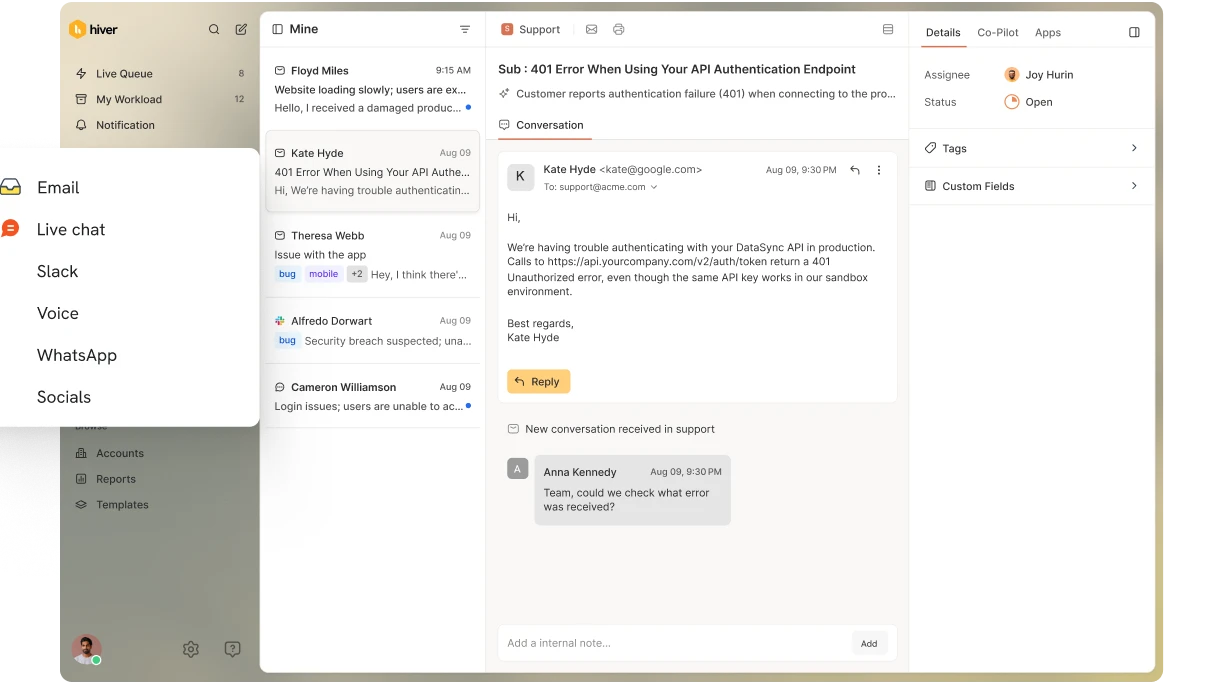
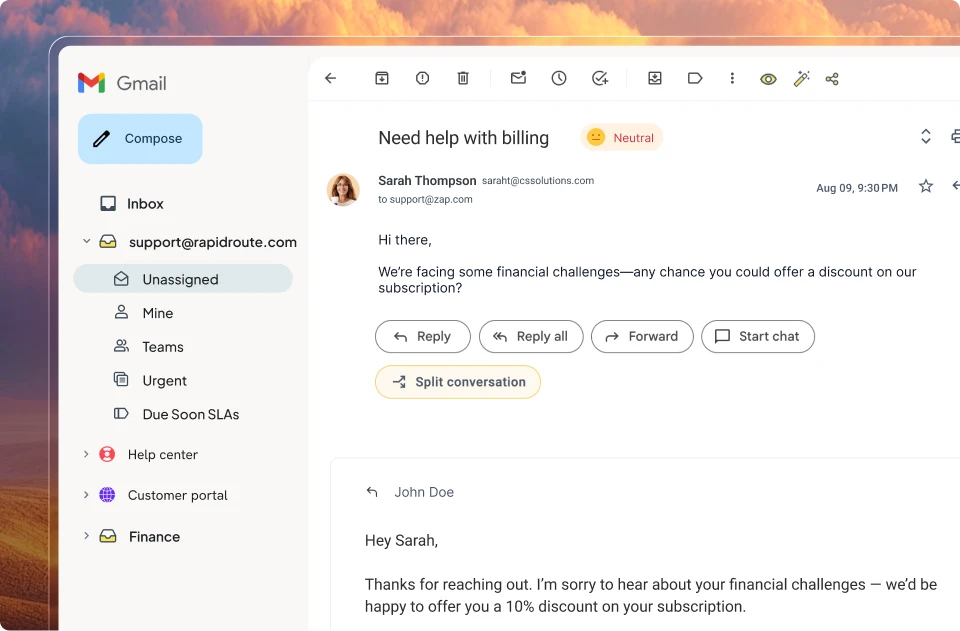
That’s where tools like Hiver come in. Instead of treating email as a one-way communication channel, Hiver turns it into a collaborative workspace that supports both structured workflows and real-time teamwork

With Hiver, your team can:
- Use shared drafts to co-write and review responses before sending
- Get collision alerts that prevent two people from replying to the same email
- Add internal notes for private team discussions within the thread
- @mention teammates to loop them in instantly, and add private notes to discuss next steps right inside the email thread.
- Access conversation reports to see how collaboration is impacting response times and workload
This kind of setup gives your team the best of both worlds: the structure needed to stay efficient and the flexibility to put in collaborative effort when a request or issue needs multiple inputs.
Whether it’s handling everyday internal requests or working through a more complex issue that needs input from multiple people, email collaboration tools like Hiver keep everyone on the same page while still making sure there’s clear accountability.
Recommended reading
Brainstorming Tools
Digital whiteboards like Miro and FigJam transform creative sessions into dynamic experiences, fostering collaboration. Teams can sketch ideas, share diverse perspectives, create mind maps, and add sticky notes in real time, capturing the essence of in-person brainstorming.
Work Scheduling Tools
Productivity apps like Todoist and Pomodoro timers help teams manage their time effectively by breaking down tasks and setting priorities. These tools support both individual accountability within team structures and collaborative time management for shared projects.
Document Sharing Platforms
Cloud storage solutions like Dropbox and Google Drive eliminate the chaos of multiple file versions. Teams can collaborate on documents in real time, track changes, and access the latest versions from anywhere.
Communication Platforms
Tools like Slack and Microsoft Teams create virtual office spaces where quick questions, important updates, and casual conversations can all find their place. These platforms create channels for both focused work discussions and team building.
Recommended reading
🕴️Foster Inclusive Leadership
Great leaders know how to guide both structured teams and open collaborations. Instead of simply directing, they enable. They recognize individual strengths, match people to the right tasks, and create space for different perspectives to thrive.
In team settings, they provide structure and resolve conflicts. In collaborative environments, they step back and let ideas emerge organically. The best leaders adapt their style to fit the situation and help everyone do their best work.
💼 Align Team Goals
Whether you’re working in a structured team or a flexible group, everyone needs to be clear on the goal. When people understand what they’re working toward and how their efforts fit in, they stay motivated and focused.
In teamwork, that means knowing your role and how it supports the bigger picture. In collaboration, it means sharing ownership of the outcome and working together to get there.
🤝 Encourage Interdependence and Support
Strong groups don’t just divide tasks—they support each other. Team members bring different skills to the table, and the best outcomes happen when team members rely on one another and step in when needed.
Sometimes that means setting aside your own idea for a better one. Other times, it’s helping someone else finish a task. This type of collaborative teamwork builds mutual support, builds trust, and leads to better results.
🎉 Celebrate and Recognize Success
Taking time to acknowledge success keeps people motivated. It shows that their work matters and encourages them to keep giving their best.
In team settings, it helps to recognize individual contributions. In collaborative projects, celebrating the collective effort as a whole feels more fitting. Either way, small moments of appreciation can make a big difference in how people feel about their work.
How Collaboration and Teamwork Go Hand in Hand
The key isn’t just understanding teamwork and collaboration—it’s about knowing when to switch between them as situations demand.
Organizations thrive when they master this balance, seamlessly shifting from structured teamwork for routine work to collaboration for innovative projects.
In this process, building the right foundation matters. From choosing effective communication tools to creating environments that encourage encourage effective collaboration, every piece contributes to your team’s ability to adapt.
When teams have the right tools and support, they can effortlessly transition between collaboration skills and structured execution.
With the future of work demanding this flexibility- ask yourself: Is your team ready? If not, it’s time to take the first step and invest in the right mindset and tools.
Frequently asked questions
1. How does collaboration differ from teamwork?
Teamwork follows a hierarchical structure with defined roles and a leader, while collaboration operates as a fluid partnership where participants work as equals. Teamwork excels in routine tasks with clear processes, whereas collaboration shines in innovative projects requiring creative problem-solving and coordinated efforts.
2. Are teamwork and collaboration synonyms?
No, teamwork and collaboration are distinct approaches. Teamwork involves structured individual contributions under leadership, while collaboration emphasizes collective decision-making and shared responsibility without formal hierarchy. Though often used interchangeably, they serve different organizational needs.
3. What is an example of collaborating?
A typical example of collaboration is a cross-functional team working on a new product launch. In this team, marketing strategists, designers, and product managers jointly develop ideas and make decisions. Unlike structured teamwork, they share equal input, enable knowledge sharing, and collectively shape the project’s direction.
4. How does collaboration improve teamwork?
Collaboration enhances teamwork by introducing flexible thinking and shared problem-solving to structured team environments. It helps break down hierarchical barriers, encourages innovation within established processes, and creates stronger relationships between team members, ultimately leading to more effective teamwork.
Start using Hiver today
- Collaborate with ease
- Manage high email volume
- Leverage AI for stellar service