Skip to content





“Hey, how do I change my delivery address?”
This one’s a common question for customer support. A customer who’s placed the order, but just to the wrong address and needs it changed.
Now a good support experience looks like this: customer reaches out. A chatbot escalates her query. A support rep fixes the issue, and the customer’s happy.
Now, flip the script.
Imagine the customer gets a help article instead. They raise a query but are met with an unhelpful “we’re looking into it” response.
The thing is, both experiences leave a mark in the customer’s mind. The former, positive, and the latter, not so much.
But what really pays off for your brand is the former.
So, in this guide, we’re going through all the ways you can provide a good customer experience, and how to improve it strategically and sustainably.
Table of Contents
- What Is Customer Experience?
- Why Does Customer Experience Matter?
- How to Improve Customer Experience
- How to Measure Customer Experience
- Examples of Good Customer Service Experience
- Deliver Great Customer Support Experience at Scale
- Frequently Asked Questions
What Is Customer Experience?
Customer experience (CSE) is all about how your customers feel when they interact with your support team. It’s the emotional outcome of every phone call, chat message, email, or social media exchange, regardless of how long the interaction lasts.
The best way to understand it is to imagine yourself in the shoes of your customer. As someone reaching out to support, here’s what would matter to you:
- How easy it was to get help
- How understood you felt
- How fast support came through
- How valued you felt by the end of it
With a good customer experience, you’ll find yourself saying “They fixed my issue—and made it effortless.”
Why Does Customer Experience Matter?
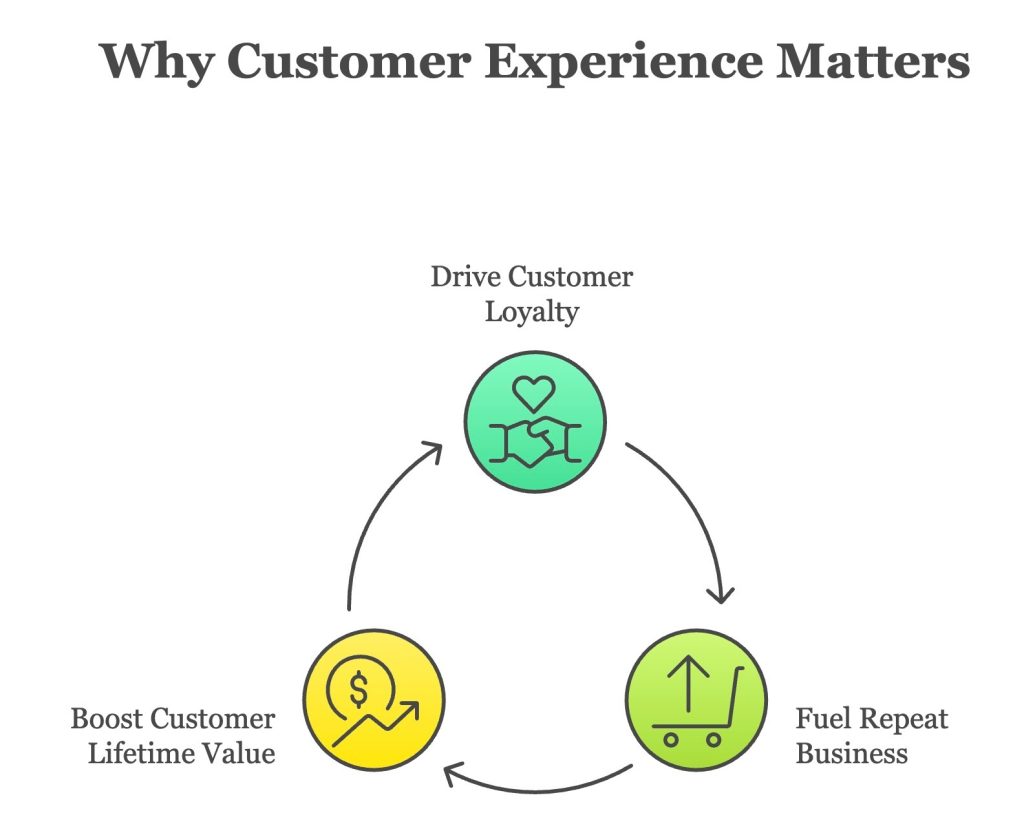
Often, customer experience is all the difference between a bad review and a word-of-mouth referral. In fact, here are some reasons why customer experience is non-negotiable for all brands:
1. It drives customer loyalty
How many times have you remembered a brand for its support, or recommended it as you had a good experience?
This is what customer loyalty is like, built through consistent, helpful support.
A smooth, thoughtful service interaction can be the reason a customer sticks around. And stats say the same too: customers are 2.6x more likely to stay loyal to brands that deliver excellent service.
2. It fuels repeat business and word-of-mouth
When people have a great experience, they keep coming back and advise people to do the same.
In fact, Karishma from our team wrote a great article about it, and how the brand’s great customer service led to her telling people about it (and stocking her fridge with some freebies). You can check out the article here.
There’s some good research around it, too. About 72% of customers share good service experiences with six or more people. That’s powerful, organic marketing you can’t buy.
3. It boosts Customer Lifetime Value (CLTV)
When was the last time you re-ordered from the same brand or were open to test out a freebie?
This willingness to continue with the same brand often stems from your previous experiences.
Not only does your trust in the brand increase, but you’ll also find yourself being more open to upgrades, repeat purchases, and even trying out new products or services the brand offers.
This is also the exact psychology behind this stat: Loyal customers tend to spend 67% more over time than new ones.
That’s the ROI that good customer service can bring. It creates value and leads to stronger customer relationships and higher revenue per customer.
Key Elements of a Great Customer Service Experience
Great customer service experiences are built on thoughtful, repeatable behaviors that make customers feel heard, respected, and taken care of. Let’s walk through a quick scenario:
👁️🗨️ The scenario: A frustrated user on live chat
It’s 9:12 AM. A user logs into your product, only to see an error message right before a client demo. Stressed and annoyed, they hit the live chat widget.
By 9:14, a support agent responds.
That alone makes a difference. The prompt acknowledgment (“Hey there! I’m here to help.”) sets a calm tone and reassures the user they’re not shouting into the void.
The agent listens actively, confirms the issue, and adds a human touch: “I totally get how frustrating this must be. Let’s fix this quickly.”
And it matters – 68 % of customers say the service representative is key to a positive service experience.
From there, the agent walks the user through clear, personalized troubleshooting steps. They reference their specific plan and past support history to save time and avoid back-and-forth.
Ten minutes later, the issue is resolved.
But it doesn’t end there. The agent sets expectations for next time (“If this pops up again, here’s what to check”). They also follow up later that day just to make sure everything remained stable.
And lastly, they close the conversation warmly: “Glad we got that sorted in time. Hope the demo goes great!”
💟 What made this experience great?
Let’s break down the six core elements of a standout customer service experience:
1. Prompt Acknowledgment
Whether it’s a live chat, email, or support ticket, customers want to know that someone’s listening.
Delays in acknowledgment create uncertainty. But a fast, human response builds instant credibility and shows customers they matter.
Even a simple “We’ve received your request and we’re on it” can immediately reduce anxiety and set the tone for a calm, productive interaction.
💡Easily Start Chat Conversations with Hiver’s AI
With Hiver AI, you can make each acknowledgment or conversation smarter and smoother by understanding intent, filling key fields, and guiding the next step without extra effort.
Hiver’s AI adds that layer across the journey from the first message to final resolution. Here’s how:
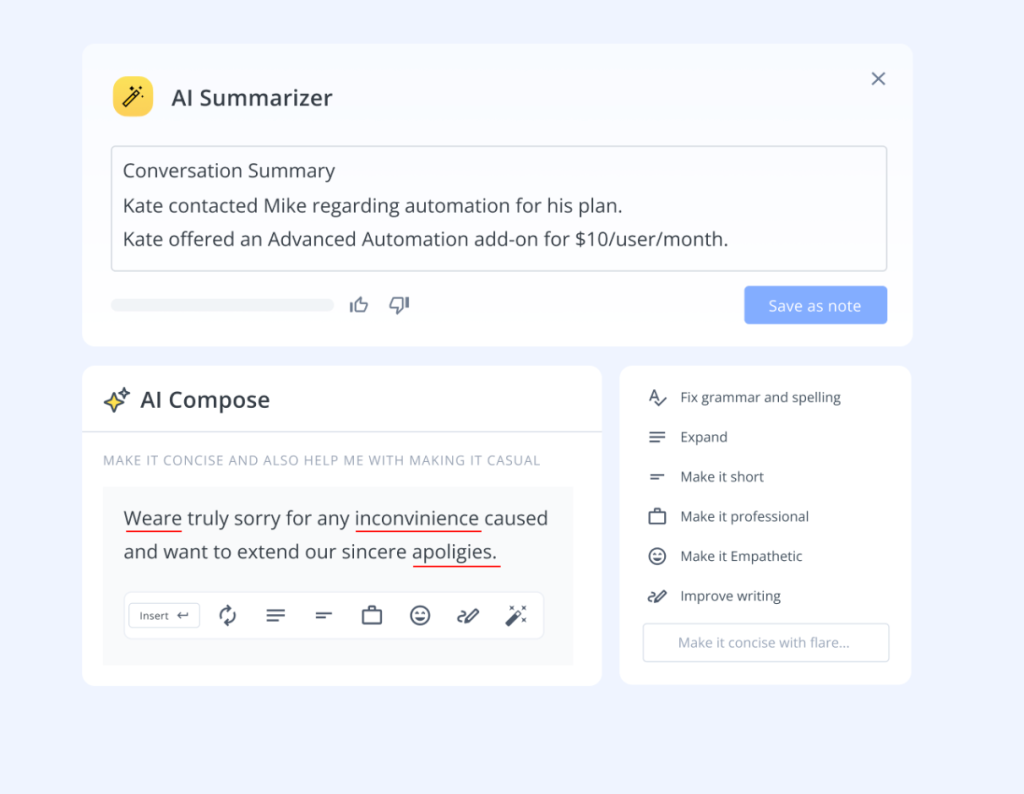
- Improve operations over time: AI Insights highlights patterns with Resolution Assist, Customer Health, and ROI feedback loops so you can refine workflows.
- Triage and routing: AI Tagging, Sentiment, and Extract classify the request, detect urgency, and pull data like order IDs so rules can route correctly.
- Auto-resolve simple queries: AI Answers replies from your knowledge base, and the Thank You Detector closes finished threads to reduce queue clutter.
- AI CoPilot to assist agents: AI Compose, AI Summarizer, Ask AI, and AI Suggested Response create polished, contextual replies and quick TL;DRs.
2. Empathetic Communication
It’s not enough to be technically correct. What truly moves the needle is showing customers you understand their frustration or confusion and that you’re genuinely there to help.
And it’s not just a hunch. 59 % of consumers prefer an empathetic customer service interaction over a speedy resolution.
💡Pro tip: Train agents to acknowledge emotion and express understanding before jumping into the fix.
Recommended reading
3. Personalized Support
Generic replies can make a customer feel like just another number. Instead, make personalized support a priority. Simple things like addressing the customer by name, referencing their past tickets, purchase history, or preferences goes a long way.
This tells the customer: We know who you are, not just what your issue is.
💡Make Personalization a Breeze with Hiver’s Integrations
With Hiver, bring customer context right where you need it. Use customer data from your CRM and support history to personalize every reply, without asking them to repeat details.
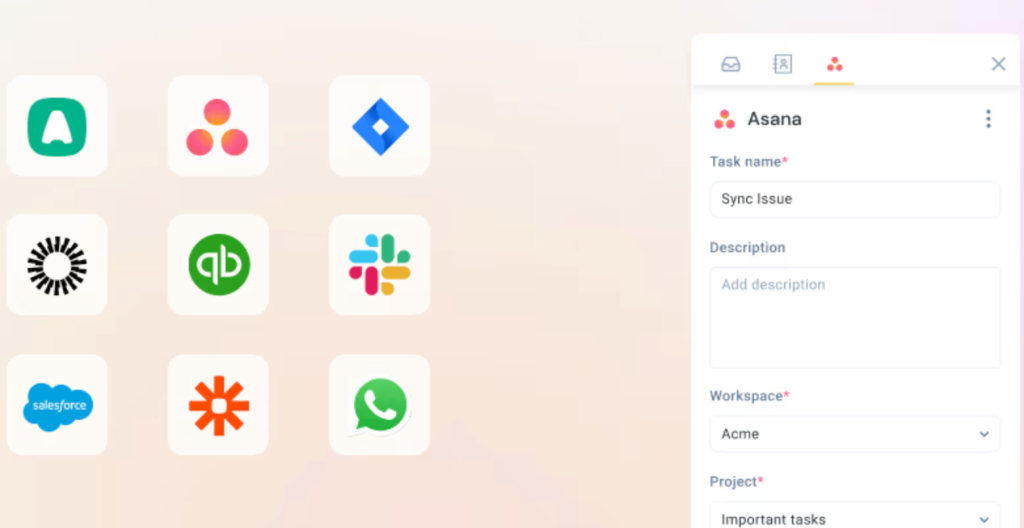
With over 100 integrations and APIs, you can sync data and automate routine tasks directly from Hiver. It’s a simpler way to give thoughtful, efficient support without jumping between tabs.
4. Seamless Multichannel Experience
Today’s customers don’t just use one channel. Depending on what you offer, they switch around based on their convenience.
Picture this: A customer might start with chat, move to email, and then switch to a phone call if things get urgent. And they expect continuity across all of it.
If they have to re-explain their issue every time they switch channels, it signals disorganization and slows down resolution.
On the flip side, when agents can pick up right where the last channel left off, it creates a smooth, friction-free experience.
Recommended reading
Multichannel Customer Support: What it is and How to Nail it
5. Clear and Honest Expectation Setting
Let’s be honest. Nobody likes crickets after you’ve explained your issue.
Silence breeds frustration. That’s why being honest about timelines, even when the news isn’t ideal, is better than overpromising and underdelivering.
Some simple examples include:
- “We’re checking with our engineering team and will get back within 24 hours.”
- “This may take a little longer, but we’ll keep you posted every step of the way.”
💡Deliver Timely Support with Hiver
Stay on top of every customer conversation with Hiver’s built-in SLA management.

Set clear response and resolution deadlines, get real-time SLA reminders, and track SLA compliance, spot delays, and fine-tune your workflows – all with easy, real-time reporting.
6. Follow-Up and Closure
Sure, getting the issue resolved is key. But the cherry on top of the cake is the follow-up.
Something as small as a thoughtful check-in shows you’re invested in their experience of the product, not just in closing the loop.
Follow-ups also surface issues that might’ve been missed, and often lead to better CSAT scores and stronger relationships.
💡Get Real-Time Insights with Hiver
Hiver’s built-in CSAT surveys help you capture feedback the moment a support interaction ends — no extra tools or setup needed. Track satisfaction trends over time, identify areas for improvement, and close the loop with customers faster.
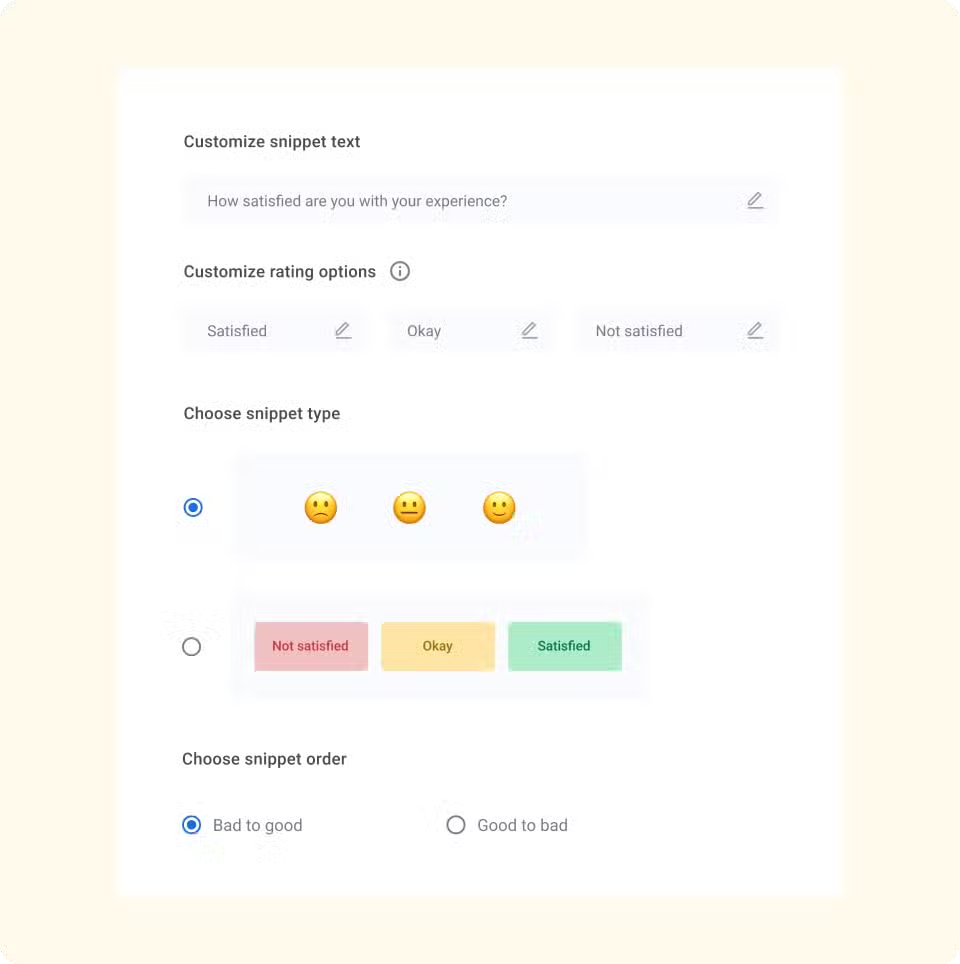
With real-time insights right inside your inbox, your team can learn and adapt with every interaction.
How to Improve Customer Experience
If you’re looking to level up your customer service experience beyond the basics, here are seven high-impact strategies your team can start using today:
1. Embrace a Customer-First Mindset
The best support teams make customers feel valued. From the first “Hello” to the final follow-up, every touchpoint should feel intentional and human.
You can also go a step further and invite customers to:
- Share feedback on your support workflows
- Suggest improvements to your knowledge base
- Beta-test new support features or channels
It shows you care and builds a stronger feedback loop that benefits everyone.
🏆How we do it at Hiver
At Hiver, we believe great customer experiences start with listening. Our users are part of a dedicated Slack community where they can share feedback, suggest improvements, and preview upcoming features.
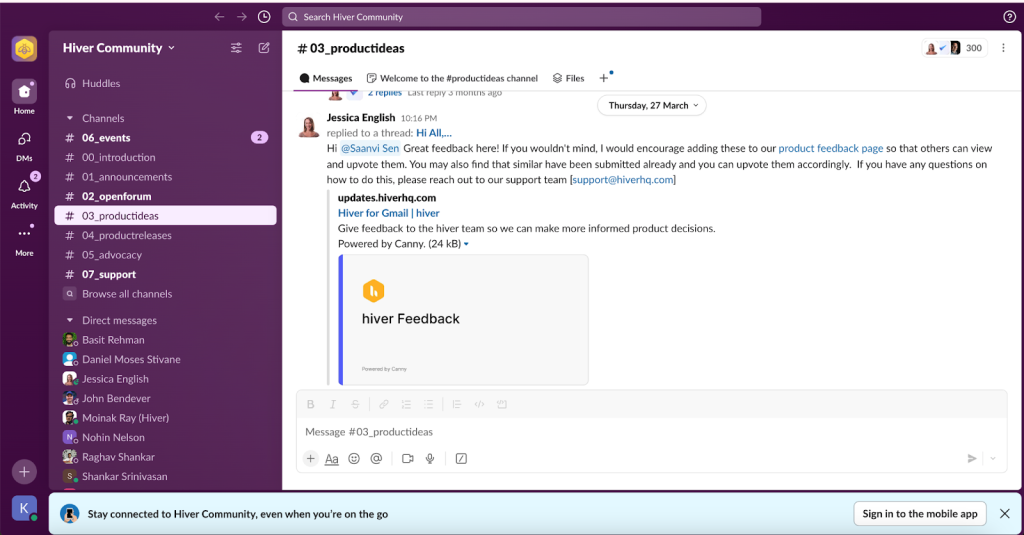
Both our product and support teams are active in the same space, which makes it easy to discuss ideas, prioritize them, and either add them to the roadmap or improve existing features based on user feedback.
2. Equip Your Team with the Right Tools
Support feels much easier when everything agents need is close at hand. Think clear workflows, quick access to context, and simple collaboration – all without the fuss of switching tools.
This can transform day-to-day work and give your agents the right context for meaningful customer conversations. Here are a few essentials:
- A shared inbox to manage all customer channels from one place
- Internal notes and email assignments to streamline collaboration
- Live chat and voice integrations for real-time help
- Analytics dashboards to spot bottlenecks and improve processes
3. Use AI to Support Agents
AI has become an essential part of modern customer support. When done well (along with a smooth escalation), it helps teams respond faster, stay organized, and provide a more personal touch.
The goal is not to replace human agents but to make their work easier and more effective.
Infact, to get to this stage, here’s how AI can help agents in their day-to-day tasks:
- Respond faster with suggested replies
- Auto-categorize and assign tickets
- Surface relevant help docs while chatting
- Handle repetitive queries through bots
4. Simplify the Customer’s Journey Across Channels
When customers reach out for help, they don’t want to dig through FAQs for a basic answer or click through four menus to find the “Contact Us” button.
Aim for a low-effort experience. That means making help easy to find, context easy to carry across channels, and transitions between chat, email, and phone absolutely seamless.
5. Localize Support for a Global Audience
If you have customers across time zones and regions, tailor your support accordingly. This could look like:
- Offering responses in the customer’s preferred language
- Adjusting working hours to cover more regions
- Using culturally relevant examples in help docs or chat replies
These small adjustments help customers feel understood and supported in a way that feels natural to them. It creates a more comfortable experience and a stronger sense of trust.
Recommended reading
6. Build a “Service Recovery” Playbook
No support team is perfect, and that’s okay. What matters is how you respond when things go wrong.
Make sure to train your team on what to do when a customer is upset or disappointed.
Here’s what to include in a playbook:
- Clear refund and escalation protocols
- Pre-approved apology messages
- Gestures like discounts or thank-you gifts
Remember, when handled with grace, a support mistake can still increase loyalty.
Recommended reading
7. Ask for Feedback
Don’t wait until after the ticket is closed to ask how things went. Make feedback part of the journey. Here’s what agents can try:
- In-chat thumbs-up/down reactions
- On-page micro feedback buttons
- Real-time sentiment alerts that let agents adjust mid-conversation
This is how tiny improvements can contribute to better customer service. It’s all about removing friction, adding empathy, and staying one step ahead of customer expectations.
With the right mindset, tools, and playbooks, your support team can turn every interaction into a competitive edge.
Recommended reading
How to Measure Customer Experience
While “experience” can feel subjective, there are proven metrics that give you a real sense of how your support is landing with customers. Here are the key ones to track:
1. CSAT (Customer Satisfaction Score)
This is the classic pulse check. After a support interaction, you ask customers a simple question like “How satisfied were you with the help you received?” Their responses give you an immediate read on how well your team is meeting expectations.
Tracking CSAT over time also shows whether improvements you make are actually landing well with customers.
✅ Why it matters: It reflects the emotional impact of the interaction while the experience is still fresh in their mind.
2. FCR (First Contact Resolution)
FCR tracks whether a customer’s issue is fully resolved in the first interaction. It shows how prepared agents are with the right information and tools to deliver answers quickly and confidently.
✅ Why it matters: Resolving queries efficiently creates a smooth experience and shows customers that their time is valued.
3. NPS (Net Promoter Score)
NPS takes a wider view. Instead of focusing on a single interaction, it asks, “How likely are you to recommend us to a friend or colleague?” It reveals whether your support experience strengthens a customer’s long-term relationship with your brand.
Over time, NPS trends can show how support contributes to loyalty and advocacy.
✅ Why it matters: Loyal customers tend to stay longer and spread the word, which directly impacts business growth.
4. CES (Customer Effort Score)
CES focuses on how easy it is for customers to get their issues resolved. You ask a simple question like “How easy was it to get your issue resolved?” A high-effort experience often signals friction in your support processes, unclear resources, or gaps in your knowledge base
✅ Why it matters: When support feels effortless, customers remember it and are more likely to return.
Tip: Look at drop-off points across channels where customers switch from chat to email or abandon support flows altogether.
5. Sentiment Analysis
Sentiment analysis tools can detect when a conversation is turning negative. Leaders can intervene with coaching or escalation before the situation worsens, creating a better outcome for both customers and agents.
✅ Why it matters: It provides qualitative insights that numbers alone cannot capture and helps maintain a consistently empathetic experience.
🔎Insights from the Hive
At Hiver, since the launch of AI Sentiment Analysis and over 50+ have customers adopted it in the very first week.

It gives support teams an instant sense of how conversations are going, so they can step in quickly when a customer needs extra care — and celebrate the moments that go well.
No single metric tells the full story. But when you combine these insights, quantitative scores plus qualitative feedback, you get a clear, actionable picture of your customer service experience.
Examples of Good Customer Service Experience
1. Starbucks: ASL Drive-Thru Delight
A viral Facebook video shows Starbucks barista Katie Wyble in St. Augustine, Florida, using the drive-thru video monitor to take a hearing-impaired customer’s order in American Sign Language. The customer, Rebecca King, was able to place her order seamlessly.
The clip went viral worldwide and prompted Starbucks to highlight its growing ASL-training efforts and accessible ordering tech.
Why it resonates
It shows how a small moment of inclusion can completely change a customer’s experience. People loved seeing a simple, thoughtful interaction remove the stress of ordering for someone who is hearing-impaired.
The story also sparked ideas for more accessible Starbucks locations around the world, proving that good service can inspire real change.
2. Costco: The “Dead” Christmas Tree Refund
A Santa Clarita member wheeled her dried-out Christmas tree to Costco’s returns desk claiming it was “dead.” Staff honored the full refund. Local shopper Scott Bentley’s Facebook photo turned the incident into a viral parable of Costco’s no-questions-asked 100 % satisfaction policy.
Why it resonates
This story took a simple return policy and made it unforgettable. People loved the idea that Costco stands behind what it sells, even when the situation is a little ridiculous. As the story spread, it became proof that shopping there feels low-risk and customer-first, which makes others more likely to buy with confidence.
3. Stanley: The Cup That Outlasted a Car Fire
A TikTok user named Danielle shared a video of her car after a fire, and viewers noticed one thing still intact inside the wreck: her Stanley Cup. Not only did it survive the flames, the ice inside was still frozen. The internet went wild. People called it the best accidental product demo ever.
Stanley jumped in quickly with a video response from the CEO. He offered to send her new cups and even replace her car. The gesture turned a viral moment into a powerful story of a brand showing up for a customer in real life.
Why it resonates
It shows a brand stepping up for a real person, not just promoting a product. The story spread quickly because people love seeing something positive come out of a tough moment. And the fast response from Stanley helped turn a viral TikTok into genuine goodwill that customers will remember.
Deliver Great Customer Support Experience at Scale
A great customer service experience is how easy you make it for customers to get help, how heard they feel, and how consistent the experience is across every channel.
It’s the little things, like a timely reply, a human tone, or a well-timed follow-up, that turn a basic support interaction into a lasting impression.
But as your team grows, delivering that kind of experience at scale can get tricky. That’s where the right tools make all the difference.
That’s why support teams use Hiver. Hiver empowers support teams to deliver seamless, human, and reliable service.
From multichannel support and automation to built-in CSAT surveys and AI-powered assistance, Hiver gives your team everything they need to scale great support without losing the personal touch.
In fact, take it for a test drive with the 7 day free trial and see how it fits into your team’s workflow.
Frequently Asked Questions
1. What qualifies as customer service experience?
Customer service experience refers to the complete journey a customer goes through when they seek support. It forms based on their interactions with your support team, across channels like email, chat, phone, or social media.
2. What is a positive customer service experience?
A positive customer service experience is when customers feel heard, helped, and respected. Their issue is resolved quickly, communication is empathetic, and the process is smooth from start to finish.
3. What is an example of good customer service?
Let’s say a customer emails about an incorrect charge. Here’s what good service looks like:
-They receive an acknowledgment within minutes (“We’re on it—reviewing your account now!”)
-The agent addresses them by name and confirms the issue
-Within the hour, the agent corrects the error, explains what happened, and assures it won’t repeat
-They follow up the next day with a quick check-in: “Just making sure all looks good on your end!”
This kind of proactive, empathetic support turns a potential churn risk into a loyal fan.
Start using Hiver today
- Collaborate with ease
- Manage high email volume
- Leverage AI for stellar service