

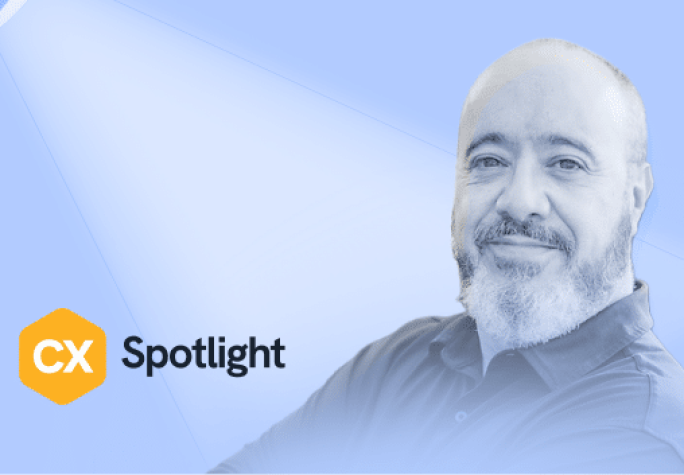


CX Spotlight is a series where we speak to customer experience leaders from across industries who are rethinking support, building customer-first cultures, and finding clarity in the messiness of real-life CX.
Every edition is a quick, candid conversation. No fluff. No jargon. Just real-world insights from people who’ve been there and done that.
Table of Contents
- 👉 In Conversation With Fernando Duarte
- 1. Tell us how you found your way into the world of customer experience. Was it intentional or accidental?
- 2. What would your support alter ego be called—and what would their superpower be?
- 3. What’s one practical change you’ve implemented to make your team more customer-centric?
- 4. What’s the most “CX” thing you’ve ever done outside of work?
- 5. The most underrated customer service metric in your opinion?
- 6. What’s the weirdest or most unexpected support request you’ve ever handled?
- 7. One ticketing automation you’d recommend to every CX leader?
- 8. What’s a use case where AI actually made things better — for either a customer or your team?
👉 In Conversation With Fernando Duarte
While most teams are still figuring out where AI fits in support, Fernando Duarte uses it to change how support actually runs. Not to shrink teams, but to reduce manual work and eliminate repetitive tasks that slow down response and resolution.
Fernando is the founder of CXperiences and Director of Support at Odyssey, a company that helps people access disability benefits and related services.
Over the last 15 years, he has scaled teams from 3 to 50+ and handled 5x ticket growth without adding much headcount, all whilst maintaining a 98% CSAT.
At Odyssey, that mindset shows up in small but high-impact fixes. When agents flagged repeated issues with ESA applications, he didn’t try to handle them faster. He fixed the form that was causing the issue. Tickets related to this topic dropped by 25%.
In this episode, Fernando explains why repeat contacts (when customers reach out again for the same issue) are the metric most teams miss. He also shares the story about a customer meeting that happened on the roadside while changing a tire.
1. Tell us how you found your way into the world of customer experience. Was it intentional or accidental?
I started in retail, where I learned that taking care of customers means taking care of your team first. That lesson led me straight into customer experience, where I’ve stayed ever since.
2. What would your support alter ego be called—and what would their superpower be?
My alter ego would be Futureproof. My superpower is designing systems that still hold up when things scale fast. I’m always thinking 10 steps ahead.
3. What’s one practical change you’ve implemented to make your team more customer-centric?
We had recurring issues with parents struggling with ESA applications. Our agents flagged it, so we gathered their feedback and revamped the forms. Tickets on that issue dropped by 25%. The team could clearly see how their input improved the customer experience.
4. What’s the most “CX” thing you’ve ever done outside of work?
I helped my parents by centralizing their passwords and simplifying access to their essential accounts. Now, they can easily manage their websites and finances on their own, without compromising security. It’s customer experience. Just closer to home.
If you think about CX as reducing friction in everyday moments, our CX Spotlight with Jeannie Walters explores why customer effort often matters more than delight.
Read it here: Jeannie Walters on Why Customer Effort Beats Delight, and the Case of the Antique Heirloom
5. The most underrated customer service metric in your opinion?
From what I’ve seen, repeat contacts on the same issue tell you more than most metrics. If customers have to come back, it wasn’t really resolved the first time. That’s where things break. Start tracking that, and you’ll quickly see what needs fixing.
6. What’s the weirdest or most unexpected support request you’ve ever handled?
At Zuora, a client got a flat tire on the way to our meeting. They didn’t want to cancel, so I met them on the roadside. We had the meeting while I helped them change the tire. We solved what they needed right there, and they ended up becoming a long-term customer.
7. One ticketing automation you’d recommend to every CX leader?
I’d recommend auto-tagging tickets by intent. When every ticket is classified upfront, you can clearly see what’s trending, what needs fixing, and how to prioritize your team’s time.
8. What’s a use case where AI actually made things better — for either a customer or your team?
We started using AI to handle the initial triage for voice and chat. Instead of agents manually sorting tickets, AI classifies and routes them upfront. It instantly routed Louisiana program inquiries. That cut down manual work and sped up resolutions.
It also freed up agents to focus on more complex issues. This improved both team efficiency and the overall customer experience.
✨ Three Takeaways from Fernando’s CX Playbook
- Turn agent feedback into product and process improvements. Agents are closest to the problem. Use their inputs to identify gaps and drive fixes upstream.
- Track repeat contacts, not just resolutions. If customers come back for the same issue, your process is broken. That’s where to focus.
- Fix issues at the source. Don’t just optimize replies or reduce handle time. Look at what’s causing the issue in the first place and remove it.
Enjoyed Fernando’s take on customer experience? Connect with him on LinkedIn or check out more stories in the CX Spotlight series.
Are you a CX leader with stories, lessons, or ideas to share? 👉 Answer these questions to get featured!