




For decades, the logistics industry excellence has been defined by the seven Rs – getting the right product to the right recipient, at the right time, in the right quantity, at the right level of quality, with the right information, and at the right price.
But in recent years, an eighth R has joined the list – the right experience.
Today, ensuring customers have the right experience has become just as important as getting everything else right. Brands that deliver a smooth, transparent, and responsive logistics experience enjoy higher customer loyalty, stronger retention, and even improved profitability.
In this article, we’ll explore the state of customer experience in the logistics industry – including:
- The biggest challenges logistics companies face in meeting modern customer expectations
- How they can elevate customer experience
- How using an IT support tool can help transform CX in logistics
- The tangible benefits of improving customer experience in logistics
6 Challenges That Impact Customer Experience in Logistics
Before we explore how logistics companies can elevate customer experience, let’s first understand what gets in the way. Here are six challenges that negatively impact customer experience in the logistics industry.
1. Rising Customer Expectations for Speed and Transparency
Today’s customers expect speed and transparency. On-time deliveries, quick resolutions, and clear communication at every step is the bare minimum now. They want logistics providers to be easily accessible, especially when something goes wrong. Whether it’s checking shipment status or resolving a damaged goods claim, customers expect issues to be handled fast – ideally in a single interaction.
The challenge is that most logistics operations still run on fragmented systems. Tracking data, customer records, and support conversations often sit in different tools. When a customer calls about a delay, the support agent must check multiple dashboards or reach out to the warehouse team before giving an update. This back-and-forth eats up time, frustrates customers, and makes it impossible to deliver quick, confident answers.
Over time, these small delays and unclear updates create a poor customer experience.
2. Communication Gaps Between Teams
Delivering great customer experience in logistics depends on how well internal teams work together. Support agents, warehouse staff, drivers, and finance teams all play a part in resolving customer issues.
But in many logistics organizations, these teams still operate in silos. A customer might email support about a missing shipment, but the information needed to resolve it sits with the operations or delivery team. The agent has to call or message the warehouse to confirm details, then wait for a response. Sometimes, the update doesn’t reach the agent in time – or it reaches them after the customer has already had to follow up again.
This kind of breakdown happens when there’s no shared platform or clear workflow connecting departments. Information gets lost in email threads or chat messages, updates are delayed, and customers are left in the dark.
When internal communication falters, customer communication suffers too – and that’s often what customers remember most.
Recommended reading
3. Reactive Problem Solving
Most logistics companies still operate in reaction mode. They wait for customers to report a delay, a missing package, or a failed delivery before taking action. By the time support teams respond, the customer has already faced the inconvenience.
This reactive approach stems from a lack of real-time visibility and automated alerts. If a shipment is delayed at customs or stuck at a warehouse, the system doesn’t always notify the team in time. As a result, customers are often the first to flag a problem – not the company.
Proactive communication is what separates average logistics providers from great ones. When customers are informed early about delays or changes, they’re far more likely to stay patient and satisfied. But when updates come only after they’ve complained, it leaves a lasting negative impression.
4. Lack of Self-Service and Knowledge Sharing
A large share of customer queries in logistics are repetitive – tracking orders, updating delivery addresses, or asking about shipping timelines. Agents spend hours responding to questions that could easily be answered through a simple FAQ or automated message.
The same issue exists internally. Warehouse teams or drivers may need help with IT tools, barcode scanners, or billing systems, but have no central place to find answers. They rely on emails or chats to get help, slowing down both support and operations.
Without proper knowledge sharing, teams waste time repeating the same explanations, and customers are forced to wait for information that should have been easily accessible.
Recommended reading
5. Difficulty Prioritizing and Managing High Volumes
During peak seasons, logistics teams face a flood of customer requests – shipment updates, delivery changes, claims, and urgent escalations all come in at once. Each query might involve a different customer, shipment type, or delivery partner, making it hard to know what needs immediate attention.
Many teams still sort and assign requests manually through emails or basic tracking sheets. Without clear systems to categorize and prioritize issues, critical cases get mixed in with routine ones. A delay for a key client might receive the same response time as a general inquiry.
When workloads surge and priorities aren’t clear, response times stretch, small errors multiply, and customers feel ignored just when they expect the most responsiveness. Peak season pressure often reveals how fragile existing support systems really are.
Recommended reading
The Role of Customer Service in Logistics in 2025 (And How to Do It Better)
6. Limited Visibility Into Performance and Trends
Customer experience in logistics can only improve if teams know what’s going wrong – and where. But many logistics companies lack the data or reporting systems needed to track recurring issues or monitor service quality.
Without visibility into patterns like frequent delivery delays, high ticket volumes from specific locations, or slow response times, it’s difficult to take preventive action. Leaders end up relying on guesswork instead of insights.
This lack of visibility means teams react to problems after they’ve already affected customers – rather than using data to stop them from happening again.
How Companies Can Elevate Customer Experience in Logistics
Improving customer experience in logistics, or any industry for that matter, is about putting systems in place that keep customers informed, supported, and confident at every step. The most successful logistics providers focus on a few key principles that make a lasting difference. Let’s look at them.
- Put the customer first, not the shipment – In many logistics teams, success is measured by how efficiently shipments move. But great customer experience starts when teams shift focus from packages to people. Every delivery or update is an opportunity to reassure and support the customer.
That means treating each inquiry – whether it’s a status check or a complaint – with empathy and urgency. Customers remember how you handle issues more than how you avoid them. - Communicate proactively – Customers don’t like being left in the dark. If there’s a delay or an issue, they want to know before they have to ask.
Proactive updates build trust and reduce frustration. A short message saying, “Your delivery is running late due to weather, and we expect it to arrive tomorrow,” can prevent multiple follow-ups and show reliability even when things go wrong.
- Encourage collaboration across teams – Customer issues in logistics span multiple departments – operations, warehouse, billing, and delivery. To deliver consistent experiences, these teams must work together instead of passing tickets back and forth.
When information flows freely between departments, customers get faster, clearer answers. Collaboration inside the company directly translates to smoother service outside it.
- Build consistency across every interaction – Customers may contact your team through different channels – phone, email, chat, or social media. Regardless of where they reach out, they expect the same level of clarity, tone, and accuracy.
Consistency makes your brand feel reliable. Clear internal communication guidelines and shared information ensure every customer gets the same quality of support.
- Learn and improve continuously – Customer experience isn’t a one-time project – it’s a process. Collect feedback after every major delivery cycle or peak season. Identify what went wrong, what customers complained about, and what can be improved next time.
Continuous improvement shows customers you’re listening and adapting – and it helps your team build more resilient, customer-first processes over time.
Recommended reading
How to Collect Customer Feedback That Actually Drives Action
How the Right Logistics Support Software Can Improve Customer Experience
Using a good logistics support tool can transform the quality of customer experience you provide. Essentially a platform that helps teams stay organized, respond faster, and maintain visibility across every customer touchpoint.
One such tool is Hiver – a modern, AI-powered ticketing solution designed for fast-moving logistics businesses. Hiver brings all your support conversations into a single, intuitive platform, while offering the power of enterprise help desk software.
Let’s break down how Hiver helps logistics companies overcome key challenges and deliver stellar customer experiences.
1. Manage Customer Conversations Seamlessly Across Channels
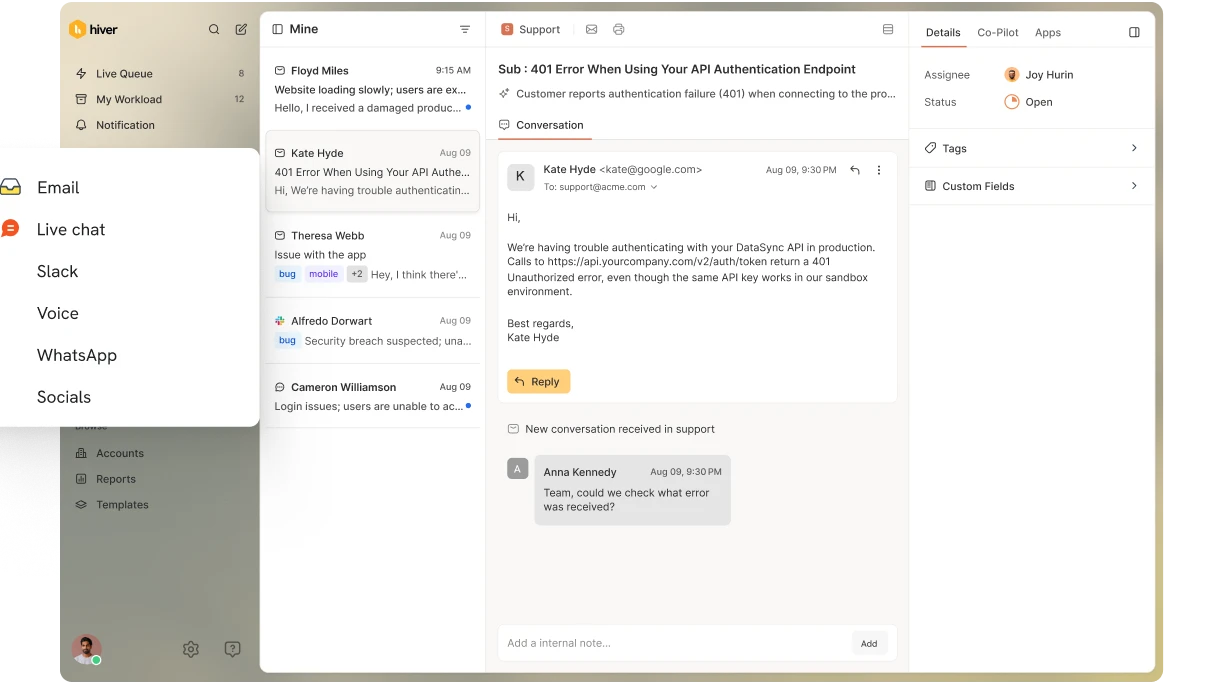
Hiver’s omnichannel ticketing system lets logistics teams manage every customer interaction across channels like email, live chat, WhatsApp, voice, SMS, and social media – all from a single, unified interface. No more switching between tabs or juggling multiple disconnected tools. Your team gets a complete, 360° view of each customer conversation, along with its full context, in one place.
Each conversation comes with its own status (open, pending, or closed), a full response history, and internal notes – so it’s easy to track ownership and progress without any confusion. This unified view helps teams deliver a faster, more consistent customer experience, no matter which channel the query comes from.
This helps logistics teams stay organized even during high-volume periods, respond faster across every channel, and ensure no message gets missed.
Let’s say a customer reaches out on Facebook about a missing package, then sends a WhatsApp message later that day. With Hiver, both messages land in the same inbox, visible to the same agent, with all previous context intact – making it easy to respond quickly, maintain consistency, and keep the customer informed throughout.

2. Collaborate Across Teams Without Losing Context
Hiver makes collaboration across different teams and departments simple and seamless — right within the ticket itself. This is crucial for logistics teams, where every customer issue often involves multiple departments — operations, warehouse staff, delivery partners, finance, and support.
To make this easier, Hiver offers a set of built-in collaboration features that help teams work together quickly and resolve customer issues without confusion or delay:
- Use @mentions in Notes to loop in teammates, share context, or get quick approvals – without switching tools. For example, an agent handling a delayed shipment can tag someone from Operations with: “Customer’s order #7845 has been stuck at the hub since Monday. Can you confirm the revised delivery ETA?” Operations replies in the note, and the agent updates the customer directly, all within Hiver.
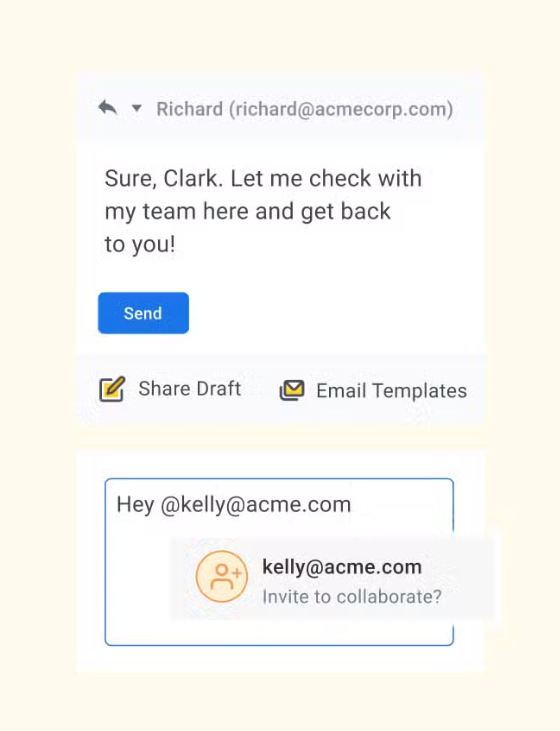
- Shared drafts let two or more team members co-edit replies before sending them – helpful for sensitive customer conversations or high-value clients.
- Collision detection alerts agents in real time if someone else is replying to the same ticket, preventing duplicate or conflicting responses.
- With Collaborators, even non-Hiver users (like contractors or field ops) can be invited to view and contribute to specific conversations – ensuring everyone involved has context and customers never hear “we’re still checking with another team.”
3. Prioritize and Track Every Customer Issue With Confidence
Some customer issues are more urgent than others – like a client threatening to cancel a bulk order due to repeated delays, or a high-value shipment that’s gone missing. During busy periods, logistics teams deal with hundreds of requests at once, making it difficult to identify what needs attention first. Without a clear system to flag and organize these tickets, teams can lose time figuring out priorities – and risk missing critical deadlines that affect customers.
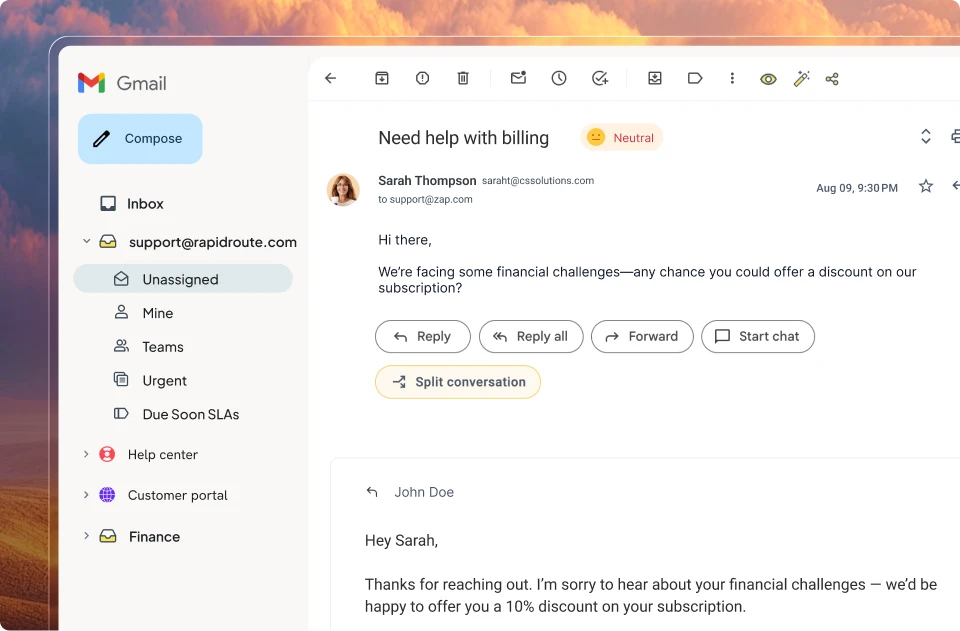
Hiver helps logistics teams stay in control by letting you tag, categorize, and prioritize every ticket. You can add custom fields like ticket type, urgency level, delivery route, warehouse location, or SLA target – and use these to filter and sort tickets.
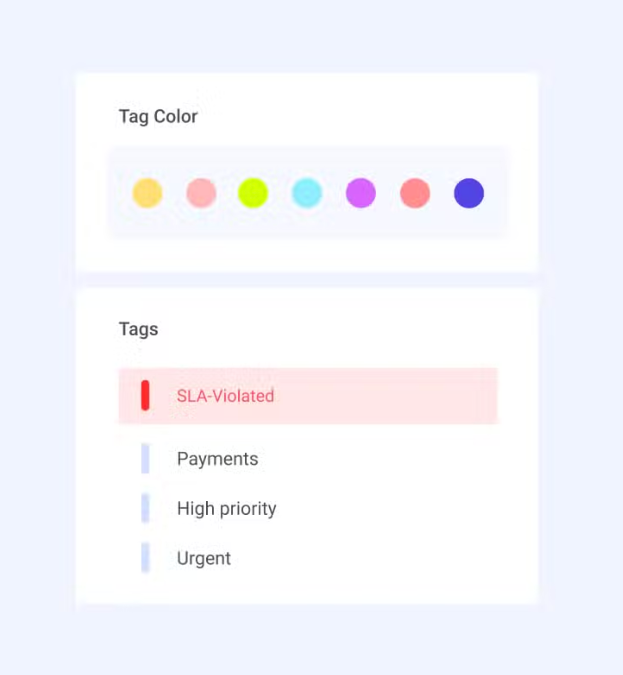
For example, you can build custom views like “High priority today,” “Delayed shipments,” or “Billing issues pending refund” – so nothing gets missed, even when volumes are high.
You can also set SLAs for response and resolution times, and Hiver will automatically alert managers or agents if a deadline is about to be breached. This ensures that urgent issues are handled on time, and team performance stays on track.
4. Reduce Repetitive Queries With a Self-Service Knowledge Base
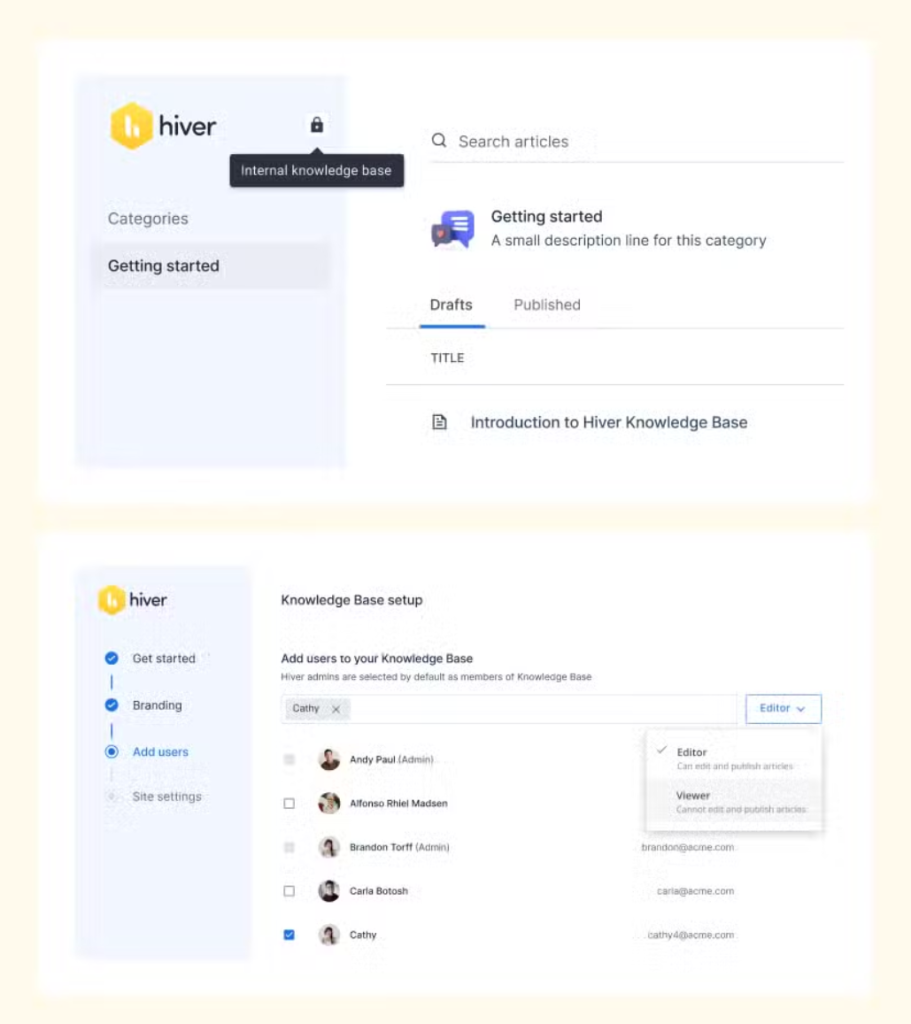
Hiver lets you set up a knowledge base so customers and teams can find answers on their own – reducing the load on your support team and improving response times.
You can create a public-facing knowledge base to help customers quickly resolve common queries like tracking orders, updating delivery addresses, or understanding shipping timelines – without having to raise a ticket.
You can also create an internal knowledge base for your teams to securely store and share SOPs, troubleshooting steps, and policy documents. This helps warehouse staff, delivery teams, and agents get the right information instantly, instead of waiting on someone else.
5. Improve Support Operations With Clear, Actionable Analytics
Without proper data, logistics support teams often end up reacting to problems instead of preventing them. It becomes hard to identify recurring issues or track how well customer queries are being resolved. For example, you might not know if a specific warehouse is facing more delays than others, or if customer complaints about missed deliveries are increasing week after week.
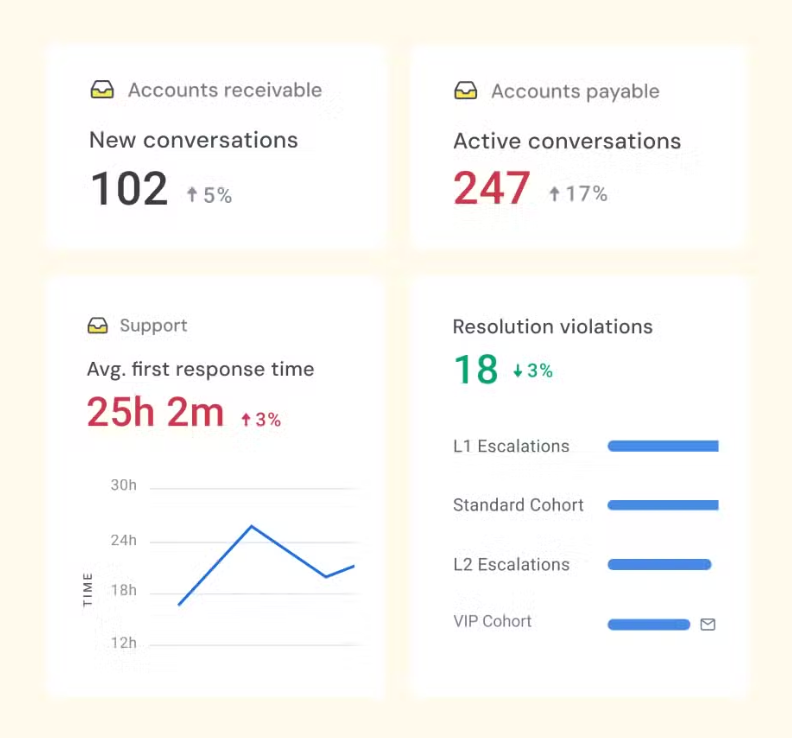
Hiver solves this with built-in analytics and reporting tools that help you monitor performance and spot trends across your entire customer support operation.
You can track data like:
- New Conversations – See how many customer queries are coming in and from which channels.
- First Response Time – Measure how quickly your team gets back to customers.
- Resolution Time – Track how long it takes to close issues completely.
- SLA Performance – Identify which tickets are on time and which are at risk of breaching.
- Workload Distribution – View how requests are spread across agents, teams, tags, or locations.
- CSAT Scores – Gather direct feedback from customers after every interaction.
You can also build custom dashboards combining these metrics to track what matters most – whether that’s high-priority client issues, common delivery delays, or overall customer satisfaction. Reports can be scheduled and shared easily with ops, IT, or leadership teams.
6. Streamline Customer Support With AI Built Into Every Step
Hiver AI is built into every stage of the customer support process – from sorting and routing queries to drafting replies and analyzing performance. It’s not just layered on top; it works behind the scenes, end to end, to make every customer interaction faster and smoother.
AI helps logistics teams manage the high volume and complexity of customer requests by handling repetitive work, speeding up responses, and helping agents make better decisions. This means customers spend less time waiting for updates and get accurate answers right away.
With AI Agents, Hiver can automatically tag and route conversations based on intent – such as shipping delays, billing issues, or address change requests. It can also extract key details like order ID, location, or delivery date directly from the message and assign it to the right team instantly.
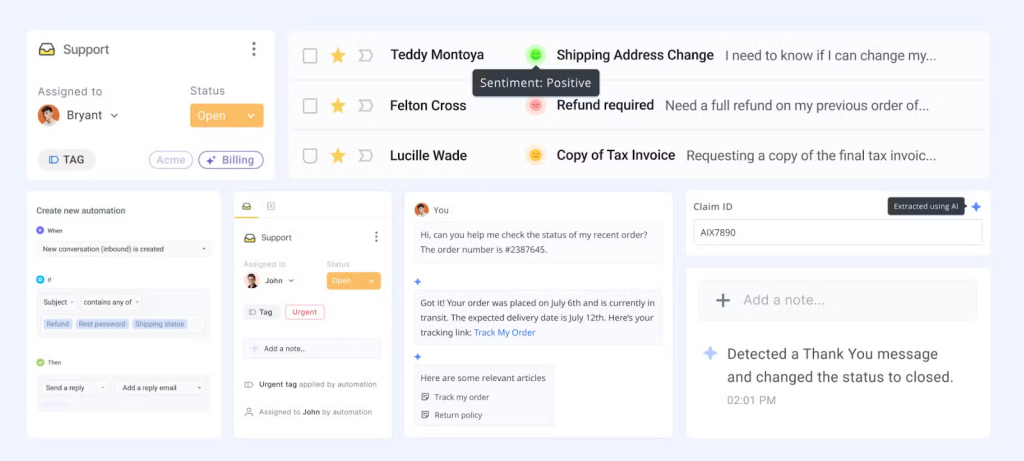
AI Copilot assists agents in real time by drafting responses, summarizing long threads, and pulling answers from your help docs or internal SOPs. Instead of searching for information across tools, agents can reply within seconds – keeping conversations moving and customers informed.

You can also automate full workflows – like issuing refunds, updating CRMs, or notifying teams when a specific type of query comes in. And with AI QA and AI Insights, managers get a complete view of team performance, customer sentiment, and recurring pain points – without having to review every ticket manually.
By embedding AI into every step, Hiver helps logistics teams deliver faster, more reliable, and more empathetic customer experiences – at any scale.
Benefits of Improving Customer Experience as a Logistics Company
Here are some of the key benefits that come from getting customer experience right –
- Higher Customer Loyalty and Retention – When customers know their shipments will arrive on time and any issues will be fixed quickly, they’re more likely to return. A simple, transparent experience builds trust. Over time, that trust turns one-time users into loyal customers who stay because they feel taken care of.
- Stronger Brand Reputation – When updates are clear, responses are fast, and promises are kept, customers remember that. They’re also more likely to recommend your service to others. Reliable, consistent communication helps your company stand out for the right reasons.
- Improved Profitability – Happy customers spend more, complain less, and are easier to retain than new ones are to acquire. Fewer escalations and smoother operations also mean lower costs – helping the business grow without adding extra overhead.
- Better Insights for Continuous Improvement – Regularly reviewing feedback and spotting recurring problems helps teams fix weak points early. This creates a cycle of constant improvement – better service, happier customers, stronger results.
- Reduced Support Volume – When customers get timely updates and clear information, they don’t have to keep asking for help. This cuts down repetitive tickets and frees your team to focus on complex issues that need real attention.
Nailing the Last ‘R’ in Logistics
Getting the right product to the customer at the right time is no longer enough. Today, what truly sets businesses apart is the experience customers have from beginning to end. It’s the small details that make the biggest difference.
How easy is it for customers to find information about their shipment? How quickly do you respond when they reach out with a question? How often and how transparently do you update them when something changes? These moments shape how customers feel about your service – and whether they’ll choose you again.
To deliver that level of experience, you need strong systems that keep teams aligned, customers informed, and communication effortless. That’s where tools like Hiver make a difference. By centralizing all your customer conversations, automating routine work, and giving you complete visibility, Hiver helps you build the kind of experience customers remember – for all the right reasons.
Start using Hiver today
- Collaborate with ease
- Manage high email volume
- Leverage AI for stellar service