Skip to content



AI chatbots in logistics mark one of the most significant operational shifts in recent years. They’re helping companies manage complex supply chains with greater precision, speed up deliveries, and maintain continuous communication with customers.
Today, in logistics, speed is everything. And what’s more is that customers expect live updates, instant answers, and full transparency about their shipments. The bar has been set high. Any unexpected hitches or mistakes can result in a poor customer experience.
Behind the scenes, though, support teams are stretched thin. They face a flood of repetitive, time-sensitive queries like “Where’s my order?” or “Can I change my delivery address?” while juggling multiple systems and tight delivery schedules.
AI chatbots are stepping in to bridge this gap. Beyond answering customer questions instantly, they’re driving smarter, more data-backed decisions, improving operational foresight, and enabling logistics businesses to scale without chaos.
In this article, we’ll talk about –
- What exactly are AI chatbots in logistics
- Key use cases of AI chatbots in logistics
- The tangible benefits they bring
Table of Contents
- What Are AI Chatbots in Logistics (and How Do They Work)?
- Key Use Cases of AI Chatbots in Logistics
- The Benefits of Using AI Chatbots in Logistics
- The Future of AI in Logistics Support
What Are AI Chatbots in Logistics (and How Do They Work)?
AI chatbots in logistics are intelligent virtual assistants that help companies communicate seamlessly with customers, delivery teams, and other stakeholders across the supply chain. Powered by artificial intelligence and natural language processing (NLP), these chatbots can understand human queries, pull the right information from connected systems, and respond instantly – without human intervention.
In logistics, this means customers no longer have to wait in queues or send multiple follow-up emails to know where their shipment is. A chatbot can instantly share the delivery status, estimated arrival time, or even assist with changes like rescheduling or updating an address.
Behind the scenes, AI chatbots integrate with core logistics tools – such as shipment tracking software, warehouse management systems, CRMs, or help desks – to access live data. Using that data, they can:
- Recognize the customer’s intent (e.g., checking an order status).
- Fetch relevant details from internal databases.
- Respond in natural, conversational language.
- Escalate complex issues to a human agent when needed.
Unlike traditional scripted bots, modern AI chatbots can even learn from past interactions and improve over time. They adapt to new queries, spot patterns in customer behavior, and help logistics teams anticipate issues before they arise.
Key Use Cases of AI Chatbots in Logistics
Let’s look at some of the most impactful use cases in logistics – what exactly they help with, and how companies are using them to simplify operations.
Customer-Facing Use Cases
- Order Tracking and Delivery Updates – This is one of the most common and high-impact applications of AI chatbots in logistics. Customers can simply ask, “Where’s my package?” and get an instant, accurate response – pulled directly from the company’s tracking systems. Chatbots can also proactively notify customers about delays, dispatches, or delivery confirmations, reducing the number of inbound support queries.
- Address Changes or Delivery Rescheduling – Customers often need to modify delivery addresses or change delivery slots at the last minute. AI chatbots can handle these simple, high-frequency requests instantly – verifying identity, checking route feasibility, and confirming the update – without an agent ever needing to step in.
- Returns, Refunds, and Damaged Goods – AI chatbots can guide customers through the return or refund process by providing clear next steps, generating return labels, or logging damaged-item reports. For logistics companies handling large shipment volumes, automating these workflows saves countless agent hours while improving customer satisfaction.
- FAQs and Policy Queries – Chatbots can instantly answer repetitive queries around shipping costs, customs regulations, or delivery timelines. For global logistics operations dealing with different rules across countries, this ensures customers always receive accurate, location-specific information – without waiting on hold.
Recommended reading
Why IT Support Is Crucial for Logistics and How to Get It Right
Operations and Internal Coordination Use Cases
- Driver and Fleet Communication – AI chatbots can serve as a bridge between dispatchers and drivers, instantly relaying route updates, schedule changes, or delivery instructions. Instead of relying on manual calls or messages, fleet teams can receive automated updates and confirmations in real time – reducing delays and miscommunication.
- Warehouse and Inventory Coordination – In large operations, chatbots can help track inventory levels, flag shortages, or alert teams when an item is ready for dispatch. For instance, if an order is delayed because of missing stock, the chatbot can automatically notify the warehouse team and update the customer at the same time.
- Freight and B2B Client Support – For logistics companies that serve business clients, chatbots can automate routine queries around freight quotes, invoices, and documentation requirements. They can also escalate high-value or complex requests to human agents with complete context, ensuring smooth communication across accounts.
- Exception Handling and Escalation – When things go wrong – say, a shipment is delayed or a delivery attempt fails – chatbots can detect the issue, update the customer, and automatically create a ticket for human review. This ensures that problems are addressed faster, and customers remain informed throughout the process.
The Benefits of Using AI Chatbots in Logistics
1. Faster Responses and Happier Customers
In logistics, every minute counts – whether it’s updating a customer about a delayed parcel or confirming a delivery change. AI chatbots handle large volumes of repetitive queries instantly, bringing response times down from hours to seconds.
For example, instead of waiting for an agent to check a tracking ID, customers can simply ask the chatbot, “Where’s my order?” and receive a live update pulled directly from the shipment system. This way customers get quicker answers, fewer follow-ups, and a smoother customer experience overall.
Recommended reading
What Is Customer Happiness? 10 Practical Ways to Keep Customers Happy
2. Lower Operational Costs
Customer support in logistics can get expensive, especially when teams deal with thousands of similar queries every day. By automating routine interactions, AI chatbots reduce the workload on human agents – allowing smaller teams to handle higher volumes.
This doesn’t just save on manpower costs; it also minimizes the need for extra hiring or training during busy seasons.
3. Round-the-Clock Availability
Shipments move across countries and time zones – and customers expect support to keep pace. AI chatbots never log off; they provide instant assistance 24×7, ensuring that customers, drivers, or partners get help at any hour.
This “always-on” support model is particularly valuable for global logistics operations, where delays in response can impact delivery timelines or customer confidence.
4. Greater Accuracy and Fewer Errors
Manual lookups and data entry often lead to inconsistencies – especially when agents work under pressure. AI chatbots eliminate this problem by fetching real-time data directly from connected systems such as CRMs, order management tools, or tracking software.
This ensures that every response – whether it’s about a delivery ETA or customs clearance – is accurate and up to date. The consistency also builds trust and reduces the number of follow-up queries or escalations.
5. Scalability During Peak Demand
Peak shipping seasons like holidays or flash sales can overwhelm logistics teams. AI chatbots can scale effortlessly to handle sudden surges in queries without additional hiring or overtime costs.
For instance, during year-end sales, a logistics provider can handle thousands of “Where’s my package?” requests simultaneously – something impossible to achieve with human agents alone. Chatbots maintain response speed and quality even under high load, keeping operations stable.
Recommended reading
6. Actionable Insights for Continuous Improvement
Every interaction handled by a chatbot leaves behind valuable data. Over time, logistics teams can analyze this to identify recurring customer pain points, frequently delayed routes, or process gaps.
For example, if a chatbot notices that “reschedule delivery” requests spike in certain regions, the company can investigate and optimize its delivery patterns. These insights turn routine conversations into opportunities for long-term efficiency and customer experience improvements.
Recommended reading
The Role of Customer Service in Logistics in 2025 (And How to Do It Better)
7. Smarter Query Routing and Escalation
By understanding the intent behind a customer’s message, chatbots can intelligently route queries to the most suitable team or agent.
For example, if a customer reports a damaged package, the chatbot can immediately escalate the case to the claims or operations team with all relevant details attached. Meanwhile, simpler questions like “What’s your return policy?” can be resolved through automated responses or redirected to a self-service page.
This smart routing reduces wait times, prevents misdirected tickets, and ensures that every query gets handled by the right person on the first try.
The Future of AI in Logistics Support
As logistics networks grow more complex and customer expectations rise, the role of AI in support will only deepen and expand, starting from AI chatbots.
Hiver, an AI-powered customer support platform, is already enabling this shift – by helping teams use AI across the entire customer journey to facilitate faster resolutions, and , automate repetitive tasks.,
It can also help logistics companies to –
- Manage customer conversations across channels – email, chat, WhatsApp, voice, and more – from one unified, easy-to-use platform.
- Automate repetitive tasks like tagging, routing, and prioritizing queries with AI Agents.
- Assist agents in real time with AI Copilot that drafts replies, summarizes threads, and pulls relevant info instantly.
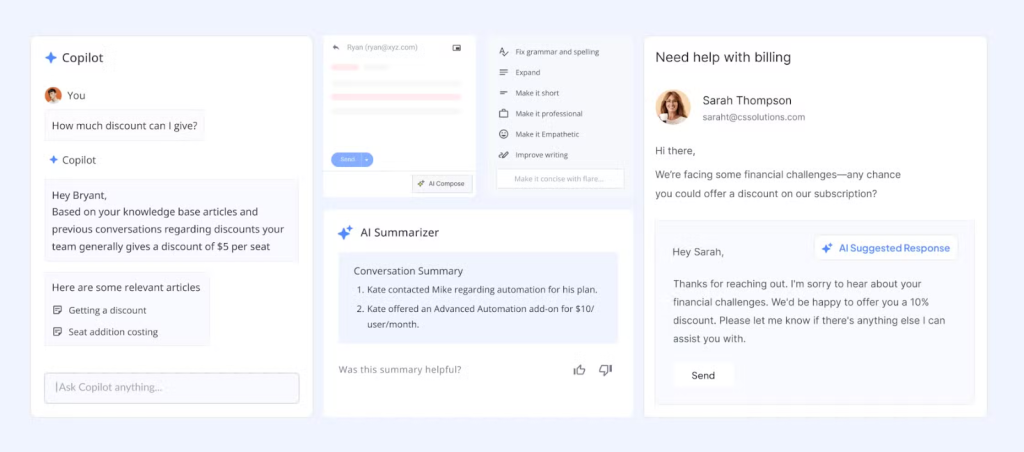
- Improve cross-team collaboration by letting support, ops, and warehouse teams work together directly within a ticket.
- Empower self-service with a public and internal knowledge base for customers and staff.
- Track performance and insights through real-time analytics on response times, SLAs, and CSAT scores.
- Ensure consistency and quality with AI QA that reviews interactions and flags improvement areas.
Start using Hiver today
- Collaborate with ease
- Manage high email volume
- Leverage AI for stellar service