Skip to content



Working in a customer support business, I’ve noticed most issues surface only after the damage is done. By the time a customer complaint hits your inbox, it’s already too late to prevent it. That’s exactly where proactive customer service changes the game. It helps your team spot potential problems early, reach out before customers do, and turn quick fixes into lasting trust.
Recent research shows 87% of consumers want brands to anticipate their needs, and companies that do see a 20% rise in customer satisfaction. The benefits go beyond happier customers: proactive service can reduce support costs by up to 25% in a year.
This guide breaks down what proactive service looks like, why it matters, and how to start building it in your own team.
Table of Contents
- What is Proactive Customer Service?
- Difference Between Proactive and Reactive Customer Service
- Why Should You Offer Proactive Customer Service?
- Key Benefits of Proactive Customer Service
- 10 Ways to Deliver Proactive Customer Service
- 1. Use AI to Detect Issues Before Customers Do
- 2. Identify At-risk Customers by Monitoring Customer Health Every Day
- 3. Communicate Issues Before Customers Notice
- 4. Build a Self-Service Hub That Actually Works
- 5. Automate Ticket Routing and SLA Tracking
- 6. Respond to Feedback in Real Time
- 7. Educate Customers Right Inside Your Product
- 8. Train Agents to Think One Step Ahead
- 9. Personalize Outreach Based on Customer Data
- 10. Share Insights Across Teams to Fix Root Causes
- Proactive Customer Service Examples & Industry Use Cases
- How to Measure the Success of Proactive Customer Service
- Switch Up Your Customer Experience with Proactive Customer Service
- Frequently Asked Questions
What is Proactive Customer Service?
Proactive customer service means anticipating customer needs and solving issues before they turn into problems. It’s an approach where support teams use customer data, feedback, and behavior patterns from past interactions to predict friction points and address them early. The goal is simple – reduce customer effort, prevent complaints, and create smoother and more reliable experiences that build long-term trust.
For example, if your payment gateway goes down, a reactive team waits for angry emails. A proactive team, on the other hand, quickly notifies customers about the outage. It also explains how long the fix will take and suggests alternate payment options. This way, instead of feeling frustrated, customers stay informed and reassured.
Let’s understand the difference between reactive and proactive customer service more clearly.
Difference Between Proactive and Reactive Customer Service
Most teams still work reactively, solving problems only after they appear. Understanding how proactive service differs from this approach is key because the mindset and results are completely different.
| Aspect | Reactive Customer Service | Proactive Customer Service |
|---|---|---|
| Approach | Responds to customer issues after they occur | Anticipates and prevents issues before they arise |
| Timing | After the customer reaches out | Before the customer experiences a problem |
| Customer Experience | Frustration followed by resolution | Clarity and confidence from timely communication |
| Goal | Resolve problems quickly | Reduce ticket volume and customer effort |
| Communication | Customer-initiated | Brand-initiated and timely |
| Data Use | Used to fix recurring issues | Used to predict and prevent future ones |
| Team Focus | Handling escalations and backlogs | Improving systems and removing friction points |
| ROI | Higher cost per ticket due to repeated contacts | Lower costs and stronger retention through efficiency |
In simple terms, reactive service fixes problems after they happen, while proactive service prevents them before they occur. One keeps you busy solving issues; the other keeps your customers happy because there are fewer to begin with.
To make the shift, start small:
- Spot patterns early. Use support analytics to detect rising complaint trends or recurring issues.
- Communicate first. Don’t wait for customers to ask. Send proactive updates, outage alerts, or self-help guides.
- Measure the impact. Track metrics like reduced ticket volume and higher CSAT to prove the ROI of proactive service.
For example, imagine a customer waiting for a delivery that’s running late. A reactive team responds after the “where’s my order?” email arrives. A proactive team sends an update before that happens, with a new delivery time and a link to track the order. The customer stays informed, and support avoids another ticket.
Recommended reading
Why Should You Offer Proactive Customer Service?
Customers don’t measure service by how fast you reply anymore; they judge it by how early you act.
- According to research, 83% of consumers want companies to contact them proactively, and 87% say it makes them more loyal.
- Proactive outreach builds confidence and eliminates surprises. When brands communicate early about issues like order delays or payment errors, complaints can drop by up to 40%. Customers stay informed and are far less likely to reach out in frustration.
- It directly improves brand reputation by showing reliability and transparency. 70% of customers view proactive brands as more trustworthy, and that perception translates directly into retention and advocacy.
Key Benefits of Proactive Customer Service
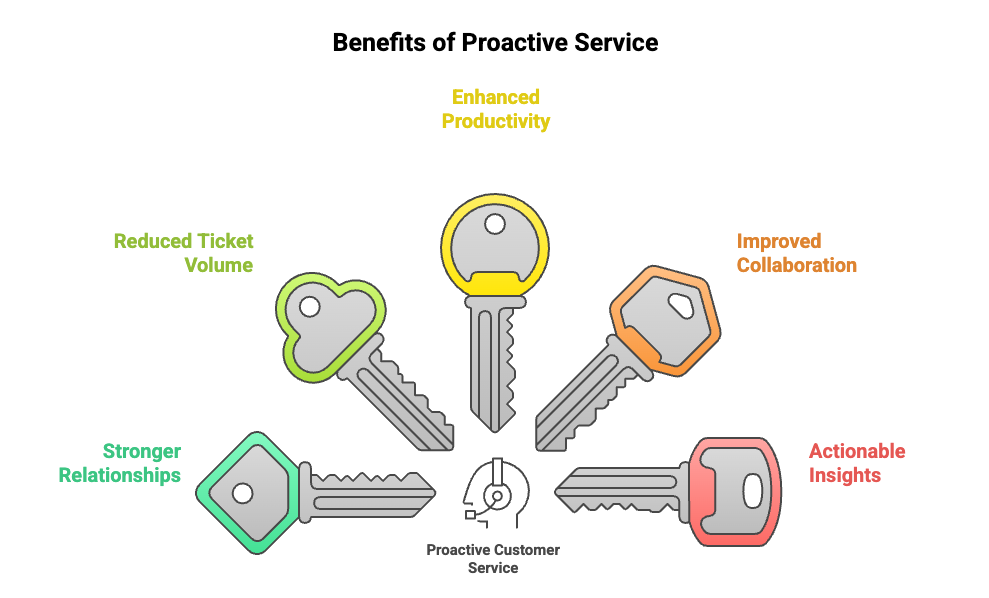
Proactive service shifts your team’s focus from constant firefighting to real problem-solving. It reduces repetitive queries, improves collaboration, and gives agents the time and data they need to deliver personalized, meaningful support.
1. Stronger Customer Relationships
When you reach out before they ask, customers feel understood and valued, which tells them you genuinely care and strengthens emotional connection and trust. That simple act of foresight builds trust and turns happy customers into loyal advocates.
2. Lower Ticket Volume and Faster Resolution
Timely updates, automated alerts, and self-service resources prevent repetitive queries from piling up. This keeps ticket queues shorter and helps agents respond faster.
3. Better Agent Productivity
With fewer repetitive tickets, agents can focus on complex or high-touch cases that require attention and problem-solving. This shift boosts engagement, reduces burnout, and improves overall service quality.
4. Improved Cross-Team Collaboration
Proactive insights often reveal recurring issues that point to deeper product or process gaps. Sharing those findings with teams like product, operations, or engineering helps fix the root cause instead of applying temporary fixes.
5. Actionable Customer Insights
Every proactive interaction, whether it’s a status alert, email, or chatbot message, captures behavioral data. Over time, this data helps CX leaders identify patterns, refine workflows, and forecast needs with greater accuracy.
Recommended reading
10 Ways to Deliver Proactive Customer Service
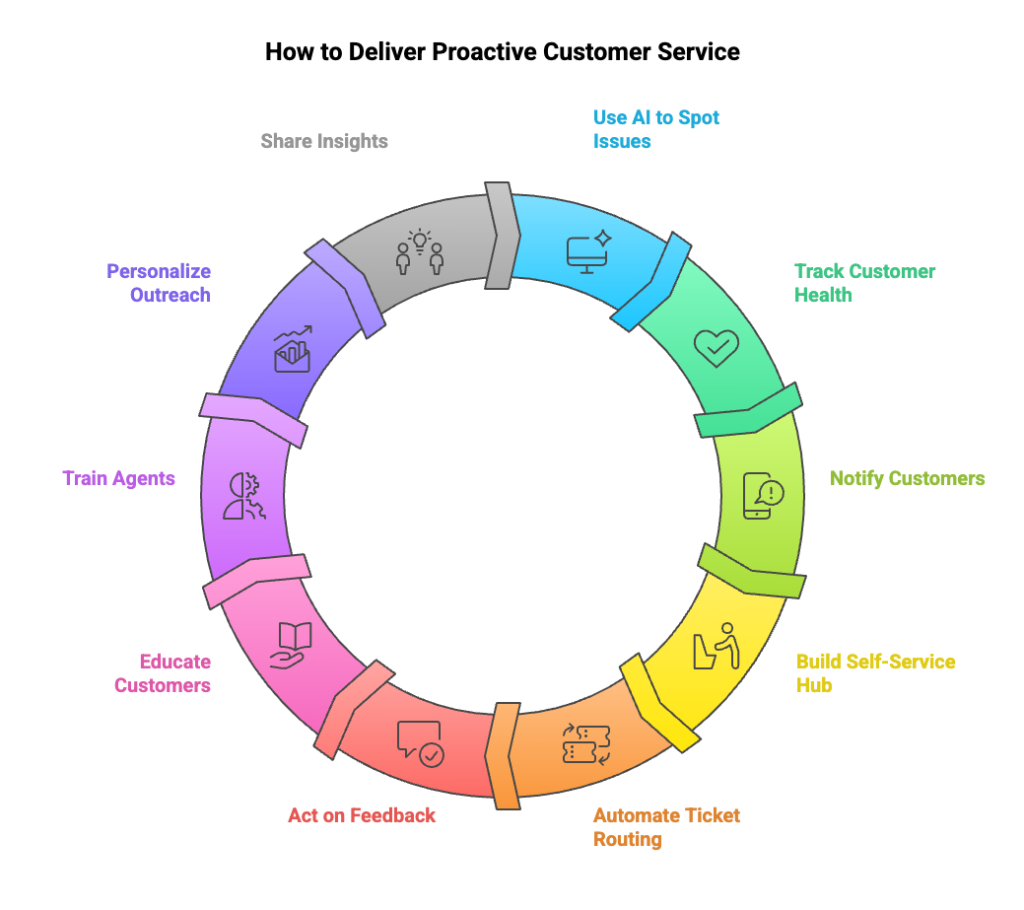
Knowing the value of proactive service is one thing. Putting it into action is another. Here are ten practical ways to make proactive customer service part of your daily operations.
1. Use AI to Detect Issues Before Customers Do
AI can spot trouble long before it hits your inbox. It analyzes tickets, chat logs, and customer conversations to uncover recurring bugs or workflow bottlenecks.
For example, if your system flags a spike in “payment failed” messages, you can automatically send customers a retry link or troubleshooting steps before they reach out.
Tools like Hiver’s AI Copilot or analytics dashboards make this easy. The AI detects patterns in real time and help you act instantly. The result: fewer repetitive queries and faster resolutions.
If you want to discover more ways of implementing AI in customer service, here’s a detailed guide for you. It maps out how you can take advantage of AI in customer support and stay ahead of competitors.
2. Identify At-risk Customers by Monitoring Customer Health Every Day
Don’t wait for churn reports to reveal a problem. Track daily metrics like logins, feature usage, and account activity to spot drops in engagement early.
If a SaaS team sees a dip in product usage, it can trigger an automated “getting started again” email. Include a short how-to guide or a quick check-in from a CSM.
This kind of outreach often reactivates users before they even think of leaving.
3. Communicate Issues Before Customers Notice
Outages, delays, or policy changes happen, even in the best-run operations. What matters is how early customers hear from you.
Send updates explaining what happened, when it’ll be resolved, and what they can do in the meantime. Transparency builds trust and prevents a flood of “any update?” tickets.
An airline, for instance, can notify passengers of a flight delay, include the new departure time, and share quick rebooking links.
Pro Tip: You can automate this kind of alert in Hiver. Set up workflows to trigger customer notifications whenever there’s a known issue, like payment downtime or service delays. Everyone gets context instantly, and your team stays ahead of the inbox chaos.

4. Build a Self-Service Hub That Actually Works
Customers want to help themselves, but only if you make it easy. Create a self-service portal with clear, visual solutions to recurring support topics like login errors, feature setup, or integration issues.
Add screenshots, short videos, and FAQs written in plain, simple language.
When a retail brand notices a spike in “return policy” searches, adding a visual step-by-step guide to the FAQ page can cut return-related tickets in half. Review search data weekly to find new gaps and keep your content updated.

5. Automate Ticket Routing and SLA Tracking
If your team is manually assigning queries, they’re spending unnecessary time figuring out who should handle what. That slows everything down and makes customers follow up for updates.
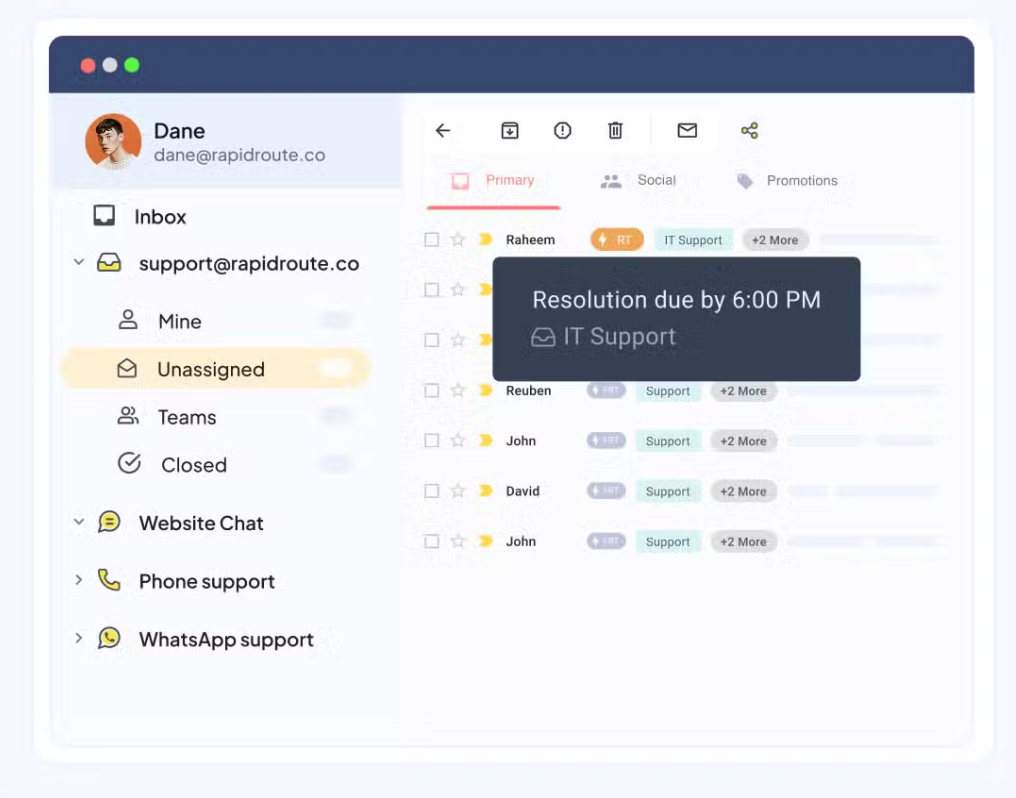
Automation fixes that. It routes conversations to the right team the moment they arrive, so your agents can start working on the issue right away.
With Hiver, you can set simple automation rules that route refund requests straight to billing or urgent delivery issues to logistics. You can also automate SLA reminders to keep your team accountable and ensure no ticket slips through the cracks.
6. Respond to Feedback in Real Time
Proactive customer service requires you to act on customer feedback, and that should be done fast.
Send short CSAT or CES surveys after every resolved ticket or chat conversation. Reach out within 24 hours to anyone who leaves a low satisfaction score.
A telecom provider, for example, can call customers who rate service 3/5 or lower. The agent listens, apologizes, and offers a fix immediately. Closing the loop quickly can turn frustration into loyalty.
Recommended reading
How to Collect Customer Feedback That Actually Drives Action
7. Educate Customers Right Inside Your Product
When users don’t know how to set up a feature or where to click next, frustration builds quietly until they reach out. Proactive service means you don’t wait for that moment.
Guide customers as they use your product with in-app walkthroughs, tooltips, and quick banners that explain features or highlight new updates. Even a short step-by-step video can prevent dozens of “how do I do this?” queries.
For example, a project management tool can show a short onboarding video when a user creates their first project. That small touch prevents setup errors and gives users the confidence to explore on their own.
8. Train Agents to Think One Step Ahead
Encourage your team to look beyond the immediate issue.
If a customer reports a payment error, the agent should check recent transactions too. Maybe other users are affected.
Strengthen this mindset through regular practice. Use role-plays to simulate real scenarios and review past transcripts to identify moments where agents could have acted sooner. When agents anticipate what might happen next, they prevent future problems instead of just solving current ones.
9. Personalize Outreach Based on Customer Data
When customers feel understood, they stay loyal. Proactive outreach shows you know their needs and act before they have to ask.
Use CRM data to spot behavior patterns and respond in real time:
- If usage drops, send a quick check-in with helpful tips.
- If renewal is coming up, remind customers what they’ve achieved and what’s next.
A subscription box brand, for instance, can email customers before renewal with a recap of past boxes and an option to pause or customize the next one. These simple, timely touches reduce cancellations and build lasting loyalty.
10. Share Insights Across Teams to Fix Root Causes
As the African Proverb goes, it takes a village to raise a child. Similarly, it takes the whole team to improve customer experience. Proactive customer service is also a shared responsibility.
Track recurring issues such as delayed responses, broken workflows, or repeated feature requests. Share these insights with product, engineering, or operations teams so they can address the root cause. Once a fix rolls out, hundreds of tickets disappear.
Celebrate those wins internally to show that proactive service drives real, measurable results.
Recommended reading
Proactive Customer Service Examples & Industry Use Cases
Now that we’ve covered how to bring proactive service to life, let’s look at how it plays out in the real world. These examples highlight how strong brands anticipate customer needs and turn potential pain points into moments of trust.
1. Airlines: Delta Air Lines
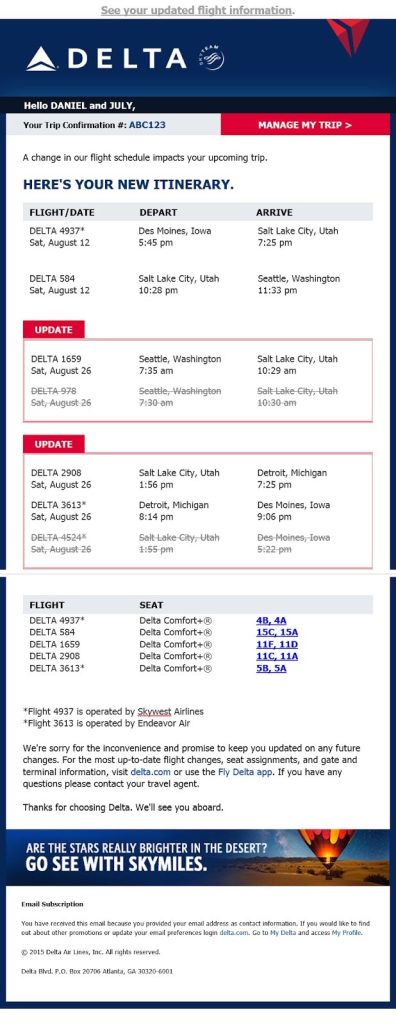
Long delays after you’ve reached the airport can frustrate any passenger. Delta tries to avoid that by sending automated alerts (via SMS and app) to let travellers know about flight delays, cancellations or gate changes—often before the customer even realises there’s an issue. Their “Delta Messenger” system handles these notifications.
2. E-commerce: Amazon
Picture this: A delivery is going to arrive late and you still haven’t been told. Amazon handles this differently. When a guaranteed delivery date gets missed, they often process shipping-fee refunds and send you an email explaining what happened. No need to contact support.

3. Hospitality: The Ritz-Carlton
In a hotel stay, it’s usually the little things that bring the biggest smiles. At Ritz-Carlton, staff are trained to react to cues like “we’re here for our anniversary” or “our family has young kids” and proactively arrange upgrades or amenities. By anticipating needs, they turn normal stays into memorable ones.

4. Food & Beverage: Starbucks
If you’re anything like me, you can’t start your day without coffee. So when your go-to drink or favorite blend is suddenly unavailable, it’s a real disappointment. Starbucks knows this pain well. Their app uses real-time data to predict when a store is out of your usual order and suggests nearby locations where it’s still available. That small, proactive touch saves you from frustration—and keeps your morning routine intact.

5. Entertainment: Disney
Waiting in long lines or missing your ride because of a last-minute change? Disney’s My Disney Experience app pushes alerts when ride times shift or attractions close. Then it suggests nearby alternatives you can visit instead. That way visitors keep control of their day instead of feeling derailed.
Recommended reading
How to Measure the Success of Proactive Customer Service
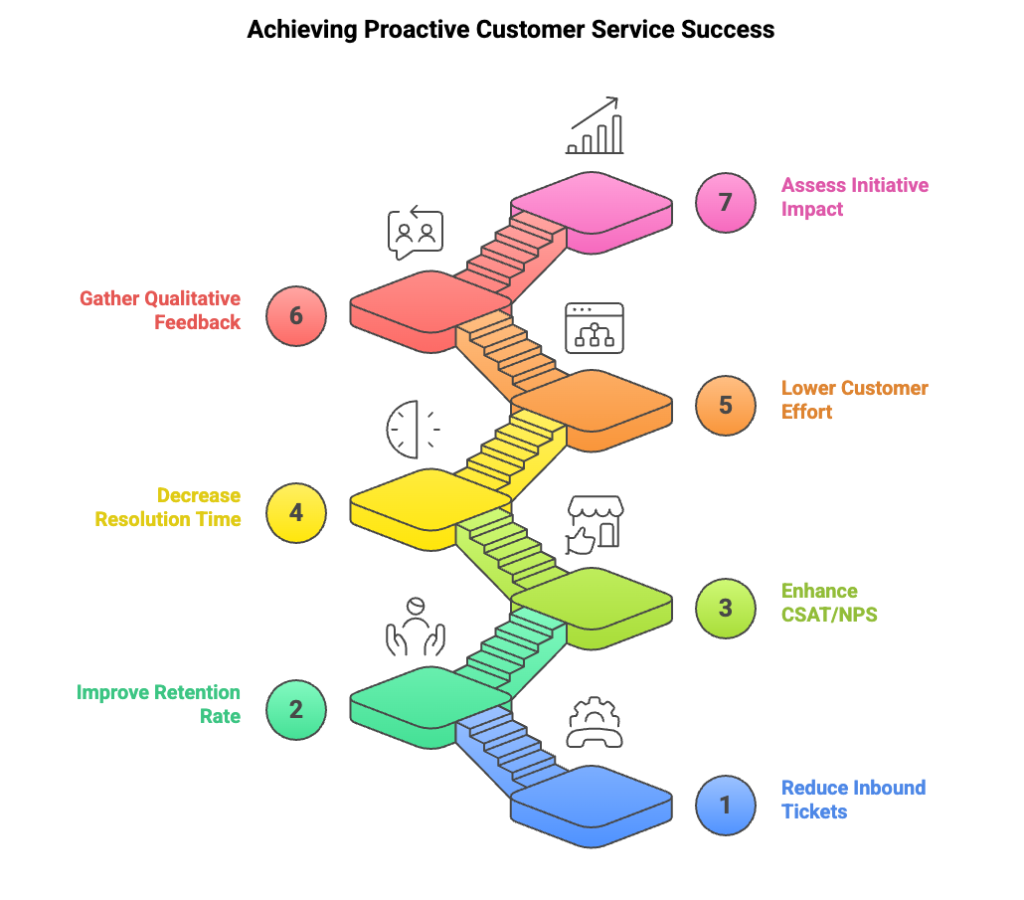
Measuring proactive success means tracking whether your team is truly preventing issues, improving experiences, and strengthening customer loyalty. Here’s what to measure and how to gauge the impact:
1. Reduction in Inbound Tickets
Track how many fewer support requests come in after implementing proactive actions such as alerts, FAQs, or automated updates. A consistent decline shows that customers are resolving issues on their own. It’s a strong sign that your early communication is working.
2. Customer Retention Rate
Measure the percentage of customers who continue using your product or renew subscriptions. If retention increases after proactive outreach or renewal reminders, it means your efforts are directly improving customer loyalty.
3. CSAT and NPS Scores
Compare satisfaction and promoter scores before and after launching proactive communication. A rise in scores confirms that customers notice early updates, faster resolutions, and transparency. These are all signs of trust building.
4. Resolution Time Improvement
Track average resolution time to see if earlier detection and automation are shortening response cycles. Shorter times indicate your team is identifying problems earlier, routing them correctly, and acting before they grow into major cases.
5. Customer Effort Score (CES)
Ask customers how easy it was to resolve their issue. Add a quick rating scale after a ticket closes or a chat ends.
For example, “How easy was it to get your issue resolved?” rated from 1 (very difficult) to 5 (very easy).
A low customer effort score means they found answers quickly and understood what to do without extra back-and-forth.
6. Qualitative Customer Feedback
Review comments in surveys or social media mentions for signs that customers appreciate proactive updates (“Thanks for the heads-up!”). These small signals confirm that your communication strategy builds confidence.
7. Initiative-Level Impact
Connect every metric to a specific initiative so you can measure what’s actually working. For example, if you’ve launched a status page for service outages, track whether it reduced the number of “Is your system down?” tickets.
Or if you’ve started sending preemptive outage alerts or delivery updates, measure their effect on CSAT or ticket deflection. Linking results this way helps you prove ROI and refine your proactive service strategy.
Switch Up Your Customer Experience with Proactive Customer Service
High ticket volumes and frustrated customers often come down to one thing: reacting too late. Proactive customer service changes that by helping your team catch issues early and prevent them from reaching customers in the first place.
Here are some best practices to get started:
- Identify recurring problems like shipping delays, billing errors, or missed SLAs.
- Set up automated alerts that flag these issues early and trigger quick internal responses.
- Publish simple help articles that guide customers through common questions or fixes.
- Train agents to spot warning signs such as repeat contacts or unanswered updates.
- Empower your team to act early instead of waiting for a complaint to land in the inbox.
Proactive service gives your team control over outcomes by identifying issues early and resolving them before they affect customers. It turns support into a system that’s calm, consistent, and always one step ahead.
Frequently Asked Questions
1. What is proactive customer service?
Proactive customer service is the practice of anticipating customer needs and addressing potential issues before customers reach out for help. By using data and feedback, your team can spot problems early and prevent them from turning into complaints. This builds trust and creates a smoother experience for every customer.
2. How to be proactive in customer service
Identify recurring customer issues, set up automated alerts, and communicate before problems arise. Use self-service tools, track key metrics like CSAT and CES, and coach agents to recognize early warning signs.
3. How can I be proactive in customer service?
Start small: automate updates, fix recurring pain points, and train your team to act on early signals. Focus on preventing issues, not just resolving them.
4. What are examples of proactive customer service?
Examples include sending outage or delay notifications before customers ask, offering personalized renewal reminders, or using in-app tips to prevent setup mistakes.
5. What are the benefits of proactive customer service?
It reduces ticket volume, improves customer satisfaction, and increases retention. Proactive communication also strengthens brand trust by showing reliability and transparency.
6. How do you measure the success of proactive customer service?
Track metrics like reduction in inbound tickets, customer retention rate, CSAT/NPS improvements, resolution time, and Customer Effort Score (CES) to evaluate performance.
Start using Hiver today
- Collaborate with ease
- Manage high email volume
- Leverage AI for stellar service