

In healthcare, how you communicate matters just as much as the care itself. Every moment between appointments, whether a patient is waiting for test results, needs a medication reminder, or has a question about insurance, shapes how they feel about their provider.
When patients get instant answers, trust builds. When responses are slow or confusing, frustration sets in.
That’s why many hospitals and clinics now use AI-powered healthcare chatbots to help with everyday questions and tasks. These chatbots can handle up to 80% of routine queries, such as checking symptoms, booking appointments, or sending reminders, while passing urgent cases to real staff members.
This guide walks you through how healthcare chatbots work, where they deliver the most value, how to keep them HIPAA compliant, and the best healthcare chatbot tools to explore in 2025.
Why Trust Us?
We try every tool ourselves, cross-check it with user reviews, and compare it against clear criteria such as ease of use, key features, integrations, and support. Our team works closely with CX leaders and sees what actually works in day-to-day operations. With over 10,000 teams trusting Hiver, we’ve learned what makes customer service software truly dependable. So, you get straightforward, unbiased recommendations – nothing more, nothing less.
What is a healthcare chatbot?
A healthcare chatbot is an AI assistant that interacts with patients and staff through chat or voice to answer questions, schedule visits, and manage follow‑ups. It connects to data sources like electronic health records (EHRs) and knowledge bases, so doctors and nurses to streamline routine tasks and focus more on patient care.
Chatbots turn patient questions into clear actions. They figure out what the patient needs, how urgent it is, and pull answers from trusted sources. They also record each conversation and can initiate tasks such as booking an appointment or alerting staff.
The best systems explain what they can do, ask for consent, and share complete details with a human when needed.
Recommended reading
How do healthcare chatbots work?
A healthcare chatbot interprets patient messages in real-time, identifies what they need, assesses the urgency, and decides whether to handle the request itself or escalate it to a clinician. Every interaction is logged for compliance audits and performance analysis.
Using natural language processing (NLP), it interprets medical terms, intent, and tone. For instance, if a patient says, “Can I see my doctor today?” the chatbot identifies the request, checks the schedule, and confirms or offers an alternative time slot.
When things get complex, for instance, a patient reports chest pain or shows signs of frustration, smart escalation rules kick in. The bot gathers context, flags the conversation as high-priority, and hands it off to a live agent with complete context, so the patient doesn’t have to repeat themselves.
Recommended reading
Benefits of Healthcare Chatbots
Healthcare organizations use chatbots to reduce call volume, speed up patient access, and deliver consistent information at scale. It also helps patients get instant, 24/7 answers through their preferred channel, like text, voice, or web chat.
Here are the benefits of healthcare chatbots discussed in detail:
1. Faster Scheduling and Fewer Missed Appointments
AI chatbots cut patient wait times dramatically by automating appointment booking and sorting requests by urgency. Instead of waiting on hold, patients can book, change, or cancel appointments at any time through chat.
Chatbots also send appointment reminders by text, email, or chat, so patients don’t forget. This matters because missed appointments cost healthcare providers billions every year and waste valuable time slots.
2. Better Adherence via Medication Nudges
Nearly half of all patients don’t take their medications as prescribed, leading to treatment failures, hospital readmissions, and preventable complications. AI chatbots can address this by sending personalized medication reminders, refill alerts, and gentle nudges tailored to each patient’s schedule and condition.
In a 12-week study with stroke patients, those who used an AI app for medication reminders achieved 100% adherence based on plasma drug levels, compared to just 50% in the control group who didn’t use the app. That’s a 67% improvement in patients actually taking their medications on time.
4. Consistent Answers Sourced from Approved Content
Healthcare chatbots pull responses from approved knowledge bases, clinical guidelines, and EHR data to give patients accurate, compliant, and up-to-date information. This consistency removes confusion that can happen when different staff members interpret policies differently or when old FAQs stay online too long. Patients get the same high-quality answer whether they ask at 2 PM or 2 AM.
Babylon Health’s AI chatbot, for instance, provides tailored healthcare advice based on patients’ symptoms and medical histories, ensuring consistent and personalized information.
5. Staff Time Reclaimed for Clinical Work
Administrative tasks consume a lot of time, leaving less bandwidth for actual patient care. Chatbots can automate routine tasks such as scheduling appointments, answering common questions, verifying insurance, and processing prescription refills. This allows doctors and staff to devote more time to patient care and clinical work.
6. Track Your Own Impact with These Metrics
Once you implement a healthcare chatbot, measure its performance to prove ROI and continuously improve. Key metrics to monitor include:
- First response time: How quickly does the bot acknowledge and respond to patient inquiries?
- Completion rate: What percentage of conversations does the bot resolve without human escalation?
- No-show rate: Are appointment attendance rates improving?
- Average handling time: How much time are staff saving on routine tasks?
- Patient satisfaction (CSAT): Are patients happier with faster, more accessible support?
- Cost per interaction: How much does each chatbot interaction cost versus a live agent call?
- Medication adherence rates: Are patients taking medications as prescribed?
- Call volume reduction: How many fewer calls is your front desk receiving?
Recommended reading
Top use cases of healthcare chatbots
The best implementations make escalation routes obvious so patients never feel trapped in loops or forced to repeat themselves. Here are the most impactful use cases where healthcare chatbots deliver measurable results:
1. Symptom Checking and Routing
Chatbots walk patients through their symptoms and analyze responses to help determine if care is needed urgently, what type of care might be appropriate, or if at-home management is possible. This reduces unnecessary emergency visits and directs people to the right provider more quickly.
2. Appointment Booking and Scheduling
Chatbots enable patients to book, reschedule, or cancel appointments at any time without waiting on hold. These systems sync with hospital calendars and EHR platforms to ensure accuracy. They can also send automated reminders via SMS, email, or WhatsApp to reduce no-shows.
For example, Grewal Eye Institute deployed a WhatsApp chatbot for appointment scheduling and got dramatic results. They handled over 7,000 chats in 90 days, booked 1,646 appointments, generated $ 618,000 in pipeline revenue, and achieved a 675% ROI.
3. Insurance Verification and Prior Authorization
AI chatbots can help verify if patients’ insurance covers their visit, explain what their plan includes, and help them complete paperwork needed for insurance approval. This takes administrative work off your staff’s plate, allowing them to focus on patient care instead of handling insurance calls. Patients are approved for procedures more quickly, and billing questions decrease significantly.
In fact, a study by Patel et al. demonstrated that AI-driven automation reduces claim processing time by up to 40%, thereby improving efficiency and enhancing fraud detection.
4. Patient Education and Post-Care Instructions
After discharge or treatment, chatbots deliver personalized post-visit instructions, wound care guidance, physical therapy exercises, and medication timing. They provide consistent, standardized education to every patient 24/7, reducing readmission rates and improving recovery outcomes.
For example, Memorial Sloan Kettering Cancer Center uses a chatbot to provide post-surgery instructions, medication schedules, and wound care guidance for surgical patients. Patients can ask follow-up questions or request clarification at any time, which has led to higher satisfaction and fewer repeat calls to the nursing staff.
5. Mental Health and Chronic Disease Support
Chatbots provide ongoing emotional support, symptom tracking, and behavioral nudges for patients managing depression, anxiety, diabetes, and asthma. They detect mood changes and escalate to human therapists when needed, creating a safety net between appointments. This reduces patient isolation and improves long-term condition management without overloading mental health professionals.
For instance, Wysa is a mental health chatbot that provides emotional support and self-help tools, utilizing cognitive behavioral therapy (CBT) techniques developed by psychologists. The platform offers structured AI-assisted programs for anxiety and other mental health conditions, with each comprising 6-8 modules that include educational videos, interactive CBT exercises, and daily check-ins to keep users engaged.
6. Billing and Claims Assistance
Chatbots handle billing questions, explain claim denials, guide patients through payment plans, and track claim status in real-time. This reduces back-and-forth with billing departments and improves patient satisfaction. Many organizations are also able to save costs.
For example, the State of Indiana implemented a chatbot to assist constituents and business owners in filing insurance claims and obtaining real-time answers to billing questions. As a result, they were able to cut annual customer service costs by $200,000.
“Implementing a chatbot revolutionized our customer service channels and our service to Indiana business owners. We’re saving an average of 4,000+ calls a month and can now provide 24x7x365 customer service along with our business services.”
~ Lindsey Roark Mayes, Director of SOS IT (State of Indiana)
7. Patient Onboarding and Pre-Visit Forms
Chatbots streamline the intake process by collecting patient history, consent forms, insurance details, and medical questionnaires before appointments. This reduces wait times at check-in and gives providers a head start on reviewing patient information.
Instead of arriving 15 minutes early to fill out paperwork, patients complete forms at home via chat. The chatbot can guide them through complex questions, verify information, and flag missing fields.
Navia Life Care, for instance, uses a HIPAA-compliant AI voice assistant that collects and maintains patient medical records with complete privacy and security. Doctors can pull up these records with a few clicks, saving time and reducing errors caused by incomplete intake forms.
Recommended reading
Top 7 Healthcare Chatbot Tools
| Tool Name | Key Features (Healthcare-Focused) | Starting Price |
|---|---|---|
| Hiver | Unifies front desk, patient care, and administration on a single, HIPAA-compliant platform; Integrates with EHR and CRM to break down silos, track performance, and ensure seamless patient experiences. | Free; Paid from $25/user/month |
| ProProfs Chat | Live chat for healthcare; supports real-time patient queries; canned responses, routing, and CRM/helpdesk integrations. | Free; Essentials start at $49/month |
| Kore.ai | Enterprise conversational AI for providers, payers, and life sciences; 40+ pre-built healthcare use cases; omnichannel support; EHR/EMR integration. | Custom Pricing |
| SmartBot360 | Healthcare-only, HIPAA-compliant chatbot platform; pre-visit planning, patient intake, and screening; SMS follow-ups; templates for specialties. | Free; $500+/month |
| Hyro.ai | Conversational AI for healthcare call centers; automates high-volume inbound calls, web and mobile chats; integrates with Epic and Salesforce. | $10,000+/month (enterprise-only) |
| Kommunicate | No-code AI chatbot builder with bot-to-human handoff; omnichannel support; automates appointment booking, basic triage, and FAQs; real-time AI recommendations. | $83.33/month (annual billing) |
| Ada Health | AI-powered symptom assessment and care navigation; HIPAA-compliant; enterprise integrations with appointment scheduling, FAQs, and insurance queries. | Custom Pricing |
1. Hiver
G2 Rating: 4.6 ⭐
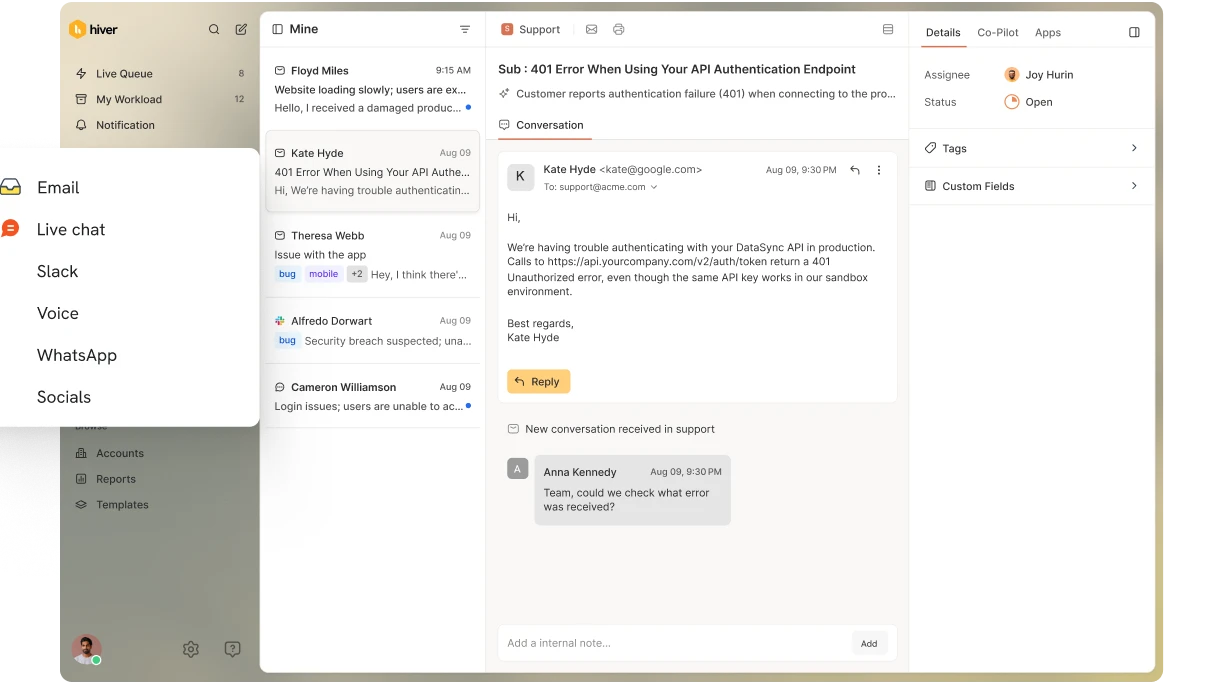
Hiver is a customer support platform that helps teams manage conversations across channels like email, live chat, WhatsApp, and voice from one place. It centralizes every patient interaction in one HIPAA-compliant workspace where your entire team can see context, coordinate handoffs, and maintain accountability.
Hiver’s AI chatbot helps healthcare teams automate routine patient inquiries while ensuring complex cases get routed to the right person. Built with configurable knowledge sources, guardrails, and hand-off rules, the chatbot learns from your conversations, internal SOPs, and knowledge base to provide accurate, consistent responses around the clock.
Many healthcare organizations like New Hope Fertility Center (a New York-based IVF clinic) and Visiting Angels (a senior home care provider with 600+ franchises) use Hiver to bring patient and member communication into a shared, trackable workflow.

Key Features
- Intelligent AI: AI agents automate routine administrative tasks, such as responding to appointment inquiries, processing prescription refills, categorizing urgent versus non-urgent messages, and drafting initial patient responses.
- AI Copilot provides instant responses to common inquiries by pulling from knowledge bases and conversation history. AI Triaging categorizes messages by intent (appointment, billing, clinical concern). AI Sentiment Analysis detects patient frustration to flag urgent cases for senior staff. AI Extract pulls key details, such as patient ID or clinical codes, for easy tracking and reporting.
- Automated Workflows and Routing: Create rule-based automations that route patient queries to the right specialist by keywords, urgency, or expertise.
- Collaboration and Internal Communication: Enable seamless team collaboration through internal notes, @mentions, and shared drafts.
- Knowledge Base and Customer Portal: Maintain separate knowledge bases for clinical staff (SOPs, protocols, checklists) and patients (appointment prep, insurance info, post-care instructions. Empower patients to self-serve 24/7 using a customer portal and reduce repetitive inquiries.
- Service Level Agreements (SLAs) and Analytics: Track critical metrics like patient response times, resolution rates, CSAT scores, and SLA compliance.
- 100+ Seamless Integrations: Connect with tools like EHR systems, CRMs, billing platforms, and healthcare tools so staff can access all necessary context like prior authorizations, billing records, and compliance documentation.
- Enterprise Security and HIPAA Compliance (Elite plan): Encryption, SSO, audit logs, and HIPAA Business Associate Agreements protect sensitive patient data and meet healthcare regulatory requirements.
Pros
- Improves team efficiency and eliminates duplicate work.
- Easy adoption with minimal training.
- Offers powerful analytics to identify and remove bottlenecks.
Cons
- A little slow when handling a very high volume of emails.
- The mobile app is not very user-friendly.
Pros and cons summarized from G2 User Reviews and Hiver Customer Stories*
Pricing:
- Free plan
- Starter: $25 user/month, billed yearly
- Plus: $45 user/month, billed yearly
- Pro: $74 user/month, billed yearly
Our Unbiased Take
Hiver works best for clinics, dental offices, and urgent care centers managing high-volume patient communication. It’s perfect if you need fast implementation and want to avoid enterprise helpdesk complexity.
However, if you require deep integrations with systems like Epic or Cerner, you might want to consider something else. Also, for things like automated care protocols, clinical decision support, or symptom triage, purpose-built healthcare chatbots offer more specialized functionality.
Moreover, large hospital networks with thousands of users and complex departmental structures might outgrow Hiver’s simplicity.
2. ProProfs Chat
G2 Rating: 4.5 ⭐
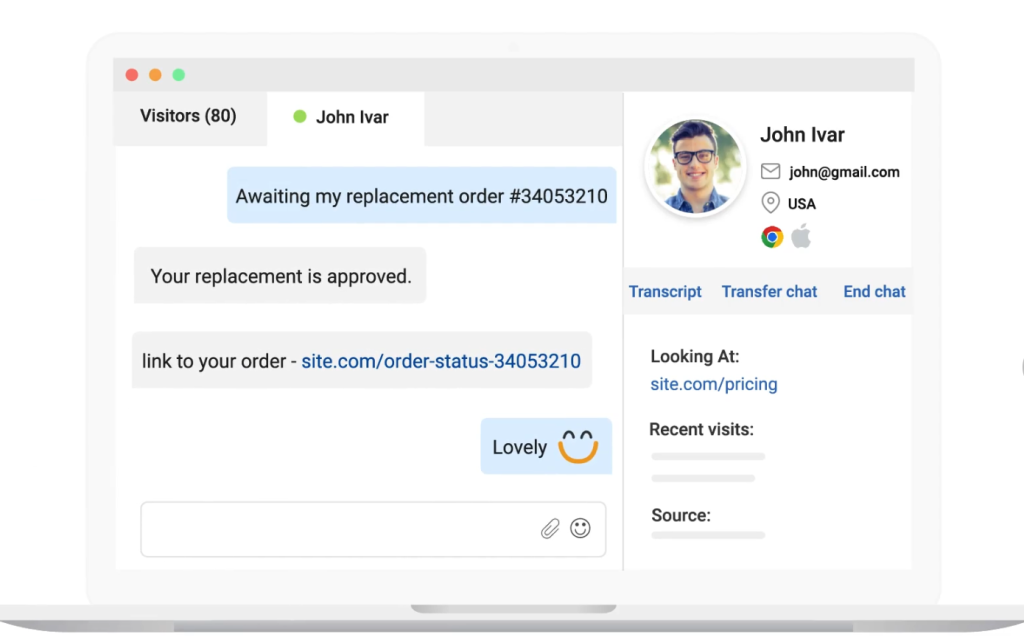
ProProfs Chat helps with real-time patient engagement directly on healthcare websites and mobile apps. The platform combines human-operated live chat with AI-powered chatbots to handle patient inquiries 24/7. This helps in answering appointment questions, processing prescription refill requests, addressing billing concerns, and clarifying insurance information.
Key Features
- Real-time live chat with operator preview – Agents see what patients are typing before they hit send, enabling faster, more anticipatory responses.
- 24/7 AI chatbot – Handles FAQs, appointment booking, and patient intake when live agents are offline.
- Proactive chat invitations – Automated triggers based on visitor behavior (e.g., viewing appointment or insurance pages).
- Canned responses and file sharing – Pre-written replies for common questions; securely share intake forms and consent documents.
- Detailed analytics – Track chat volume, response times, operator performance, and patient satisfaction.
- Multi-device support – Agents can respond from desktops, mobile devices, or tablets.
Pros:
- Easy setup with no coding required
- Forever free plan for one operator with all premium features
- Excellent customer support and onboarding
Cons:
- Limited advanced AI capabilities (no sentiment analysis or complex flows)
- Fewer customization options for chat widget design
Pros and cons summarized from G2 User Reviews.*
Pricing
- Free Plan: $0/ 0/month for up to 2 operators; includes unlimited domains, full chat history, AI chatbots, chat routing, visitor tracking, multi-language support, and 50+ integrations.
- Team Plan (Professional): $19.99/month per operator (billed annually); adds mobile SDK support and advanced features.
- Gold Plan: $39/month; includes advanced analytics and priority support
Enterprise Plan: $199/month; custom features and dedicated support
Our Unbiased Take
ProProfs Chat is easy to use and affordable. It’s ideal for small to mid-sized healthcare practices that require a straightforward, HIPAA-compliant live chat solution with a minimal learning curve. The forever-free plan is genuinely helpful (not a stripped-down trial), making it ideal for solo practitioners or small clinics testing live chat for the first time.
That said, if you require sophisticated AI features such as symptom checking or advanced triage automation, you’ll likely outgrow ProProfs and need a more scalable platform. For straightforward patient communication, appointment booking, and FAQ handling, ProProfs delivers substantial value at a fraction of the cost of enterprise competitors.
3. ADA
G2 Rating: 4.6 ⭐
Ada Health is an AI-powered symptom assessment and care navigation platform designed to help patients understand their symptoms and guide them to appropriate care. The platform uses a conversational Q&A interface to assess symptoms against a medical database of thousands of conditions. It then provides personalized reports with likely causes and recommended next steps.
Ada’s AI has been trained by doctors and validated through clinical studies. The platform integrates with EHRs, telehealth systems, and appointment booking, and is used by health systems like Sutter Health to triage patients, reduce unnecessary ER visits, and route people to the right care setting.

Key Features:
- AI-powered symptom checker – Guides patients through a conversational assessment of their symptoms and provides probable diagnoses with recommended care pathways.
- Personalized triage recommendations – Tailored advice (call ambulance, visit urgent care, book GP, or self-care).
- Multilingual support – Available in 15 languages with advanced NLP.
Symptom tracking & health history – Users can log symptoms over time and download PDF reports. - Enterprise EHR integration – Works with Epic, Salesforce, Zendesk, and Contentful.
- HIPAA-compliant security – AES-256 encryption, OAuth 2.0, SOC 2 Type II certified.
Pros:
- The app is quite accurate, asks the right questions most of the time, and the assessment is reasonable enough.
- Very friendly and easy to use.
- It can detect rare diseases as well.
Cons:
- There are no graphs to show the progression of symptoms over time.
- Sometimes it recommends seeing a doctor when home care would suffice.
Pros and cons summarized from ada.com and healthify.*
Pricing
- Download the app for free.
- Custom pricing
Our Unbiased opinion
Ada Health is built for large health systems, insurers, and healthcare organizations that prioritize clinical accuracy, symptom assessment, and care navigation. The platform excels at triage, reducing unnecessary emergency visits and helping patients understand when and where to seek appropriate care.
However, Ada is not designed for comprehensive patient communication, appointment scheduling, or customer service automation. Enterprise pricing is custom and non-transparent, requiring engagement from the partnership team and significant implementation work. Small independent clinics or practices needing self-service chatbots with transparent pricing can consider more accessible platforms.
4. Kore.ai
G2 Rating: 4.7 ⭐
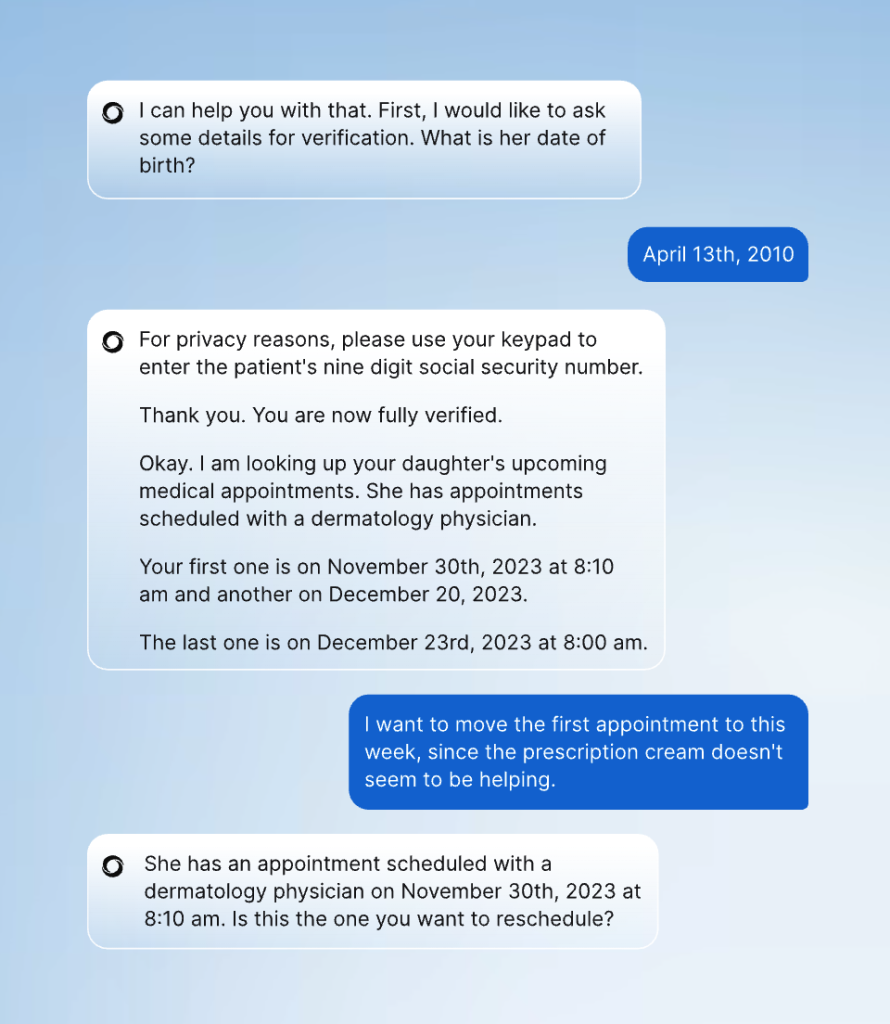
Kore.ai is an enterprise conversational AI platform that offers a dedicated healthcare solution called HealthAssist. The platform enables healthcare providers, payers, and life sciences organizations to deploy AI-powered virtual assistants across various digital channels, including voice, chat, SMS, and others.
Kore.ai’s healthcare solution comes pre-built with 40+ use cases, including appointment scheduling, symptom checking, medication reminders, claims and billing inquiries, and care coordination.
Key Features:
- Voice + Chat: Supports both text and voice interactions, functional for phone system integration
- Pre-built healthcare workflows: Templates for appointment scheduling, insurance eligibility checks, prescription refills, and doctor finding
- No-code bot builder: Drag-and-drop interface for creating and modifying conversations
- HIPAA-compliant: Secure patient data handling
- Omnichannel: Works across 40+ digital and voice channels
- Enterprise integrations: EHR/EMR integration for hospitals, health plans, and pharmacies
Pros
- User-friendly no-code platform that helps build complex healthcare AI agents.
- Powerful NLP and customization capabilities that handle massive conversation volumes.
- Responsive customer support and proven track record delivering successful deployments across Fortune 500 enterprises.
Cons
- Enterprise-only pricing starting at $300K+ annually with no public pricing models.
- Complex integrations with ticketing platforms can cause chat disconnections and workflow disruptions.
- Slow post-deployment support response times and extended feature development cycles that frustrate customers.
Pros and cons summarized from G2 and Capterra*
Pricing:
- Essential plan: $50-$60/month
- Advanced plan: $150-$180/month (annual billing) with basic chatbot builder, analytics, and integrations
- Enterprise Plan: Custom pricing starting at $300,000+ annually
- Usage-Based Model: Pay-as-you-go at $0.20 per 15-minute conversation session, with costs scaling based on conversation volume
Our Unbiased Take
Kore.ai is built for enterprise healthcare organizations with complex automation workflows and dedicated IT resources. However, the enterprise-only pricing ($300K+ annually), complex integrations requiring IT oversight, and post-deployment support delays make it impractical for small to mid-sized practices managing basic needs like appointment scheduling or FAQs.
Organizations considering Kore.ai should have technical teams capable of managing ongoing customizations to maximize ROI.
5. SmartBot360
G2 Rating: 4.5 ⭐
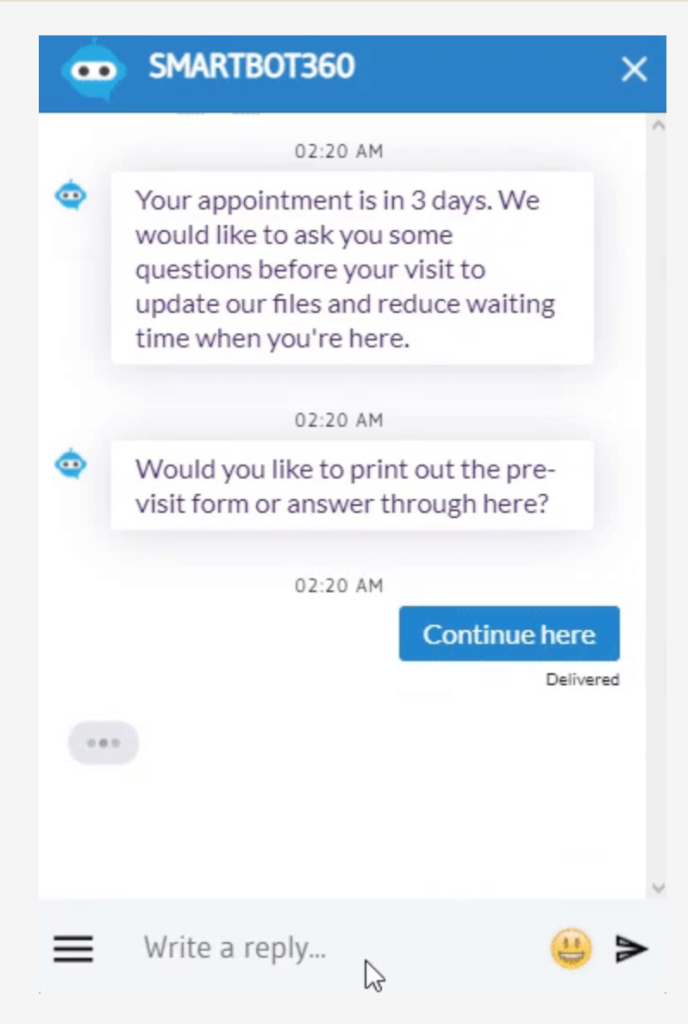
SmartBot360 is an AI-powered chatbot platform built exclusively for healthcare organizations to engage patients and streamline communication. The platform focuses on patient engagement, pre-visit planning, appointment scheduling, patient intake, and SMS follow-ups, all with HIPAA compliance from the ground up.
SmartBot360’s AI has been trained on over 100,000 real patient interactions across healthcare specialties. This helps it understand patient intent, handle off-script questions, and minimize chatbot drop-offs.
Key Features
- Healthcare-Specific AI and Templates: Pre-built, healthcare-trained chatbot templates for appointment booking, intake, FAQs, and symptom screening requiring minimal setup.
- SMS Follow-Up and Multi-Channel Support: Automatically send appointment reminders, post-visit follow-ups, and medication confirmations via SMS, all without leaving the platform.
- Appointment Scheduling and Reminders: Enable direct appointment booking through the chatbot with automatic reminders to reduce no-shows
- Seamless Live Chat Handoff: Route complex inquiries to human agents with full conversation history and patient context.
- CRM and EHR Integration: Connect with electronic health records and practice management systems to access patient data securely.
Pros
- Built exclusively for healthcare with pre-trained AI and native HIPAA security.
- AI understands patient intent and context even when patients use non-standard language.
- SMS follow-ups and personalized responses help patients feel supported and hear
Cons
- The platform lacks depth in complex workflows and full integration capabilities.
- Performance metrics and conversation intelligence are limited compared to those of enterprise platforms.
- Fewer pre-built integrations than competitors, potentially requiring custom AP
Pricing
Custom pricing
Our Unbiased Take
SmartBot360 excels at what it’s built for: HIPAA-compliant patient engagement and appointment automation for healthcare providers who need a simple, secure solution. The no-code builder makes it accessible to non-technical teams. The focus on compliance from day one means you’re not retrofitting security features later.
It’s a strong fit for small to mid-sized practices, ambulatory clinics, and digital health startups that prioritize ease of use, affordability, and regulatory compliance over advanced enterprise features like voice AI or deep analytics.
6. Hyro.ai
G2 Rating: 4.9 ⭐
Hyro is an enterprise-grade conversational AI platform. It is designed specifically for healthcare systems to automate high-volume inbound and outbound calls, messages, and chat across call centers, websites, mobile apps, and SMS.
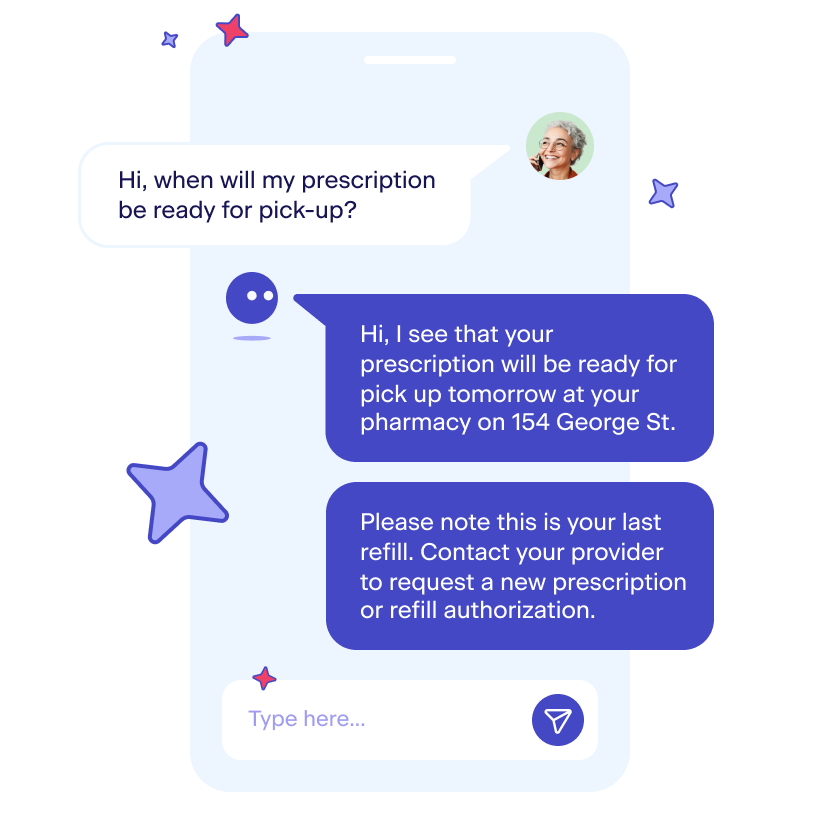
Hyro’s AI assistants automate routine administrative tasks like appointment scheduling, prescription refills, billing inquiries, and insurance pre-authorizations. The platform integrates with EHR systems and is designed for HIPAA compliance.
Key Features
- Omnichannel AI assistants – Automate across call centers, websites, mobile apps, and SMS with contextual handoff.
- Epic EMR integration – Deep integration with Epic’s APIs for patient record ID, scheduling, and prescription support.
- Responsible AI safeguards – HIPAA, SOC 2, and GDPR compliant with PII redaction and explainability.
- Real-time patient intelligence – Dashboard tracking top call drivers, hours saved, AI accuracy, and conversation logs.
- Adaptive AI – Continuously learns from health system data without manual retraining.
Pros
- Reduces the need for designing conversational flows like competitors (Drift, Kore), saving time and technical resources.
- It accurately interprets patient queries without needing constant manual updates or retraining.
- It Hyro requires less manual flow configuration and ongoing rule updates.
Cons
- Internal dashboard needs UI/UX improvements
- Very expensive with no transparency
- Natural language understanding is still improving
Pros and cons summarized from G2 and Capterra.*
Pricing:
- Starting at $10,000/month minimum (subscription-based, enterprise-only)
- Custom quote-based pricing structured per skill and per channel, with tiered pricing for enterprise healthcare systems. No public pricing available
Our Unbiased Take
Hyro.ai works best for large healthcare organizations. The platform’s plug-and-play setup eliminates the need to manually build conversation flows. Its adaptive AI integrates deeply with Epic, Oracle Cerner, and other major EHR systems to automatically pull patient data. So if you’re frustrated with rigid chatbots that break easily and require constant maintenance, Hyro delivers reliable automation with strong ROI.
However, Hyro.ai isn’t designed for small clinics, solo practitioners, or budget-conscious practices. With pricing starting at $10,000/month, it is inaccessible for most small to mid-sized healthcare providers managing basic needs, such as appointment scheduling and FAQs.
7. Kommunicate
G2 Rating: 4.8 ⭐
Kommunicate is a no-code AI agent platform designed to automate customer support across web, mobile apps, WhatsApp, email, and other channels. Kommunicate’s AI agents are trained on your organization’s FAQs, knowledge base, and documents to handle routine patient inquiries like appointment scheduling, prescription questions, billing inquiries, and symptom screening.
The platform offers omnichannel support with complete conversation context, real-time AI recommendations for agents, automatic language translation, and conversation summarization.

Key Features
- Seamless bot-to-human handoff – Industry-leading transition from chatbot to live agent with full conversation context.
- Omnichannel support – Unified inbox for website chat, WhatsApp, Facebook, Telegram, Viber, and email.
- No-code chatbot builder – Create AI chatbots with ready-made templates and a drag-and-drop interface.
- HIPAA compliance – Encrypted data handling, BAA support, secure messaging for patient communications.
- Real-time AI recommendations – Agent-assist features provide precise resolutions during live chats.
- Dynamic language translator – Translate and reply in 100+ languages without external tools.
Pros
- Easy to use and quick to deploy
- Flexible automation with seamless human handoff
- Great value for money and strong customer support
Cons
- The bot can be buggy and the mobile app can be less responsive.
- Monthly plans restrict the number of conversations, and extra chats incur overage charges.
- Some advanced features and integrations are only available on higher-tier plans..
Pros and cons summarized from G2 and SoftwareAdvice*
Pricing:
- Starter: $40/month (billed annually)
- Professional $167/month (billed annually)
- Enterprise: Custom pricing
Our Unbiased Take
Kommunicate is a solid option for SMB healthcare teams and fast-growing practices that want fast, no-code chatbot deployment, easy automation, and dependable support without a huge learning curve or enterprise-level expense. It’s a particularly good fit for clinics focused on appointments, basic patient queries, and omnichannel support on a budget.
However, costs can rise with usage, and those needing HIPAA compliance, deep EHR integrations, or advanced customization may need to upgrade to higher tiers or consider more specialized platforms.
Keeping Healthcare Chatbots Secure and HIPAA Compliant
HIPAA (Health Insurance Portability and Accountability Act) sets the standards for protecting patient data in the U.S. If your chatbot handles any personal health information (PHI), appointment details, symptoms, insurance info, or prescription requests, it falls under HIPAA.
If your chatbot collects or processes any medical or personal health information, it must meet HIPAA requirements. This ensures patient privacy, builds trust, and prevents costly compliance violations. Non-compliance can result in fines ranging from $141 to over $71,000 per violation, with annual maximums exceeding $2 million for willful neglect.
Here’s what to get right:
Encrypt everything. Data should be unreadable to anyone who intercepts it. Use TLS 1.3 for data in transit (conversations happening in real-time) and AES-256 for data at rest (stored chat logs, patient records). If your chatbot vendor can’t confirm both, that’s a red flag.
Limit who sees what. Not everyone on your team needs access to patient conversations. Role-based access control ensures billing staff see billing queries, clinical staff see clinical queries—and nobody sees more than they need. Multi-factor authentication (MFA) adds another barrier against unauthorized access.
Get your BAAs in order. Any third-party vendor that touches patient data, for example, a chatbot platform, cloud provider, or analytics, must sign a Business Associate Agreement (BAA). No BAA means they’re not legally bound to HIPAA standards, and you’re liable if they slip up.
Don’t hoard data. Collect only what’s necessary for the task at hand. The less PHI you store, the smaller your exposure if something goes wrong. Set retention policies and auto-delete data you no longer need.
Log everything. Audit trails aren’t just for compliance audits—they help you catch suspicious activity early. Every access, edit, and download should be recorded and reviewable.
Know what to do when things go wrong. Breaches happen. HIPAA requires you to notify affected patients and regulators within 60 days (or sooner, depending on the breach). Having a documented incident response plan means you’re not scrambling when it matters most.
What Does The Future of Healthcare Chatbots Look Like?
The trajectory of healthcare AI is shifting the burden of work away from staff and toward smarter systems. Here’s what healthcare operations teams should expect:
1. AI Assistants That Understand Context, Not Just Keywords
LLM‑powered assistants are moving beyond scripted flows to more natural, clinically informed conversations. Models like Med‑PaLM 2 are being tested with health systems such as Mayo Clinic to summarize complex medical notes, draft responses, and answer medical questions with expert‑level accuracy. It achieved around 86.5% accuracy on USMLE‑style benchmarks and outperformed earlier medical QA systems, as reported in Google Health’s research
2. Real‑Time Health Data Feeding Automated Workflows
Wearable healthcare technology is experiencing rapid growth, with the global market projected to reach USD 75.98 billion by 2030. Soon, chatbots won’t just remind patients to take their meds. It’ll also track their heart rate, activity levels, and blood sugar in real-time.
Take Livongo’s diabetes program (now part of Teladoc Health) as an example. Their AI platform integrates with Dexcom’s G6 continuous glucose monitor, which sends glucose readings wirelessly every five minutes, resulting in 288 data points per day. When levels spike or drop, the system sends instant alerts, personalized coaching tips, and connects patients with certified diabetes educators within minutes if needed.
3. Integration with Operational Data (Not Just Patient Wearables)
The biggest gains for operations come when AI agents tap into core systems, such as EHR, scheduling, billing, and lab systems, to drive proactive workflows.
- A patient asking about lab results can be routed to the right answer because the assistant can see which tests are pending, which are finalized, and what follow‑up is recommended.
- Billing questions can be answered faster because the assistant pulls from real‑time account status and prior authorizations rather than forcing staff to navigate multiple systems.
Predictive analytics examples already show what this can deliver. Corewell Health used AI‑driven, predictive models to flag patients at high risk of readmission and coordinate targeted outreach, preventing 200 readmissions and saving about USD 5 million over 20 months.
3. More Personalized Care Pathways
Personalization is moving from marketing language to operational reality. AI systems are increasingly capable of combining medications, allergies, problem lists, and even multi‑omics data to support more tailored care decisions.
For example, MediChat, an AI healthcare chatbot, helped a diabetic patient cut appointment rescheduling time from hours to under 2 minutes. The system also sent her personalized medication reminders and follow-up care tips tailored to her condition. The result? A 95% patient satisfaction rate and a 30% reduction in missed appointments.
Real-World Examples & Case Studies
AI chatbots are already solving real problems. Fertility clinics, pharmacies, hospitals, and mental health centers are using them to improve care and patient outcomes. Here are a few examples that show real impact:
Bloom IVF: 25% More Bookings in One Month
Bloom IVF Group runs India’s largest fertility clinic network. They serve over 25,000 patients a year. But their appointment booking system was broken. Patients had to call during business hours. Wait times were long. Staff spent their days scheduling instead of helping patients.
Bloom built a chatbot that books appointments 24/7. It works like WhatsApp. Patients text, answer a few questions, check availability, and book a time.
Results:
- 25% more bookings every month
- 24/7 scheduling with no wait times
- Staff freed up for complex cases
Walgreens: Better Medicine Adherence (People Actually Take Their Meds)
When patients don’t take their medications, it costs the U.S. healthcare system $500 billion a year. Over 125,000 preventable deaths happen because of this.
Walgreens partnered with AllazoHealth to fix the problem. They built an AI system that predicts which patients will skip their meds. The system then sends reminders through the channel each patient prefers, for example, phone, SMS, email, or app. It picks the right time and message for each person.
Results:
- Statin medications: 9.7% better adherence (76.3% → 83.6%)
- Diabetes medications: 8.6% better adherence (73.1% → 79.6%)
- Blood pressure medications: 5.5% better adherence (79.3% → 83.7%)
- One in four non-adherent patients switched to taking their meds
Woebot Health: Helping Depression Patients Get Back to Work
Woebot is an AI chatbot for mental health. It uses CBT (Cognitive Behavioral Therapy), a proven therapy technique, through text conversations. Researchers tested Woebot with 256 adults over 8 weeks.
Results:
- 24% less work impairment among depressed patients
- 21% fewer depression symptoms in 8 weeks
- 23% less anxiety in 8 weeks
- Noticeable improvement after just 2 weeks
Mastering Proactive Healthcare in 2025
AI chatbots are no longer experimental. They’re handling front-line patient care by managing routine inquiries, identifying high-risk patients early, and freeing clinicians to focus on complex cases that require human judgment and expertise.
But most healthcare teams face a challenge. They’re stuck with AI tools that work fast but operate in isolation, disconnected from clinical decision-making. On the other hand, legacy systems offer integration but lack the flexibility to adapt to modern patient expectations.
The best approach depends on your specific needs. How much volume can your team realistically handle, and where do your biggest operational bottlenecks live? Start there, measure results, and scale what works.
Whether you choose a general-purpose platform, a dedicated healthcare solution, or a hybrid approach, the goal remains the same: reduce repetitive work, improve response times, and let your team focus on what they do best — delivering excellent care.
Frequently Asked Questions
1. What should I look for in a healthcare chatbot?
Start with security. The chatbot must follow HIPAA rules to protect patient data. Look for encryption, signed Business Associate Agreements (BAAs), and detailed audit logs. It should also connect smoothly with your systems (EHRs, scheduling tools) and make it easy to hand conversations over to real staff when needed. Finally, verify that pricing is clear and there are no hidden usage fees.
2. How much does it cost to deploy a chatbot?
Prices range widely based on features. Simple chatbots for live chat or FAQs can start around $0–$20 per month, while enterprise-grade AI chatbots with HIPAA compliance can cost $500–$10,000+ per month. Always confirm vendor pricing, user limits, and support options before making a commitment.
3. Can chatbots replace nurses or staff?
No, chatbots cannot replace healthcare professionals. They support teams by managing routine tasks, such as scheduling, reminders, and addressing insurance questions, but they do not make clinical decisions or replace human judgment.
4. Do patients trust chatbots in healthcare?
Patients tend to trust chatbots that are transparent about their capabilities and limitations. When a chatbot protects patient information, communicates clearly, and allows people to reach a real person when needed, it earns lasting trust.