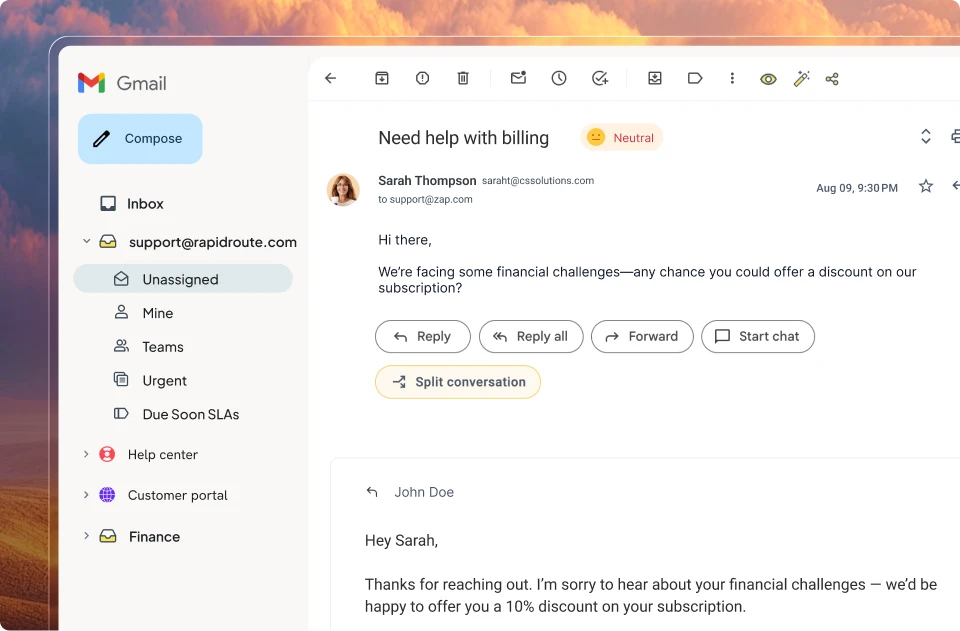







“Where is my order?” “Can I change my address?” “Has my refund been processed?”
Such order-related questions don’t slow teams down because they’re difficult. They slow teams down because they’re repetitive. And as volume grows, managing them efficiently becomes the real challenge.
At that point, the question shifts from handling tickets to whether your support platform is built for growth.
Zendesk and Gorgias are two popular customer service platforms, but they’re designed for different types of teams. Zendesk focuses on structured, enterprise-grade support operations, while Gorgias is built specifically for ecommerce brands, combining Shopify-native order actions with AI-powered support and sales features.
In this comparison, we’ll look at how Zendesk and Gorgias differ across pricing, ecommerce capabilities, automation, integrations, setup effort, and long-term scalability. The goal is to help you choose the platform that fits how your team actually works.
How I Did My Research
The goal of this comparison is simple: Help you make a practical decision between Zendesk and Gorgias based on how teams actually use them.
To put this together, I reviewed official documentation from both platforms, looked at verified user reviews on sites like G2 and Capterra, and analyzed their pricing models and add-ons.
I also read community discussions and migration stories to understand where teams face challenges after implementation.
Instead of listing every feature, I focused on what really influences buying decisions: pricing structure, ecommerce depth, AI automation, setup effort, and long-term scalability. The aim is to help you choose the platform that fits your team’s workflow, not just the one with the longest feature list.
Quick Overview of Gorgias vs Zendesk: Which is Best?
If you want the short answer, this table highlights how Gorgias and Zendesk compare across the areas most ecommerce teams evaluate
| Feature | Gorgias | Zendesk |
|---|---|---|
| Core Focus | E-commerce-first helpdesk built for Shopify and DTC brands | Structured, enterprise-grade customer service management for multi-team operations |
| Pricing Structure | ⭐⭐⭐☆☆ Ticket-based pricing (cost scales with volume) | ⭐⭐⭐⭐☆ Agent-based pricing (predictable per seat, add-ons increase cost) |
| Ecommerce Ticketing | ⭐⭐⭐⭐⭐ Manage Shopify orders, refunds, and subscriptions without leaving Gorgias | ⭐⭐⭐☆☆ Shopify integration is available, but order actions typically require apps or external workflows |
| Feature Depth | ⭐⭐⭐⭐☆ Strong automation for order queries, revenue tracking, social support | ⭐⭐⭐⭐⭐ Advanced routing, SLAs, AI automation, enterprise workflows |
| User Reviews & Market Maturity | ⭐⭐⭐⭐☆ Popular among DTC and ecommerce brands | ⭐⭐⭐⭐⭐ Widely adopted across industries and large enterprises |
| Best For | ⭐⭐⭐⭐☆ Small to mid-sized online stores focused on speed and sales | ⭐⭐⭐⭐⭐ Scaling teams needing structured workflows and compliance controls |
| Integrations | ⭐⭐⭐⭐⭐ Deep Shopify, BigCommerce, and Magento integrations with in-dashboard order actions | ⭐⭐⭐⭐☆ Broad ecosystem integrations, but ecommerce depth depends on apps |
Zendesk vs Gorgias Comparison: Main Features
Choosing between Zendesk and Gorgias comes down to how your support operation actually runs. Both platforms cover the fundamentals: Ticketing, live chat, automation, reporting, and integrations.
The difference lies in depth, flexibility, and how well each system fits ecommerce-driven workflows versus large-scale, multi-team support environments.
Below, I break down the features that matter most when you’re making a buying decision.
User Interface & Ease of Use
The interface should make resolving customer and order-related queries fast and intuitive. Agents need quick access to customer details and key actions without having to navigate complex menus.
Zendesk
Zendesk offers a structured agent workspace designed for handling high volumes across multiple channels. It’s powerful, but that power comes with complexity.
Custom views, triggers, and SLAs require setup time and often some operational maturity. Larger teams benefit from the structure, but most teams will face a learning curve before workflows are fully optimized.
Gorgias
Gorgias uses a feed-style interface built around ecommerce workflows. Core integrations and order-level actions are built in, allowing teams to start handling tickets quickly without extensive configuration.
Verdict
Gorgias is the better choice for ease of use and faster adoption. Its ecommerce-focused interface and quicker setup make it more practical for teams that want to go live without heavy configuration.
Ticketing System
A good ticketing system helps agents resolve order-related requests without switching systems. Refunds, returns, shipping updates, and subscription edits should happen inside the ticket view, not across multiple tabs.
Zendesk
Zendesk structures ticketing around control and accountability. Its routing system automatically assigns tickets based on priority or skills, reducing manual sorting and preventing delays. SLAs ensure every request is tracked against defined response targets, helping teams stay consistent as volume grows.
For organizations managing complex escalations or cross-team workflows, this structure creates predictability. Tickets follow predefined paths rather than relying on manual follow-ups. This reduces errors, improves handoffs between departments, and maintains service quality even during peak periods.

Gorgias
Gorgias manages tickets in a conversational view that keeps customer messages and order details in one place. Instead of switching between Shopify and the support system, agents can update orders, process refunds, or check shipping status directly within the conversation.
For ecommerce teams handling high volumes of order-related requests, this reduces resolution time and keeps workflows focused inside a single screen.
Verdict
Gorgias is the stronger choice for ecommerce ticketing. Its ability to handle order edits, refunds, and shipping updates directly inside the conversation makes it more practical for retail support teams.
Recommended reading
Live Chat
Live chat directly impacts customer conversions, cart abandonment, and average order value. The ability to see cart contents and purchase history during a conversation can determine whether a visitor becomes a buyer.
Zendesk
Zendesk Messaging integrates web chat, social messaging apps, and voice into one unified view. It supports proactive messaging, automation, and integration with its broader ticketing workflows. It’s well-suited for omnichannel support at scale.
Gorgias
Gorgias’ live chat is tightly integrated with ecommerce data. Agents can view carts, purchase history, and order details during a conversation. It’s particularly effective for pre-sales questions and cart abandonment recovery.
Verdict
Gorgias offers a more ecommerce-optimized live chat experience than Zendesk. Its ability to view carts, edit orders, and respond to social conversations in one stream makes it more practical for DTC brands focused on conversions.
AI Automation & Workflows
“Where is my order?” “Can I return this?” “When will this restock?”
The right automation system should quickly resolve these repetitive order queries.
Zendesk
Zendesk uses AI Agents, triggers, and macros to automate ticket categorization, prioritization, and routing. Suggested replies and Copilot assistance help agents respond faster, while automation rules ensure tickets move through structured workflows without manual oversight.
Such automation becomes especially valuable when workflows span multiple departments or require layered approval paths.
Gorgias
Gorgias focuses on e-commerce-specific automation. Its AI Agent can automatically resolve common order-related queries. Intent detection and smart tagging streamline workflows for retail operations.
Verdict
Overall, Zendesk is the better choice for AI automation when your workflows require structured routing, cross-team coordination, and layered approval rules. Gorgias is better suited for ecommerce teams that want automation focused on order-related queries and retail workflows.
Recommended reading
What is Customer Experience Automation (CXA)? A Practical Guide with Examples
Self-Service Options
Self-service is important for handling repetitive order-related queries. Clear FAQs around shipping, returns, and policies reduce ticket volume and improve response times.
Zendesk
Zendesk allows teams to build detailed help centers and internal knowledge bases. Customers can search articles, browse FAQs, and access multilingual documentation, while agents can reference the same knowledge base directly within tickets.
For teams managing large product catalogs or complex policies, this creates a single source of truth that supports both customer independence and agent accuracy.
Gorgias
Gorgias supports basic FAQs and help articles for common ecommerce questions such as shipping, returns, and policies. It works well for stores with straightforward documentation needs, giving customers quick access to essential information and helping agents reference policy details during conversations.
However, it is less suited for teams that require layered documentation, internal knowledge hierarchies, or community-driven support portals.
Verdict
Zendesk has a stronger and more customizable self-service infrastructure than Gorgias. Its help center, multilingual support, and advanced configuration options make it better suited for larger organizations with complex documentation needs.
Analytics & Reporting
Data visibility influences staffing, automation decisions, and performance tracking.
Zendesk
Zendesk provides detailed reporting that helps managers monitor SLA performance, response times, backlog trends, and agent productivity across teams.
Custom dashboards allow operations leaders to identify bottlenecks, forecast staffing needs, and refine workflows based on real performance data.
For large or multi-team environments, this level of visibility supports structured performance management and long-term process optimization.
Gorgias
Gorgias focuses on reporting on the impact of e-commerce. Teams can see how support conversations influence revenue, conversions, and customer lifetime value.
For DTC brands, this makes it easier to connect support performance directly to sales outcomes rather than just operational metrics.
Verdict
Zendesk offers deeper operational analytics than Gorgias. While Gorgias shines in ecommerce revenue attribution, Zendesk provides more advanced reporting, SLA tracking, and performance monitoring across large teams.
Integrations & Flexibility
Your support platform should connect easily with the rest of your tech stack. Effective integrations reduce tab-switching.
Zendesk
Zendesk integrations allow customer data, order history, CRM records, and internal systems to sync directly inside the ticket view.
Agents don’t need to switch between platforms to check account details or update records, reducing response time and improving accuracy.
Gorgias
Gorgias integrations are designed to pull ecommerce data, such as order status, subscription details, and payment history, directly into conversations. Agents can issue refunds, edit orders, or apply discounts without leaving the ticket, which speeds up resolution for retail support teams.
Verdict
Zendesk has a broader and clearer integration ecosystem than Gorgias. Organizations with complex tech stacks, ITSM requirements, or CRM dependencies will likely find stronger native support within Zendesk’s marketplace.
Customer Support & Learning Resources
The quality of vendor support and training materials affects how quickly teams can configure workflows, troubleshoot issues, and scale without external help.
Zendesk
Zendesk provides layered support options suited for larger organizations. Dedicated onboarding, structured training programs, and partner-led implementation help enterprises manage complex configurations.
However, accessing deeper support often depends on plan level or paid services.
Gorgias
Gorgias offers onboarding materials designed specifically for ecommerce teams and Shopify merchants. Its documentation is straightforward and practical for retail workflows, making it easier for smaller teams to get guidance without navigating enterprise-heavy resources.
Verdict
Zendesk provides more structured enterprise-level documentation and support programs than Gorgias. Larger organizations that require formal onboarding processes and layered support models may benefit more from Zendesk’s approach.
Migration Support & Data Transfer
Switching platforms involves risk. Data integrity and workflow continuity matter.
Zendesk
Zendesk provides structured migration tools ike CSV data imports, API-based transfers, and third-party migration partners to move tickets, users, and historical conversations from other systems.
Enterprise customers often rely on implementation partners to manage workflow mapping and configuration during the transition.
Gorgias
Gorgias supports migration from platforms like Zendesk, particularly for ecommerce teams. Migration is typically smoother for Shopify-focused businesses.
Verdict
Zendesk is better equipped for complex, enterprise-level migrations than Gorgias. Businesses transitioning from legacy systems or managing large data volumes will likely find Zendesk’s implementation ecosystem more robust.
Pros & Cons: Zendesk & Gorgias
The breakdown of pros and cons below reflects how each platform typically performs once it is live in real support environments:
Zendesk
| Pros (where Zendesk works well) | Cons (where Zendesk can fall short) |
|---|---|
| Enterprise-grade workflows and controls. Zendesk handles complex routing, SLAs, permissions, and multi-team escalations more reliably than ecommerce-first tools once everything is configured. | Implementation is heavy. Zendesk usually requires dedicated admin effort to set up triggers, views, roles, SLAs, and reporting in a clean way. |
| Strong omnichannel foundation. Email, messaging, voice, and social channels can live under one system, which helps larger teams standardize support operations across touchpoints. | Costs rise as you add “must-have” capabilities. Many teams end up upgrading tiers or adding Copilot, QA, WFM, and other add-ons to match modern expectations. |
| Mature integration ecosystem. Zendesk’s marketplace and APIs support broader tech stacks, which helps when your support team depends on multiple tools beyond Shopify. | Can feel overwhelming for smaller ecommerce teams. The interface and admin settings can feel complex if your workflows are straightforward and you do not need enterprise-level structure. |
All the above pros and cons are summarised from G2 reviews.
Gorgias
| Pros (where Gorgias works well) | Cons (where Gorgias can fall short) |
|---|---|
| Shopify-first support workflows. Gorgias is designed for ecommerce teams that need fast order visibility and actions like refunds or edits directly from the helpdesk. | Ticket-based pricing can spike. Costs increase with ticket volume, which can become a problem during peak seasons or at a larger scale. |
| Quick setup and faster agent adoption. Most Shopify merchants can get running quickly without needing a dedicated admin or weeks of configuration. | Less suited for complex, cross-team operations. Once support needs involve multiple departments, strict governance, or deep SLA hierarchies, Gorgias can start feeling limiting. |
| Automation built around retail use cases. Rules, macros, and AI features work well for repetitive ecommerce queries like WISMO, returns, and product questions. | Reporting and customization depth is narrower. Teams that need highly customized analytics or enterprise-grade reporting may outgrow the built-in dashboards. |
All the above pros and cons are summarised from G2 reviews.
Pricing Plan Differences: Gorgias vs Zendesk
Pricing is one of the biggest differentiators between Gorgias and Zendesk. The two platforms follow fundamentally different models: One scales with ticket volume, the other scales with agent count. That difference can significantly impact your total cost as you grow.
Overview Pricing Comparison
| Pricing Factor | Gorgias | Zendesk |
|---|---|---|
| Pricing Model | Ticket-based (monthly ticket volume) | Per-agent (seat-based) |
| Entry Plan | Starter: $10/month (50 tickets) | Support Team: $19/agent/month (annual) |
| Mid-Tier Plan | Pro: $300/month (2,000 tickets) | Suite Professional: $115/agent/month (annual) |
| Enterprise Plan | Custom volume pricing | Suite Enterprise: $169/agent/month (annual) |
| Overages / Add-ons | Overage per 100 tickets + AI Agent per resolution ($0.90–$1.00) | Add-ons per agent (Copilot $50, QA $35, WFM $25, etc.) |
| Cost Scales With | Conversation volume | Team size |
Zendesk Pricing
Zendesk follows a per-agent pricing structure. Plans start at $19 per agent/month (annual billing) for the Support Team and go up to $169 per agent/month (Suite Enterprise).

Suite plans bundle email, messaging, live chat, help center, and voice. However, advanced capabilities such as Copilot ($50/agent/month), Quality Assurance ($35), Workforce Management ($25), and other AI tools are priced as add-ons, which can add up quickly.
Example: A 10-agent team on Suite Professional:
$115 × 10 = $1,150/month base
Add Copilot + QA + WFM → +$1,100/month
Total: $2,250/month ($27,000/year)
And that’s before implementation services, which enterprises often require due to the complexity of their configurations.
For a deeper cost breakdown, see our full Zendesk Pricing guide.
Gorgias Pricing
Gorgias uses a ticket-based pricing model. Plans include a fixed number of tickets per month:
- Starter: $10/month (50 tickets)
- Basic: $50/month (300 tickets)
- Pro: $300/month (2,000 tickets)
- Advanced: $750/month (5,000 tickets)
- Enterprise: Custom
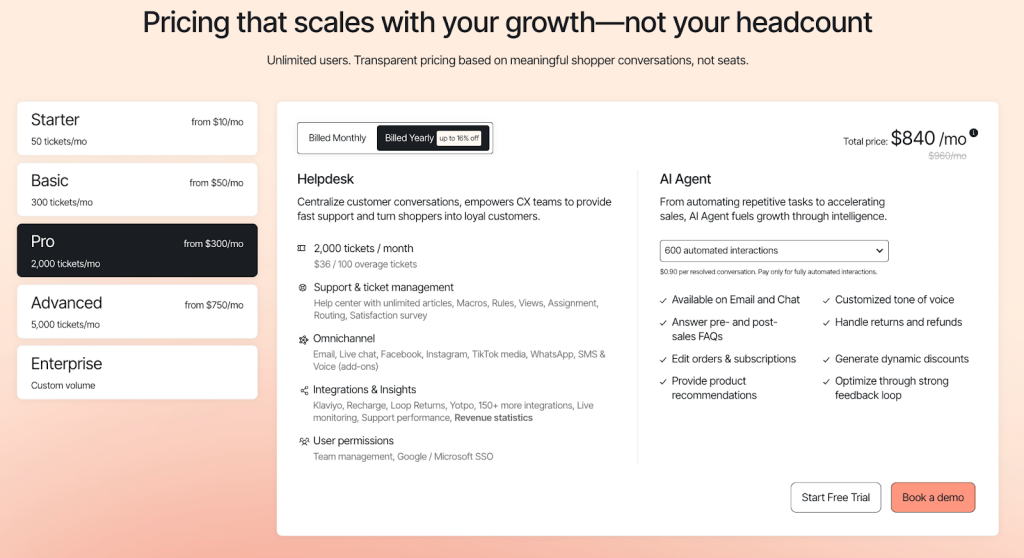
If you exceed your ticket limit, overage fees apply.
AI Agent interactions are billed separately at approximately $0.90 per automated resolution (for annual plans) and count toward your ticket usage.
Example:
If you handle 10,000 tickets per month, you’ll exceed the 5,000-ticket Advanced plan ($750/month) and move into Enterprise pricing. Depending on automation usage and overages, monthly costs can easily cross $1,500–$2,000+, especially during peak ecommerce seasons.
Here’s the honest reality about Gorgias vs Zendesk pricing
Gorgias looks affordable for small teams with predictable volume. But once you cross a few thousand tickets per month, especially during Black Friday or holiday peaks, ticket-based pricing can spike.
Zendesk looks expensive upfront. But for high-volume teams with stable headcount, per-seat pricing becomes more predictable. The real budget impact often comes from add-ons and configuration requirements, not just base plan pricing.
The better model depends on what grows faster in your business:
- Ticket volume → Gorgias becomes costly
- Headcount + enterprise needs → Zendesk becomes costly
Before You Decide: 3 Pricing Questions That Matter
1. Do costs change during peak sale seasons like Black Friday?
Yes. With Gorgias, higher ticket volume during peak seasons can trigger overage fees or force plan upgrades. Zendesk pricing remains stable per agent, but additional AI usage or add-ons can still increase total spend.
2. How does Gorgias’s ticket-based pricing compare to Zendesk’s agent seats?
Gorgias charges based on conversation volume, which benefits smaller teams with controlled ticket counts but becomes expensive at scale. Zendesk charges per agent seat, offering more predictable pricing for high-ticket-volume teams with stable headcount.
3. Which pricing model is better for high-volume enterprise stores?
Zendesk’s seat-based model is generally better suited for high-volume enterprise stores with large support operations. Gorgias may become cost-heavy if ticket volume grows faster than automation efficiency.
Similarities Between Gorgias and Zendesk
Despite their differences in pricing models and target markets, Gorgias and Zendesk share many foundational capabilities. Both platforms are built to centralize support operations and improve resolution speed through structure and automation.
Core Ticket Management
Both platforms allow teams to capture, assign, track, and resolve customer issues through structured tickets. Agents can update statuses, collaborate internally, and maintain a complete conversation history throughout the lifecycle of a request.
Omnichannel Support
Gorgias and Zendesk both support multiple customer channels, including email, live chat, and social messaging. Conversations from different touchpoints are centralized into a unified workspace to maintain context and avoid fragmented support.
Automation and Routing
Each platform offers automation tools to reduce manual work. You can configure rules, triggers, macros, and routing logic to prioritize tickets, assign ownership, and maintain SLA compliance.
Reporting and Performance Tracking
Both tools provide analytics dashboards to track response times, resolution metrics, CSAT, and team productivity. Managers can monitor performance trends and identify operational bottlenecks through built-in reporting features.
Integration Ecosystem
Gorgias and Zendesk both integrate with ecommerce platforms, CRMs, payment tools, and collaboration software.
While the depth of these integrations differs, each platform connects your support system to the broader tech stack to reduce manual work and streamline customer workflows.
Zendesk vs Gorgias: Which One Fits Your Support Model?
Choosing between Zendesk and Gorgias isn’t just about comparing features. It comes down to how your support team operates today and how you expect it to scale.
Are you running a high-volume Shopify store?
Do agents need to edit orders inside tickets?
Or do you need structured workflows and strict SLAs across teams?
Both platforms are strong, but they solve different operational problems.
Go with Zendesk when:
- Your support setup spans multiple teams, departments, or regions
- You require advanced routing, escalations, and SLA enforcement
- Compliance, reporting depth, and enterprise-grade controls matter
- You’re prepared for a heavier implementation process to gain long-term operational scalability
Zendesk works best when support is part of a broader service infrastructure and needs enterprise-level governance.
Go with Gorgias when:
- You rely heavily on Shopify integrations
- Agents frequently edit orders, issue refunds, or manage subscriptions directly inside the helpdesk
- Social media and chat are primary support channels
- You want faster deployment with minimal IT involvement
Gorgias is ideal for DTC brands that prioritize efficiency, revenue tracking, and streamlined retail workflows.
Hiver: A Better Alternative to Gorgias & Zendesk
If Gorgias feels too ecommerce-specific and Zendesk feels too enterprise-heavy, Hiver sits right in the middle, balancing complexity and simplicity.
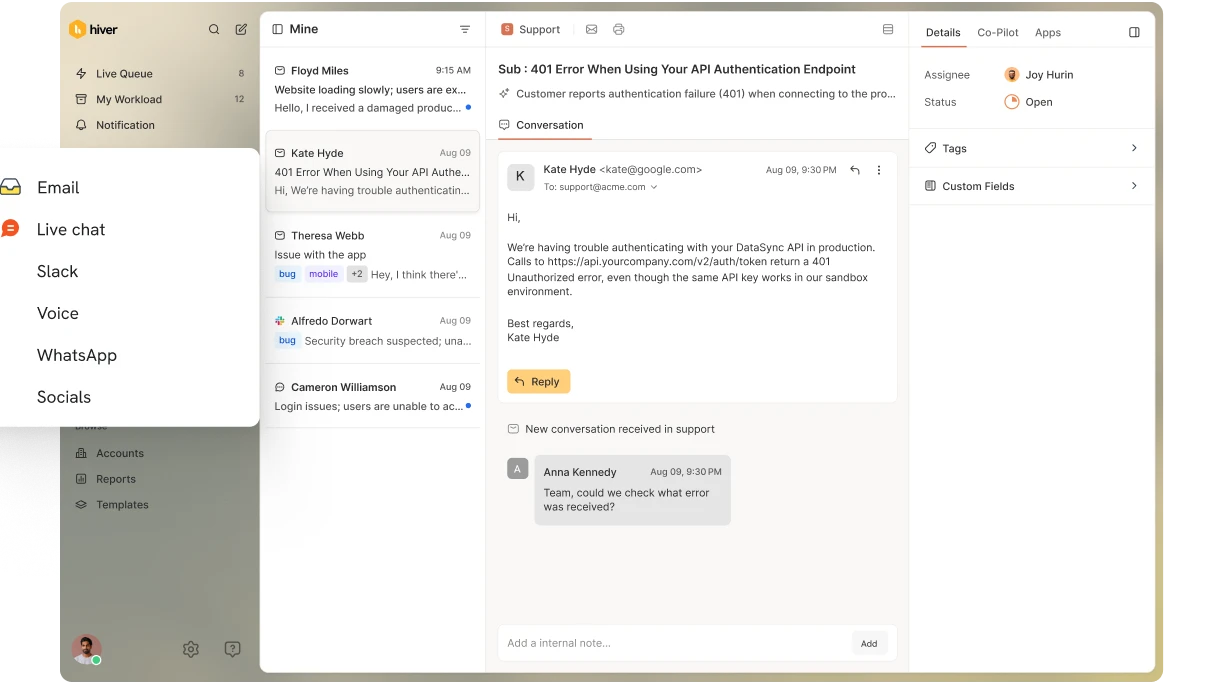
Hiver is an AI-powered customer service platform built for teams that want structured support without a complex configuration. Instead of forcing you into a new system architecture, Hiver brings email, live chat, WhatsApp, voice, and social conversations into one shared workspace.
You still get what modern support teams need: Clear ownership, SLAs, automation, analytics, and AI assistance. The difference is in how quickly you can go live and how much operational overhead you need to manage.
Zendesk is powerful, but it requires thoughtful setup of routing logic, triggers, reporting layers, and permissions. Gorgias is built for Shopify-centric brands and is primarily optimized for ecommerce workflows.
Hiver is designed for fast-growing customer support teams that want structure without any enterprise complexity. Here’s where Hiver stands out:
1. Structured support without heavy implementation: The intuitive, streamlined UI allows teams to get up and running within hours, significantly reducing onboarding complexity and minimizing training time, while still maintaining clear workflows and organized support operations.
2. AI embedded into daily workflows: AI assists with email summaries, intent detection, tagging, reply drafting, and automated resolution in higher plans. The goal is practical productivity, not layered AI add-ons.
3. Omnichannel without operational sprawl: Email, chat, voice, WhatsApp, and social conversations are managed in one connected platform, helping teams maintain visibility without switching systems.
4. Predictable per-user pricing: Plans scale per user, not per ticket or usage-based interaction, which makes forecasting costs simpler for small and mid-sized teams.
Choose Hiver if:
- Your team wants shared inboxes and automation without moving into a heavy enterprise system
- You want AI support capabilities without negotiating separate add-ons
- You need operational clarity without implementing enterprise-grade infrastructure
Ready to simplify support and give your team more control without adding complexity? Start your free trial with Hiver today.
Frequently Asked Questions
1. How do Gorgias and Zendesk differ in their ecommerce focus?
Gorgias is built specifically for ecommerce brands, especially Shopify stores, with native order actions and revenue tracking. Zendesk is a broader, enterprise-grade support platform designed to handle complex operations across industries, not just online retail.
2. Can Zendesk match Gorgias’s depth of native Shopify order management?
No. Zendesk integrates with Shopify, but it does not offer the same native, in-dashboard order edits, refunds, and subscription actions that Gorgias provides for ecommerce teams.
3. Can I set up Gorgias or Zendesk by myself, or do I need additional technical support to implement?
Yes for Gorgias. No, for Zendesk in most cases. Gorgias can usually be set up by ecommerce teams without heavy technical help, while Zendesk typically requires deeper configuration and operational planning, especially at scale.
4. Which has better AI automation capabilities, Gorgias or Zendesk?
Zendesk offers more advanced, enterprise-level automation across departments and channels. Gorgias focuses on ecommerce-specific automation, particularly for order-related queries and customer interactions.
5. Is Hiver really a better alternative to Zendesk or Gorgias?
Yes, Hiver is a strong alternative for teams that want structured, multi-channel customer support with built-in AI and automation, without adopting an enterprise-heavy system or usage-based pricing model.
6. Which platform is best for small or medium-sized online stores?
Between Zendesk and Gorgias, Gorgias is usually the better fit for small to mid-sized online stores due to its ecommerce-native workflows and faster setup. However, Hiver can be a stronger option for fast-growing teams that want structured multi-channel support without enterprise complexity or ticket-based pricing spikes.
7. Is it easy to migrate to Hiver from Zendesk or Gorgias?
Yes. Most teams can transition to Hiver without heavy implementation cycles, making it a practical option for businesses that want structure and visibility without a long setup phase.
8. What are some top alternatives and competitors to Zendesk?
Popular alternatives include Freshdesk, Hiver, Intercom, Help Scout, Front, and Salesforce Service Cloud. For a deeper breakdown, explore our detailed guide on Zendesk Alternatives.
9. What are some top alternatives and competitors to Gorgias?
Top competitors include Zendesk, Hiver, Freshdesk, DelightChat, Intercom, and ecommerce-focused helpdesks like Re:amaze. You can find a full comparison in our guide to Gorgias Alternatives.