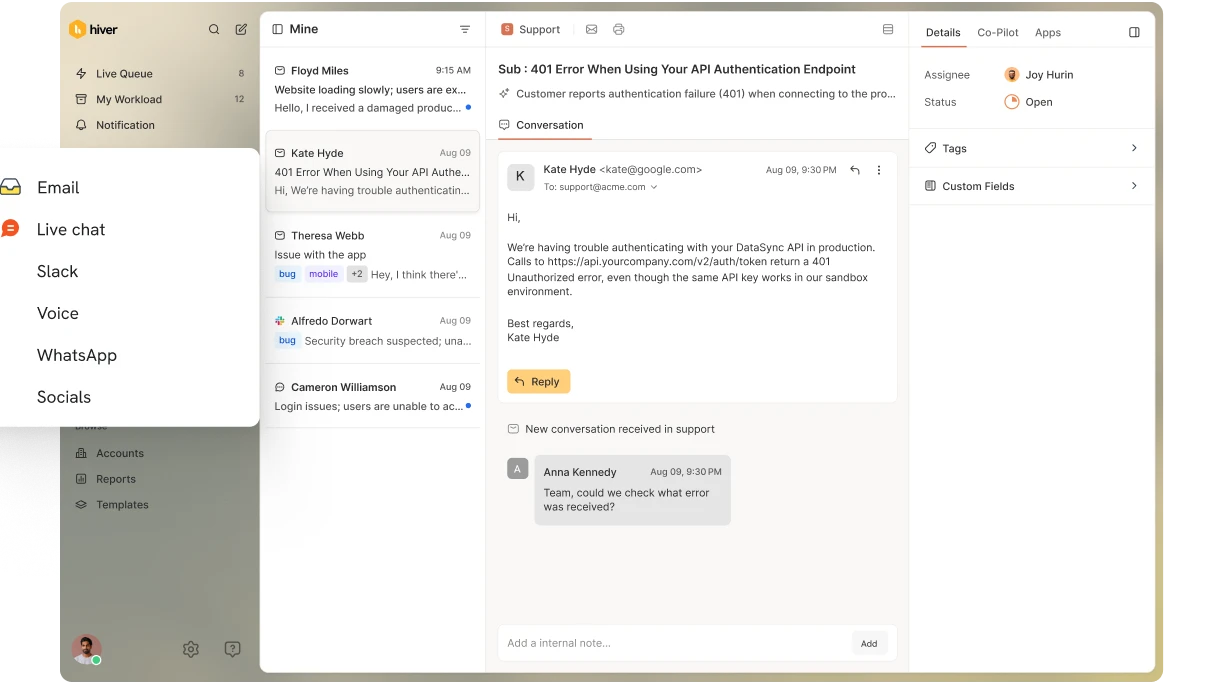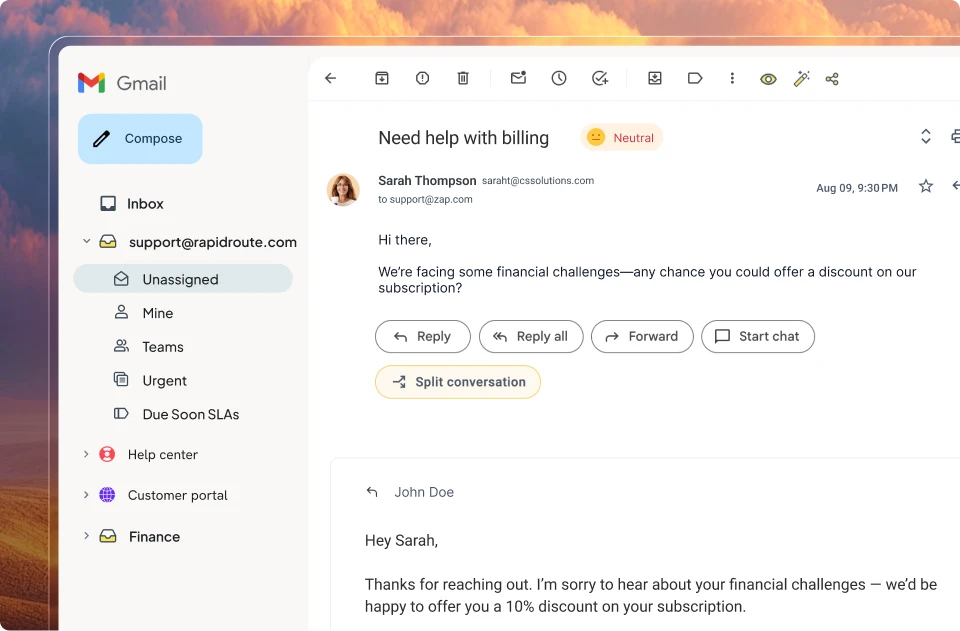







Email plays a major role in project communication, from approvals and updates to client coordination and follow-ups. But without structure, tracking ownership and progress across inboxes quickly becomes difficult.
Email project management solves that by adding structure to these workflows.
In this article, you’ll learn how email project management works, how teams set it up, and which tools help manage projects more efficiently.
What is Email Project Management?
Email project management is the process of managing tasks, updates, and team communication directly from your inbox without relying entirely on a separate PM tool. It helps teams organize work, assign ownership, and keep projects moving without a separate project management platform.
For example, a client approval email can instantly become an assigned task, move through statuses like “Pending” or “In Progress,” and remain visible to the entire team until it is resolved. Instead of relying on scattered inboxes and manual follow-ups, teams can manage project communication in a more structured and trackable way.
Recommended reading
How Email Project Management Works
Getting email project management to work requires adding that structure manually or through a tool.
Here is how it typically runs:
- Convert emails into tasks: When an email requires action, it gets logged as a task, not left sitting in the inbox as an unread message.
- Assign ownership: Each task is assigned to one person. Unclear ownership is one of the biggest reasons project updates, approvals, and follow-ups get missed.
- Track status: Every task moves through a clear workflow: Open → in progress → pending → resolved; the team can see this without asking
- Tag and categorize: Emails get organized by project, client, priority, or type (e.g. billing, escalation, onboarding) so the inbox stops being a flat list and becomes a sorted queue.
Tagging and categorization are often overlooked, but they make project email workflows much easier to manage. Without a consistent system, teams end up searching through inboxes to find pending approvals, client feedback, or overdue follow-ups, especially when multiple projects are running at the same time.
Solution: A simple tagging structure can solve most of this. Teams should organize emails using labels based on project name, priority, workflow stage, or department. Tags like “Waiting for Approval,” “Follow-up,” “Urgent,” “Client Feedback,” or “Blocked” make it much easier to filter conversations, track pending work, and identify bottlenecks before projects get delayed.

Organize project emails with tags, assignments, and workflow with Hiver.
How to Set Up Email Project Management
Most modern email project management tools follow a similar setup process. The goal is to turn your inbox into a structured workspace where teams can assign ownership, track progress, and collaborate without forwarding emails manually.
Tools like Hiver, Front, Missive, and Drag add this layer of structure directly inside your inbox. Most connect with project management tools like Asana, Trello, Jira, or ClickUp, so emails and tasks stay in sync without copying information between platforms.
Below is an example workflow on how to manage emails using Hiver:
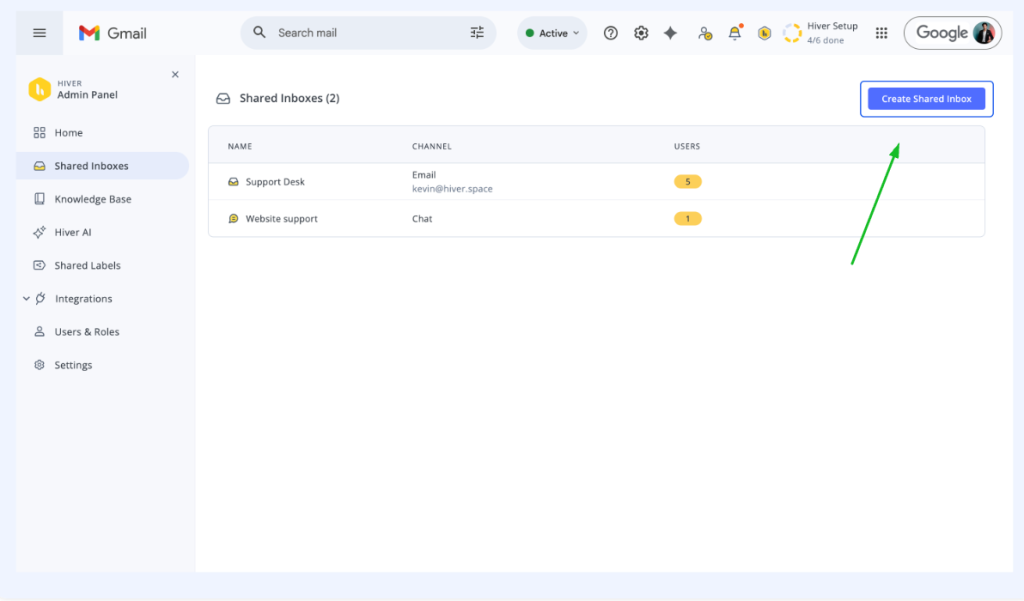
Step 1: Create a shared inbox
Go to the Hiver Admin Console → select “Create Shared Mailbox” → give it an email address (e.g. support@, projects@) → add your team members.
Everyone on the list can now view, manage, and respond to emails from that address.
Step 2: Assign emails to team members
Open any email in the shared inbox and assign it to a specific team member from the right panel. The assignee gets notified immediately, and the conversation appears in their queue with clear ownership attached to it.

Step 3: Add tags to categorize conversations
Create tags like “Billing,” “Onboarding,” “Escalation,” or “Waiting on Client” to organize conversations by workflow stage or priority. Teams can apply tags manually or let Hiver AI identify action items and create tasks automatically.
For example, if a customer requests an onboarding update or submits an approval request, AI Tasks can understand the intent behind the conversation, suggest the right tag, and route it to the appropriate team without relying on exact keyword matches or manual triaging.

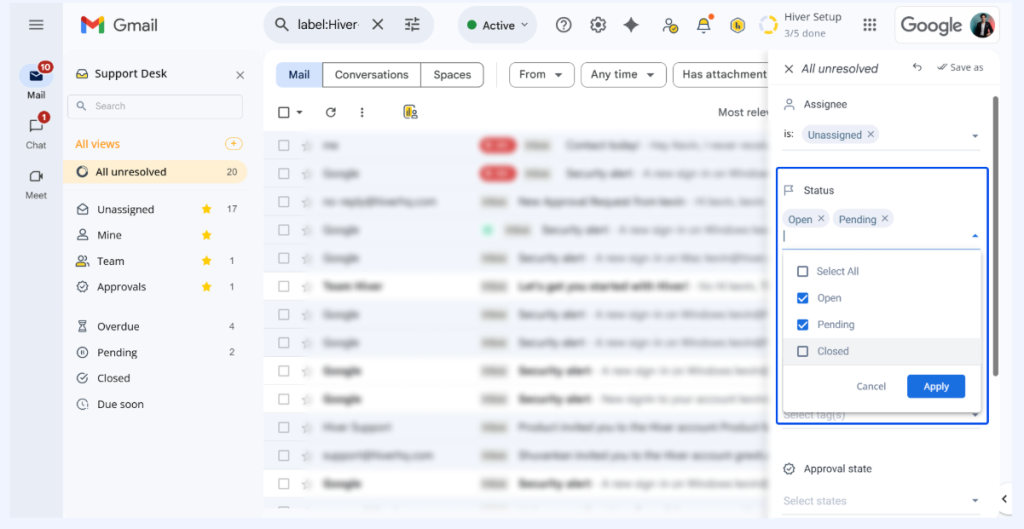
Step 4: Set conversation status
Every email moves through a status: Open, Pending, or Closed. Team members update this as they work. Anyone checking the inbox sees exactly what is in progress, what is waiting, and what is done without asking.
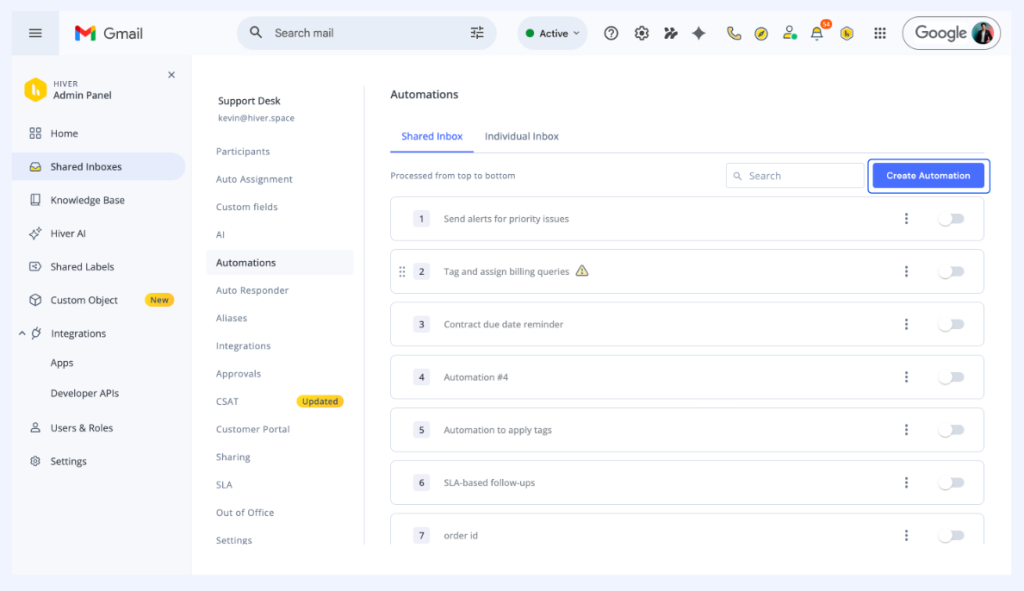
Step 5: Set up automation for recurring email types
Go to Automations → Create a rule → set a trigger (e.g. sender domain, keyword, or tag) → define the action (assign to person, apply tag, set priority).
A team handling 100+ emails a day can route most of them without manual sorting.
Assign emails, automate workflows, track ownership, and manage project communication without switching between multiple tools with Hiver
Start your free trial
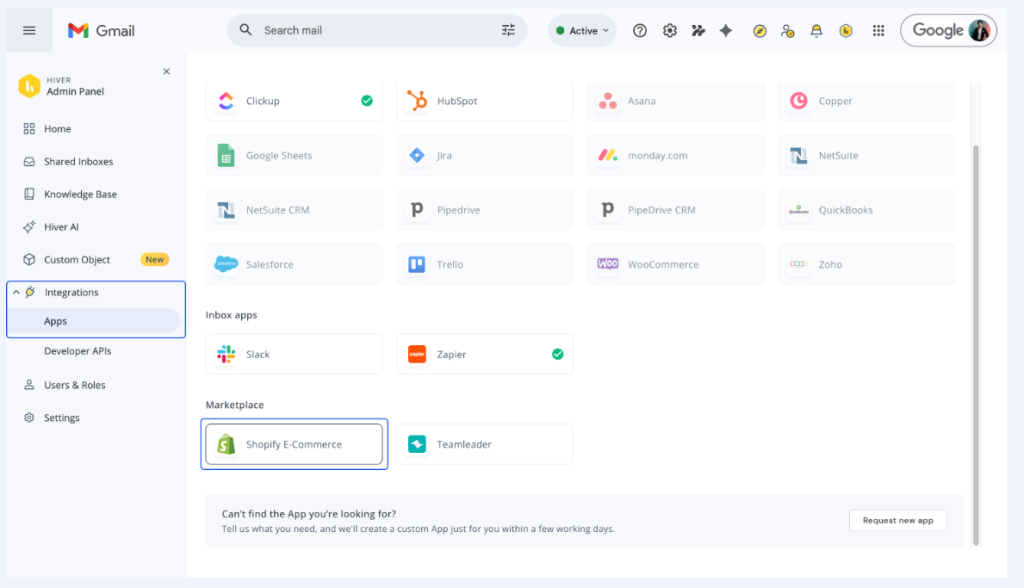
For teams that also use a dedicated PM tool, Hiver integrates with tools like Asana, Jira, and Monday, so you can create a task from any email in one click.
Recommended reading
How to Leverage SLAs in Ticketing Software to Improve Your Customer Service
How to Bring Visibility Across Email Projects
Email-based work has a fundamental problem: you cannot manage what you cannot measure. Tasks get done, deadlines pass, but there is no record of how long things took, who handled what, or where things slowed down.
Reporting adds visibility across email workflows. Teams can track response times, monitor workload distribution, identify overdue conversations, measure turnaround times, and spot bottlenecks before they delay projects. Instead of relying on manual follow-ups, managers get a clear view of how work is moving across teams and projects.
With the right tool, every email-based task becomes a data point. Here is what that looks like in practice:
1. Response times and turnaround
Track how quickly teams respond to project emails, how long approvals take, and which conversations remain pending for too long. Teams can spot delays early instead of learning about them after deadlines are missed.
If a specific workflow, client, or project category consistently takes longer than expected, reporting helps teams identify the issue immediately and fix the process before delays compound.
2. Ownership and workload
You can see how many open conversations each team member has, who is overloaded, and who has capacity. This matters when you are managing projects across a shared inbox; without it, work distribution is guesswork.
3. Bottlenecks across projects
If conversations assigned to a specific team or workflow stage consistently take longer to close, reporting helps teams identify the slowdown early. For example, repeated delays in finance approvals or design reviews usually point to a workflow issue, not just high email volume.

Hiver’s reporting dashboard gives teams all three of these data points, no need to export to a spreadsheet or use any third-party analytics tool.
Choosing the Right Email Project Management Tool
Many email project management tools require you to forward emails into a separate platform, rebuild your workflow elsewhere, and train your team on a new system. At this point, you have left email project management and entered standard project management with an email import feature.
The right tool keeps email as the primary workspace and adds structure on top of it. Four important factors to check before committing:
- Native to Gmail or Outlook: The tool should work directly inside the email platform your team already uses. If people have to keep switching between inboxes and separate dashboards, most teams stop using the system consistently.
- Fast onboarding: Setup should take minutes, not a week-long implementation. If a vendor is quoting you an onboarding call before you can even try the product, that is a signal the tool was not built for email-first teams.
- Integrations with your PM stack: If your team tracks work in ClickUp, Monday, Jira, or Asana, the tool should connect to those without manual data entry. An email gets assigned to the inbox; the corresponding task updates in the PM tool automatically.
- Built-in tagging, tracking, and reporting: Tagging and status tracking should be native, not bolted on. And reporting should show you response times, workload by person, and open tasks without requiring a separate analytics tool.
- Automation support: Automations reduce manual work by routing emails, assigning ownership, adding tags, or escalating urgent conversations automatically.
The whole point of email project management is to make collaboration easier, not force teams to move work into another complicated platform. Hiver connects to tools like Asana, Jira, and Monday, and gives teams tagging, assignment, SLA tracking, and reporting from an intuitive interface.
How Egnyte reduced manual assignment with Hiver
Egnyte’s customer success team uses Hiver to automatically assign incoming queries in a round-robin fashion, reducing the manual work of distributing emails across the team.“I do not have to assign them (queries) manually. Hiver’s automation just does it Round-Robin fashion. Saves so much time!”- Kenedi Padgett, Manager of Scaled Customer Success, Egnyte
Hiver is free to get started, and you can set up a shared inbox, assign emails, and see how the workflow runs before committing to a paid plan. Most teams are up and running in under 30 minutes.
If you like what you’ve read about Hiver, you can get started for free and try it out for yourself, no implementation call required.
Frequently Asked Questions
1. How do I stop losing tasks in email threads?
Use an email project management tool that supports task assignments, tagging, and status tracking. Turning emails into assigned tasks with clear ownership makes it much easier to track follow-ups and pending work.
3. What tools integrate email with project management software?
4. How do you turn emails into tasks?
Most email project management tools allow teams to convert an email into a task directly from the inbox. In Hiver, you assign an email to a team member and that email becomes their task, with a status, a tag, and a due date if needed. Some tools also let you push emails into Asana or Jira as tasks with one click.
5. Can you get analytics from email project management?
Yes, but only with the right tool. A standard inbox gives you nothing. Hiver’s reporting shows response times, resolution rates, workload by team member, and SLA compliance.