






You open Gmail to send a quick follow-up and end up sifting through forgotten reminders, random newsletters, and long-dead threads. And before you realize, you feel overwhelmed by the clutter and find it difficult to prioritize things.
Microsoft’s 2025 Work Trend Index Annual Report backs up that feeling: the average worker now receives 117 emails a day, and is interrupted every 2 minutes with notifications. Moreover, 40% of working professionals now check email before 6 AM.
Beyond individual email cleanup, many teams struggle with shared workflows, coordination, and response quality — especially when multiple people need to act on the same messages.
So, how do you not let your Gmail inbox get in the way of your productivity?
This guide pulls together 17 practical tips to organize your Gmail inbox. It covers everything from quick clean-up tricks and smarter filters to new AI tools like Gemini. We’ll help you regain control of your emails, no matter how busy you are.
Keep your Gmail tidy with these quick steps to sort and organize your inbox.
✅ Sort by sender: Zero in on specific conversations fast. Type from:[sender’s email] in Gmail’s search bar to view every message from that contact in one place.
✅ Sort by size: Free up storage by spotting bulky attachments. Use size:[bytes] (for example, size:5000000) to surface large emails and decide what to delete or archive.
✅ Sort by date: Pinpoint messages from a certain period. Combine before:[yyyy/mm/dd] and after:[yyyy/mm/dd] to narrow results to an exact date range.
✅ Star key emails: Highlight what matters most. Star important emails, and use different star colors, to group them into quick-access categories.
✅ Use labels as folders: Turn clutter into organized workspaces. Apply labels that match your workflow or projects; shared labels let teams collaborate on tagged emails seamlessly.ssly.
We’ve explained the above points in detail in this video.
TL;DR: 17 ways to organize Gmail inbox
Here’s a quick breakdown of 17 ways to clean up and organize your Gmail inbox.
| Focus area | Actions |
|---|---|
| Clear visible clutter | 1. Delete promotional emails in bulk 2. Unsubscribe from unwanted newsletters 3. Switch to “Priority” or “Multiple Inboxes” layout 4. Use Compact view for faster scanning 5. Batch-archive low-priority updates |
| Sort useful emails | 6. Create labels like “Needs Reply,” “Follow-Up,” and “Read Later” 7. Pin important threads 8. Set filters for repeat senders 9. Clean up large email attachments 10. Mute noisy or irrelevant threads |
| Use AI and automations | 11. Summarize long email threads with Gemini 12. Batch-label or archive with simple prompts 13. Delete outdated emails with AI 14. Enable Smart Compose and Smart Reply 15. Turn on Nudges to follow up promptly 16. Set email-specific reminders 17. Use Gmail’s mobile widget for quick triage |
No pressure to do all 17. Each of these tips is a small win on its own. Start with the ones that feel easiest, and build from there.
Tip 1: Delete old promotional emails in bulk
Promotional emails pile up fast: flash sales, newsletters, announcements you never asked for. Most of them land in the “Promotions” tab and quietly bloat your inbox. Clearing them out in bulk is one of the fastest ways to declutter Gmail and free up mental space.
Here’s how to do it:
- Open your Gmail account on a desktop browser.
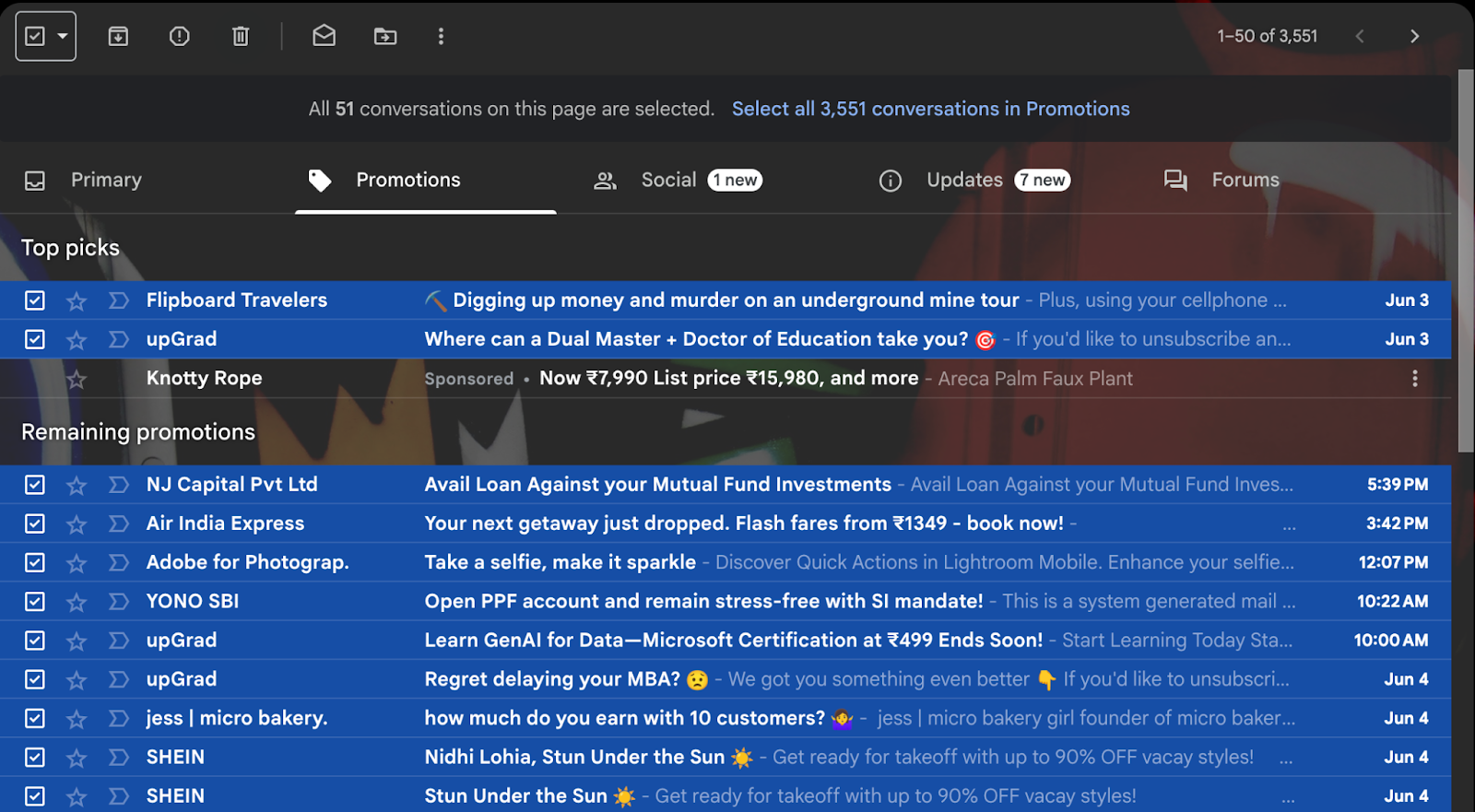
- Click on the “Promotions” tab.
- Click the checkbox at the top left corner to select all emails on the current page.
- If you have more than 50 emails, a message will appear saying, “All 50 conversations on this page are selected.” Click on “Select all conversations in Promotions” to select all promotional emails.
- Click on the trash bin icon 🗑️ to delete all selected promotional emails.
- Deleted emails will move to the Trash folder and will be permanently deleted after 30 days.
💡 Pro Tip: Use Gmail search to target even older promos. Try: category:promotions older_than:6m
Copy these filters to keep your inbox tidy:
- Sender filter: from:(news@brand.com) → Apply label “Newsletters” + Skip Inbox
- Subject filter: subject:(receipt) → Apply label “Receipts” + Mark as Read
- Unsubscribe filter: list-unsubscribe: → Apply label “Mailing Lists” + Skip Inbox
- Domain filter: from:(@company.com) → Star + Apply label “Work”
Tip: Once your filters work well, go to Settings › Filters and Blocked Addresses › Export to download them. Share or Import on another account so your team can start with the same prebuilt set. (See Google’s official help page for more filter options.)
Tip 2: Unsubscribe from unwanted newsletters
It’s easy to sign up for newsletters and product updates. But if you’re not opening them, they’re just taking up space. Gmail helps you unsubscribe quickly, without needing to hunt for footer links. The steps include:
- Click on a promotional or newsletter email you wish to unsubscribe from.
- Next to the sender’s name at the top of the email, look for the “Unsubscribe” link.
- Click on “Unsubscribe.” A confirmation pop-up will appear. Confirm by clicking “Unsubscribe” again.
- If you don’t see Gmail’s built-in link, scroll to the bottom of the email, as most senders include a manual unsubscribe option.

Recommended reading
Tip 3: Switch to a smarter inbox layout
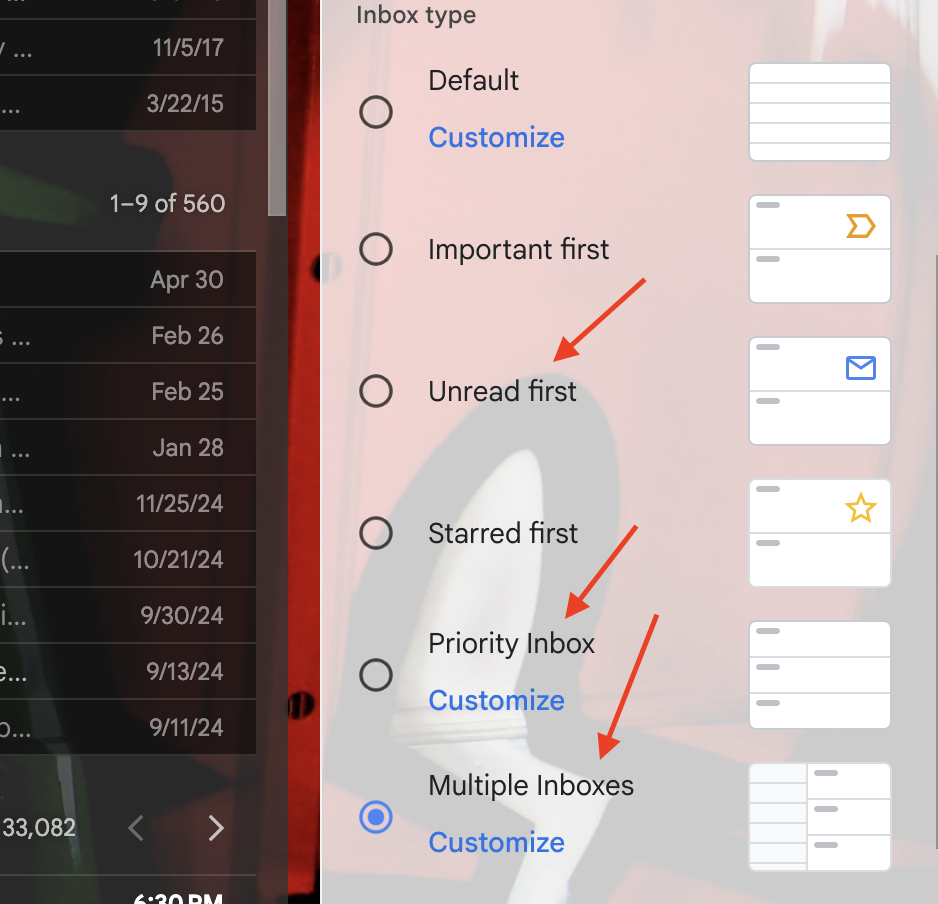
Gmail offers multiple inbox layouts like Default, Important First, Unread First, Priority Inbox, and Multiple Inboxes. Choosing the right one helps you surface high-priority emails faster and reduce distractions.
If you’re someone who misses important messages because they’re buried under updates or newsletters, switching to “Priority Inbox” or “Unread First” can immediately improve focus.
- Open Gmail on your desktop.
- In the top-right corner, click the gear icon (⚙️) to open Quick Settings.
- Under Inbox Type, try one of the following:
- Priority Inbox: Automatically splits your inbox into Important, Starred, and Everything Else.
- Unread First: Shows unread messages at the top.
- Multiple Inboxes: Lets you create custom inbox sections based on filters or labels.
- Gmail updates the layout instantly. No need to save changes.
Tip 4: Change to “Compact View” for faster scanning
When you’re skimming through dozens (or hundreds) of emails, every inch of screen space counts. Gmail’s Compact view tightens up the layout so you can see more messages at once.
Here’s how to switch it on:
- Click the gear icon (⚙️) in the top-right corner
- Under “Density” in Quick Settings, select “Compact”
- Gmail applies the new view instantly, No saving needed
💡 Pro Tip: Compact view is especially handy during inbox cleanup sessions or when working from a smaller screen. You can always switch back to “Comfortable” once you’re done.

Tip 5: Use search to batch-read or archive low-priority updates
The “Updates” tab in Gmail collects things like order confirmations, system alerts, account activity, and service notifications. Most of them are informational and rarely require you to take action. Instead of clicking through them one by one, use search operators to clean them up in bulk. Here’s how:
- Open Gmail on desktop.
- In the search bar, paste: is:unread AND category:updates
- Press Enter. Gmail will show all unread emails from the Updates tab.
- Click the checkbox at the top left to select emails on the page.
- (Optional) If Gmail offers the “Select all conversations that match this search” prompt, click it.
- Choose what you want to do: Click the checkmark icon ✅ to mark as read. Or, click the archive icon 📥 to move them out of the inbox.

💡 Pro Tip: Use this trick weekly to keep auto-emails from piling up.
Tip 6: Create labels like “Needs Reply,” “Follow-Up,” and “Read Later”
Most inboxes are a mix of action items, things you’re waiting on, and stuff you want to read later. Instead of letting them all sit in one big pile, create 2–3 labels that match how you work. It’s like turning your inbox into a simple task board. Here’s what to do:
- In Gmail’s left sidebar, click “+ Create new label”
- Name the label: e.g., Needs Reply, Follow-Up, or Read Later.
- Click Create.
- You can apply these labels by dragging emails into the label folder or opening an email and using the ‘Label’ icon to assign it.
- (Optional) Use color codes to make labels more scannable. Click the three-dot menu beside any label > Label color.

Tip 7: Pin emails you keep coming back to
Some emails don’t need a reply, but you keep going back to them. It could be a project discussion with a client, an invoice with key details, or an internal email. Pinning such emails keeps them fixed at the top of your inbox, so you’re not hunting through search every time. This is a cleaner alternative to starring everything or keeping emails unread “just in case.” Here’s how to do this:
- Hover over the email you want to pin
- Click the pin icon (📌) on the right
- Gmail moves it to a dedicated pinned section at the top
- To unpin, just click the icon again
Note: Pinning only works if you’re using Gmail’s default inbox view with pins enabled. If you don’t see the option:
Under Inbox Type, select Default and ensure “Show pinned emails” is turned on
Go to Settings (⚙️) → Try out the new Gmail view (if prompted)
Pinned threads stay right where you need them. No more scrolling, no more digging through filters.
Tip 8: Set filters for repeat senders
Some emails don’t need your attention. Instead, they just need a place to land. Think: HR updates, Stripe receipts, weekly reports. Instead of sorting them manually, use Gmail filters to auto-label, archive, or star these messages based on rules you set once.
Here’s how to set one up:
- In the Gmail search bar, type the sender’s email. Example: from:@flipboard.com
- Click the filter icon (on the far right inside the search bar).
- Gmail will show advanced filter options. Confirm or refine the filter conditions.
- Click Create filter at the bottom of the box.
- Choose actions to apply:
✅ Check Apply the label and choose/create a label (e.g., Finance or Reports)
✅ Check Skip the Inbox (Archive it) if it’s not urgent
✅ Check Star it if you want it easily findable
✅ Click Create filter again to save.
You can create multiple filters for different teams, clients, or notification types. This reduces mental load and keeps your inbox cleaner over time.

Tip 9: Delete bulky emails
Attachments like PDFs, decks, invoices, and media files take up space and slow down search. If you’re close to Gmail’s storage limit, or just want a faster inbox, identifying large emails is a smart cleanup step.
Gmail doesn’t show file sizes in the inbox by default, but you can use search to find the heaviest emails instantly. Here’s how:
- In the search bar, type: has:attachment larger:10M (this will show emails with attachments larger than 10 MB.)
- Press Enter. Gmail will list all relevant emails.
- Review and delete emails you no longer need, especially with outdated files or duplicate attachments.
- You can also forward important attachments to Google Drive before deleting, if needed.
- Bonus search operators to try: “larger:5M older_than:1y” – to find old, space-hogging attachments. Or, “filename:pdf” – to locate specific file types.

Use these Gmail search operators to bulk-delete and organize emails quickly
| Operator | What it finds | Example action |
|---|---|---|
| category:promotions | Promotional emails only | Select All → Archive/Delete |
| older_than:6m | Messages older than 6 months | Bulk-archive to reduce clutter |
| larger:10M | Emails over 10 MB | Delete or download attachments |
| filename:pdf | All PDF attachments | Save/download, then delete |
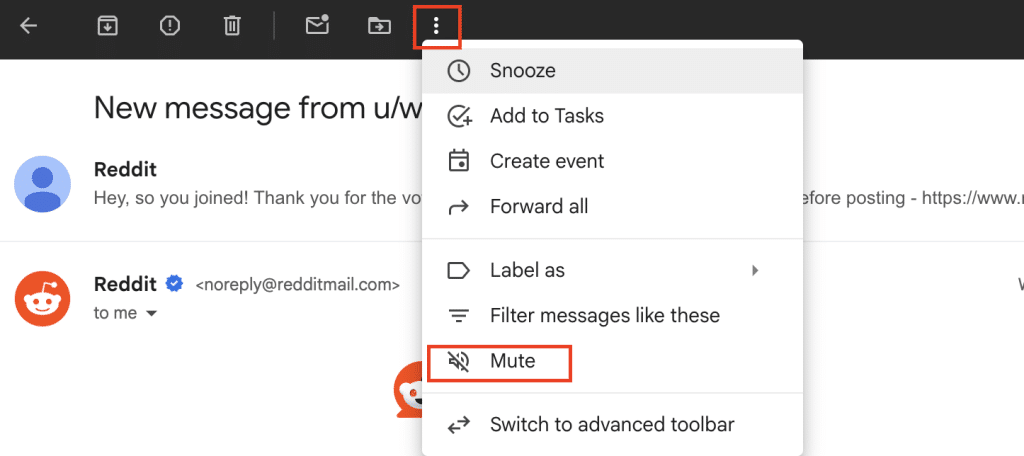
Tip 10: Mute noisy threads you don’t need to see
Endless reply-alls. Team updates you’re just CC’d on. Product threads that’ve already wrapped. You don’t want to delete them, but you definitely don’t want to see them in your inbox either.
That’s where Gmail’s Mute feature comes in. It quietly removes a thread from your inbox, even if new replies come in.
Here’s how to mute a thread:
- Open the email thread you want to mute.
- Click the three-dot menu (︙) at the top of the message.
- Select Mute.
- Gmail moves the conversation out of your inbox. Any new replies in that thread won’t surface again, unless someone replies only to you.
- To unmute: Search for the thread, open it, click the three-dot menu again, and choose Unmute.
💡Pro Tip: Use it liberally on closed support tickets, group convos that don’t need your follow-up, or FYI updates that don’t require action.
Tip 11: Ask Gemini to summarize long email threads
Gemini (Google’s AI assistant) is now integrated directly into Gmail, and one of its best time-saving features is summarizing long email threads. Instead of scrolling through back-and-forth messages, you get a clean overview of what’s been discussed; helpful when catching up after time away or jumping into a long thread mid-way. Steps to follow:
- Open a long email thread in Gmail.
- If available, you’ll see a “Summarize this email” option (Gemini prompt) at the top of the thread.
- Click it and Gemini will generate a short, natural-language summary of the thread.
- You can copy, save, or refer to the summary when replying or delegating.
Note: This feature is gradually rolling out to Gmail accounts with Gemini enabled (Workspace or paid plans). Make sure Gemini is turned on in your account settings under “Help me write” and AI tools.
Tip 12: Use Gemini to batch-label or archive emails
Instead of creating multiple filters or selecting dozens of emails manually, you can now ask Gemini in Gmail to apply labels or archive emails based on sender, subject, category, or time frame – all in plain language. This saves clicks and helps you stay organized without digging through settings.
What you can ask Gemini:
- “Label all emails from Zoom as ‘Meetings.’”
- “Archive all emails from January 2024.”
- “Label unread emails from @stripe.com as ‘Finance.’”
Steps to follow:
- Open Gmail (must be using a Gemini-enabled Workspace account).
- Click the Gemini icon in the top-right corner or use the Gemini side panel.
- Type a natural-language prompt like: Label all unread emails from @stripe.com as Finance.
- Gemini will process the request and apply changes in bulk – no manual filters needed.
Note: Gemini must be enabled under Settings → Help me write & AI tools. Works best with simple, rule-based requests (by sender, label, date, etc.).

Tip 13: Ask Gemini to delete emails by context
Instead of manually searching and selecting emails to delete, you can now instruct Gemini to find and remove clutter based on context – like outdated promotions, old receipts, or irrelevant newsletters. This makes inbox cleanup significantly faster, especially if you’re behind on maintenance.
What you can ask Gemini:
- “Delete all promotional emails older than 60 days.”
- “Delete unread updates from 2023.”
- “Remove newsletters I haven’t opened in the last 90 days.”
Steps to follow:
- Open Gmail and launch Gemini via the side panel or toolbar.
- Type a clear instruction, like: Delete all unread promotional emails older than 60 days.
- Review Gemini’s preview (if shown) before confirming deletion.
- Confirm the action, and Gemini will remove the selected emails in bulk.
Always review the preview to avoid deleting anything important. Gemini is improving in understanding context, but a double-check helps.

Tip 14: Enable Smart Compose and Smart Reply
Smart Compose and Smart Reply use Gmail’s AI to help you respond faster – by suggesting complete sentences as you type, or by offering one-click replies. These tools save time, reduce mental effort, and help you handle high volumes of email more efficiently.
- Smart Compose suggests full sentences as you write.
- Smart Reply gives you 2–3 short responses to choose from.
- They’re available across web and mobile, and they learn from your writing style over time. Steps to turn them on:
- Open Gmail Settings (click the gear icon → See all settings).
- Go to the General tab.
- Scroll down to the sections:
- Smart Compose → Enable Writing suggestions on
- Smart Reply → Enable Smart Reply on
- Scroll to the bottom and click Save Changes.

How to use them:
- When replying to emails, suggestions will auto-populate as gray text while typing. Press Tab to accept.
- On mobile, Smart Reply shows quick tap-to-send options (e.g., “Sounds good!” or “Thanks for the update”).
Tip 15: Turn on Nudges to resurface emails you might’ve missed
Sometimes you read an email, plan to respond, and forget. Or you send an important message – and never get a reply. Gmail’s Nudge feature quietly tracks these and resurfaces them with reminders like: “Received 3 days ago. Reply?” or “You sent this 5 days ago. Follow up?”
It’s one of Gmail’s most underrated features for staying on top of important threads, without setting manual reminders or labels.
Steps to turn on Nudges:
- Go to Gmail Settings (gear icon → See all settings).
- In the General tab, scroll to Nudges.
- Check both boxes:
- Suggest emails to reply to
- Suggest emails to follow up on
- Click Save Changes at the bottom.
Once enabled, Gmail will automatically highlight messages that may need your attention at the top of your inbox.

Tip 16: Use Gemini to set reminders
Gemini in Gmail doesn’t just summarize or label – it can now also help you set natural-language reminders inside your inbox. Whether it’s following up with a lead, replying to a client, or checking back on something next week, you can just ask Gemini to remind you. No external app. No calendar juggling. It stays right inside Gmail where the message lives.
Examples of what you can ask Gemini:
- “Remind me to reply to this email on Monday.”
- “Set a reminder to follow up in 3 days.”
- “Remind me about this thread next Friday at 10 AM.”
Steps to follow:
- Open the email you want to set a reminder for.
- Launch Gemini from the right-side panel (or via the Gemini icon).
- Type a prompt like: Remind me to respond to this email tomorrow at 9 AM.
- Gemini will confirm the reminder and surface it when the time comes, either as a pinned card or follow-up notification within Gmail.
This feature is rolling out to Workspace and Gemini for Gmail users, so check if it’s enabled in your account settings.

Tip 17: Install Gmail’s mobile widget to triage emails from your phone screen
If you check email often throughout the day, the Gmail app widget on iOS is a quick way to stay on top of new messages without opening the app every time. It shows recent emails right on your home screen, making it easier to triage emails while multitasking or on the go.
From the widget, you can:
- See your most recent inbox activity at a glance
- Tap directly into a message from your home screen
- Access your Gmail faster without searching for the app
Steps to add the Gmail widget (iOS only):
- On your iPhone or iPad, touch and hold the home screen until icons start jiggling.
- Tap the “+” icon in the top-left corner.
- Scroll or search for Gmail.
- Tap Add Widget.
- Drag it to your home screen and tap Done.
If you’ve just installed the Gmail app, open it once before trying to add the widget. To switch between accounts, tap your profile picture in the Gmail app first.

Pro tip: If you’re managing email alone, labels and filters go a long way. But when you’re part of a team — especially customer support or shared workloads — personal inbox tricks aren’t enough. You need structure: clear ownership, collaboration, automation, and visibility across the conversation lifecycle.
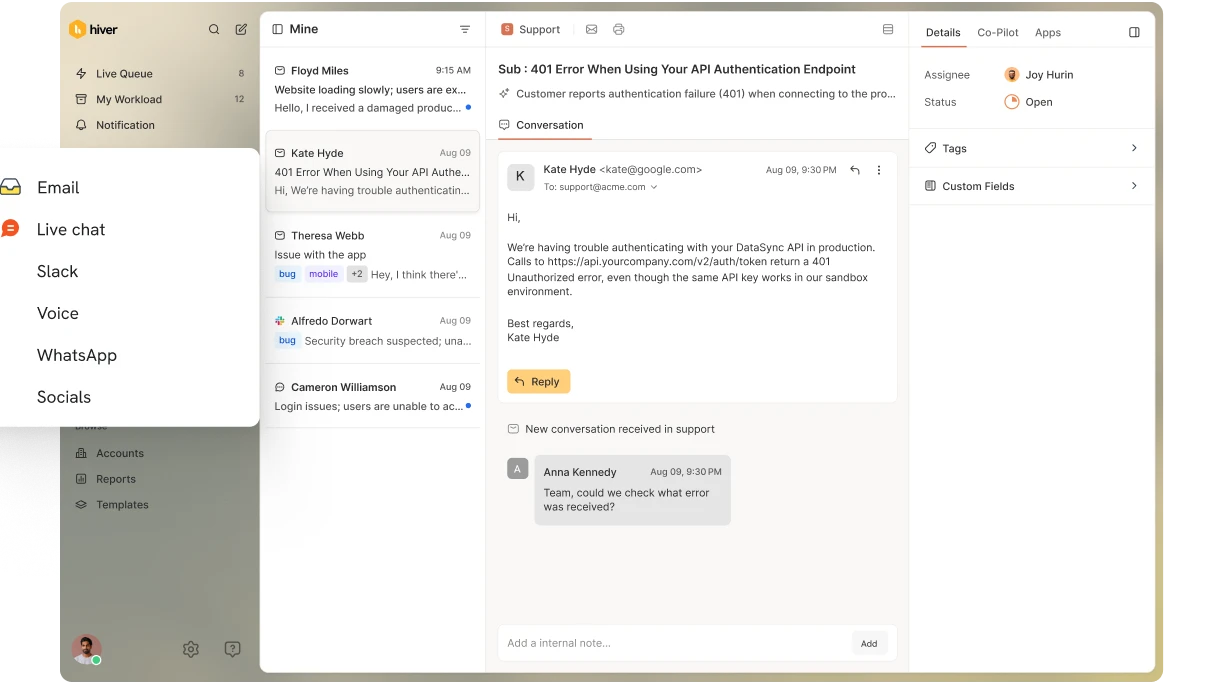
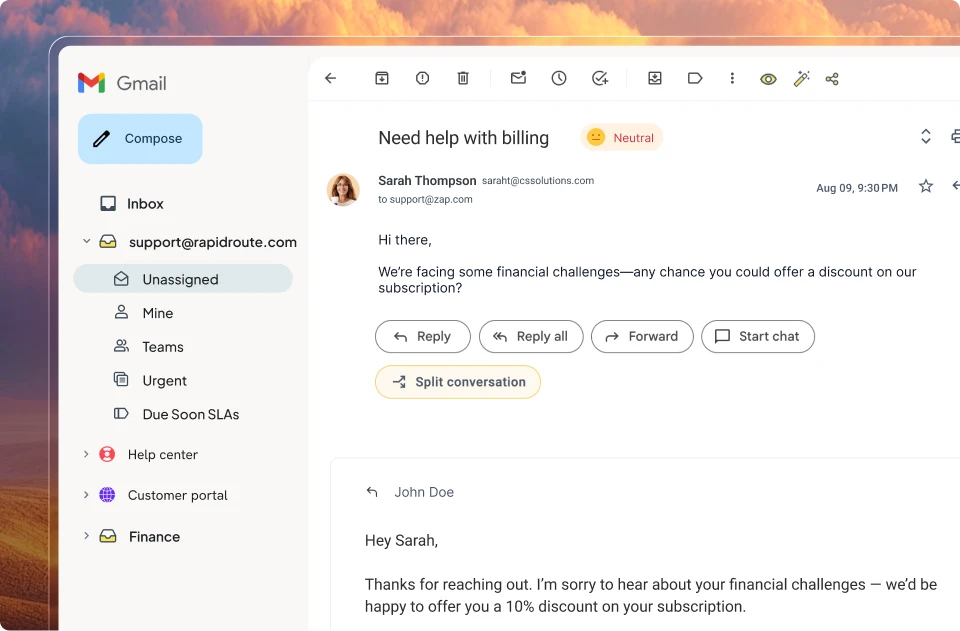
Tools like Hiver bring team-level organization to Gmail by adding shared inboxes, assignment and collision detection, workflow automation, and AI assistance — without leaving your familiar Gmail interface.
P.S. Hiver also offers a dedicated omnichannel platform, Hiver Omni, that works with Gmail and Outlook and consolidates all your channels like chat, voice, socials, SMS, Slack, and more in one intuitive workspace.
5 tools to organize your Gmail inbox
Here are five tools to help you organize your Gmail inbox effectively, including Intercom alternatives like Hiver that streamline customer communication.
- Hiver: It helps teams manage shared inboxes like info@ and support@ directly from Gmail, without switching to an external help desk. You can delegate emails in one click, add context with internal notes, automate repetitive actions like tagging or routing, and track everything – from response times to resolution trends – in a clean analytics dashboard.
- Clean Email: A privacy-focused tool that helps declutter your inbox by organizing emails into easy-to-review bundles. It offers features like Smart Views, Quick Clean, and Auto Clean to automate routine tasks, unsubscribe from unwanted emails, and keep your inbox organized over time.
- Right Inbox: It improves Gmail by adding functionalities such as email scheduling, recurring emails, and follow-up reminders. It’s particularly useful for professionals who need to manage outreach and ensure timely communication without manual tracking.
- Mailbird: A desktop email client that consolidates multiple email accounts and apps into one interface. It supports features like email snoozing, speed reading, and integrations with various productivity apps, making it easier to manage emails and related tasks from a single platform.
- Spike: It turns your email into a chat-like interface, promoting real-time conversation and collaboration. It includes features like collaborative notes, tasks, and video meetings, aiming to streamline communication and reduce email clutter.
🆕 What’s new in Gmail (2025)
Check out these fresh Gmail updates for 2025 that can make organizing and triaging even smoother.
✅ Gemini-powered summaries & label suggestions
Gmail’s built-in Gemini can now summarize long email threads directly in the inbox and suggest contextual labels based on content—saving you from opening every message.
✅ Notification action: “Mark as Read” on Android
Gmail mobile notifications now include a Mark as Read button without expanding the notification, perfect for quick triage on the go.
✅ Purchases tab rollout
A new Purchases tab is appearing in the sidebar for order confirmations and shipping updates, automatically grouping receipts and delivery emails in one place.
✅ Dynamic color labels
Google quietly added adaptive color labels that adjust for dark mode and accessibility, making it easier to scan categories without eye strain.
Most useful tutorials to learn everything about Gmail
Explore Gmail inside and out with these must-watch tutorials. From quick tips to in-depth walkthroughs, you’ll find everything you need to organize, customize, and get more done.
- Gmail Tips to Clean Up Your Inbox: Recent tips, bulk cleanup methods, and what’s new in Gmail.
- 20 Gmail Settings EVERYONE Needs to Change: Helpful for optimizing settings you might not know you should tweak.
- Top 22 Gmail TIPS & TRICKS for 2025: More advanced and varied hacks, great for power users.
- Gmail Tutorial for Beginners: Covers basics like setting up Gmail, navigating the interface, and entering data.
- Gmail Tips to Master Shortcuts and Inbox Organization: Focuses on keyboard shortcuts + tricks to quickly clean up your inbox.
- Gmail Basics Tutorial: A step-by-step walkthrough of essential Gmail features (for newer users especially).
- The Best Gmail Tips and Tricks: Updated hacks + settings everyone should know.
Frequently asked questions
1. How do I automatically organize my Gmail?
Use filters and labels. In Gmail, click the search-bar filter icon, set conditions (e.g., sender, subject), then choose actions like “Apply label” or “Skip the Inbox.” This auto-files newsletters, receipts, and updates so your Primary stays clutter-free.
2. How do I clean up thousands of emails in Gmail?
Search using operators like older_than:2y, larger:10M, or category:promotions. Select all conversations that match, then Delete or Archive them. Empty Trash to free storage. Repeat for large senders (from:) to clear out big chunks quickly.
3. How do I efficiently sort my Gmail inbox?
Switch to Priority Inbox or Unread First, pin or star critical threads, and label follow-ups. Add filters for known senders so routine emails skip the inbox, leaving only what needs attention on top.
4. How do I declutter Gmail quickly?
Unsubscribe from low-value mailing lists, delete Promotions in bulk, mute long FYI chains, and run a search for filename:pdf larger:5M to clear old attachments. Ten focused minutes can dramatically reduce inbox noise.
Make your Gmail inbox easier to manage every day
Organizing your Gmail inbox doesn’t need to be a massive project – it just needs a little structure. When you break it down into 15 focused minutes, it stops feeling overwhelming and starts feeling doable.
Maybe you started by archiving old promo emails, tried a smarter layout, or labeled a few action items. Maybe you gave Gemini a shot and realized AI can actually help you get through your inbox faster. Whatever combination you picked, the goal isn’t zero emails – it’s making your inbox easier to work with.
Come back to this list anytime your inbox feels like it’s getting out of hand. It’s not about keeping things perfect. It’s about making it easier to show up, focus, and move on with your day.
Start using Hiver today
- Collaborate with ease
- Manage high email volume
- Leverage AI for stellar service